
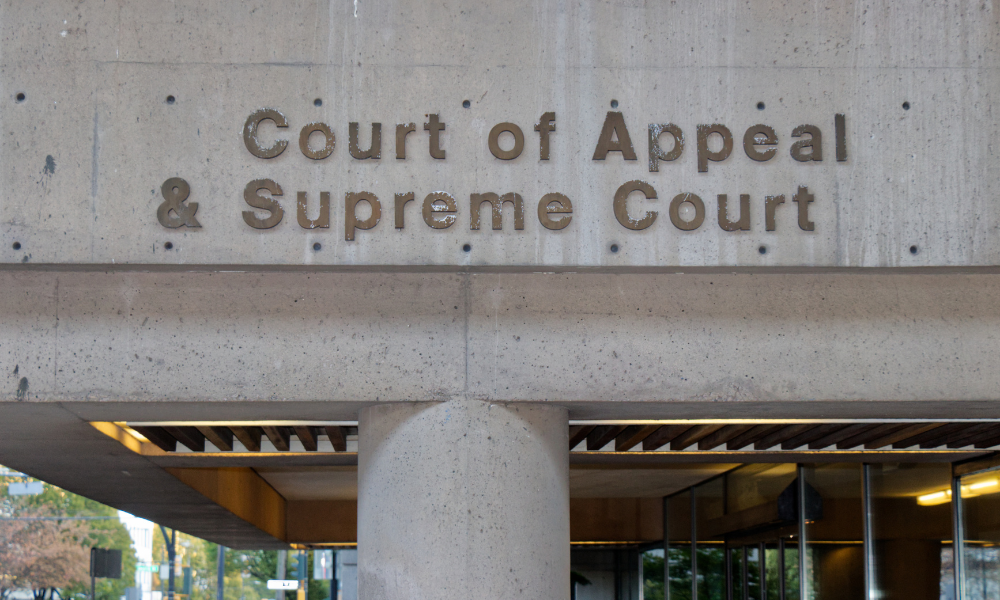
BC Supreme Court Awards $1M in MVA Damages, Citing Mitigation Failure
Judge lowers award by $162K due to injured party’s failure to mitigate In a case arising from a motor vehicle accident (MVA) in Richmond, BC, on Feb. 1, 2017, the British Columbia Supreme Court awarded total damages of $1,023,400.33 after accounting for the injured plaintiff’s lack of mitigation. In MacRae v Harker, 2026 BCSC 1749, the plaintiff brought an action for personal injury sustained in the MVA. Specifically, the plaintiff sought $1,870,767.33 in damages, including non-pecuniary damages, past income loss, lost future earning capacity, future care costs, special damages, lost housekeeping capacity, and an in-trust claim. Because of the injuries due to the MVA, the plaintiff shared that she has not worked since a year after the accident. The Insurance Corporation of British Columbia (ICBC) acknowledged the defendant driver’s fault for the MVA. However, ICBC challenged the nature and extent of the plaintiff’s injuries, the resulting financial loss, and thus the quantum of damages. The defendant asserted that the plaintiff: The defendant sought to limit damages to between $106,116 and $459,980.84, with the amount further decreased for the plaintiff’s failure to mitigate. Initially, the BC Supreme Court awarded the plaintiff $1,186,066.50 in total damages, broken down as follows: For future care costs, the court decreased the award of future care costs to $274,388.35, upon considering a 10 percent reduction for the plaintiff’s failure to mitigate. As for all other heads of damages, the court reduced the award to $749,011.98, upon accounting for a 15 percent reduction due to the lack of mitigation. In weighing the appropriate deductions for failure to mitigate, the court explained that the plaintiff’s progress had plateaued and her disability appeared unlikely to improve much in the future. According to the court, the parties could agree or give submissions on costs. Applying the “but for” test, the BC Supreme Court determined that the plaintiff had been experiencing various physical, psychiatric, and cognitive issues due to the MVA. Based on the medical opinions of three doctors, the court confirmed on a balance of probabilities that the MVA resulted in the following injuries: The court held that these injuries substantially affected the lives of the plaintiff, her family, and her friends. Here are some of the Supreme Court of British Columbia’s other recent decisions involving injury claims arising from vehicular accidents. In a case arising from a motor vehicle accident, the court issued a May 29 decision awarding total damages of $879,458 to an airport screening officer who developed a disabling chronic pain condition due to her back and leg injuries. In a vehicular accident case, the court made an Apr. 23 decision dismissing the injured party’s application to call four expert witnesses and to exclude disbursements incurred by a vocational and job market analyst, an occupational therapist, an actuary, and an orthopedic surgeon. Enjoy this story? Read the latest personal injury news on the main page! The Canadian Legal Newswire is a FREE newsletter that keeps you up to date on news and analysis about the Canadian legal scene, providing targeted news and information of interest to Canadian Lawyers. Please enter your email address below to subscribe.
How does this affect you?
Get an AI analysis of this article grounded in your jurisdictions, practice areas, and any policy documents you've uploaded to Wansom.
Finish Reading the Full Story and the Expert Analysis.
Get the latest legal & regulatory intelligence in Canada
Wansom is AI and can make mistakes.