
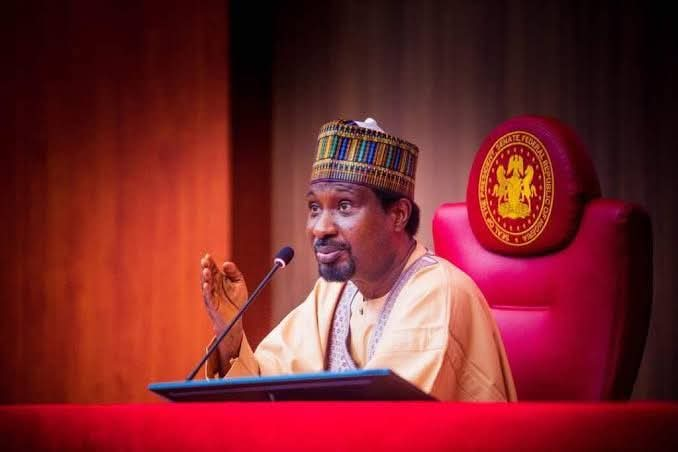
Barau Jibrin: Aide's Social Media Dismissal for Anti-Party Posts
Summary
- Deputy Senate President Barau Jibrin terminated the appointment of his aide, Umar Alhassan.
- The dismissal was a direct consequence of social media posts made by Alhassan.
- These posts were deemed to constitute 'anti-party activities' and were considered disrespectful to Kano State Governor Abba Yusuf.
What Happened
The termination of Barau Jibrin's aide over social media dismissal underscores a critical need for proactive legal counsel for political office holders, their staff, and public sector employees across Nigeria.
Deputy Senate President Barau Jibrin recently took decisive action regarding a member of his staff, Umar Alhassan. Alhassan's employment was brought to an end following a review of his online activities. The termination stemmed directly from posts made on social media platforms.
These specific online communications were officially characterized as constituting 'anti-party activities.' Furthermore, the content of these posts was deemed to show disrespect towards the incumbent Governor of Kano State, Abba Yusuf. This swift dismissal highlights the increasing scrutiny placed on the digital footprint of individuals associated with high-ranking political figures in Nigeria. The decision by Senator Jibrin underscores a clear stance against perceived insubordination or actions that could undermine political alliances or party discipline.
Context of Public Service Conduct
The incident involving Umar Alhassan and Deputy Senate President Barau Jibrin serves as a potent reminder of the delicate balance political aides must maintain in their public and online personas. In Nigeria's political landscape, the conduct of staff members is often seen as a reflection of their principals. This is particularly true for individuals serving high-profile figures like the Deputy Senate President.
While specific details of a formal Deputy Senate President staff social media policy are not publicly detailed in this instance, the termination suggests an implicit or explicit expectation regarding appropriate digital behavior. Public officials and their teams are increasingly under pressure to ensure their online expressions align with their roles and do not create political friction. Criticism, especially when directed at fellow party members or allied political figures such as Kano Governor Abba Yusuf, can be interpreted as a breach of loyalty or 'anti-party activities,' carrying severe consequences for Nigeria public official social media conduct.
Legal and Employment Implications
From an employment law perspective in Nigeria, the dismissal of Umar Alhassan by Deputy Senate President Barau Jibrin raises important considerations regarding the grounds for termination, particularly in the public sector. While employers generally have the right to terminate employment, the classification of social media posts as 'anti-party activities' or 'disrespectful' can be a broad interpretation.
Such actions often fall under categories like gross misconduct or insubordination, which typically justify summary dismissal without notice. However, for such terminations to withstand potential legal challenge, clear employment terms or staff social media policies outlining prohibited conduct are crucial. The absence of explicit guidelines can complicate matters, although political appointments often carry an inherent expectation of loyalty and adherence to the principal's political agenda. This case highlights the intersection of political loyalty and employment rights, particularly when online expression is involved. The concept of 'anti-party activities Nigeria employment law' is not a distinct legal category but rather an interpretation of general misconduct within a political employment context.
Broader Significance
The termination of Barau Jibrin's aide over social media dismissal underscores a critical need for proactive legal counsel for political office holders, their staff, and public sector employees across Nigeria. This incident serves as a stark warning about the potential ramifications of online expression, particularly when it is perceived as critical or disloyal to political superiors or allies.
Lawyers advising these individuals must emphasize the importance of understanding and adhering to both explicit and implicit social media conduct policies. The swift action taken against Umar Alhassan demonstrates the significant risks associated with online commentary that could be construed as 'anti-party' or 'disrespectful.' It highlights the potential for immediate employment termination based on such conduct, reinforcing the necessity for clear communication and robust internal guidelines regarding digital engagement. This case exemplifies the evolving challenges in managing public image and political relationships in the digital age, making informed legal guidance indispensable for navigating these complex waters.
Practical Implications
This incident underscores the critical need for lawyers advising political office holders, their staff, or public sector employees in Nigeria to review and advise on social media conduct policies. It highlights potential employment law implications for online expression deemed 'anti-party' or 'disrespectful' and the risks of summary termination for such conduct.
Source
How does this affect you?
Get an AI analysis of this article grounded in your jurisdictions, practice areas, and any policy documents you've uploaded to Wansom.
Finish Reading the Full Story and the Expert Analysis.
Get the latest legal & regulatory intelligence in Nigeria
Wansom is AI and can make mistakes.