
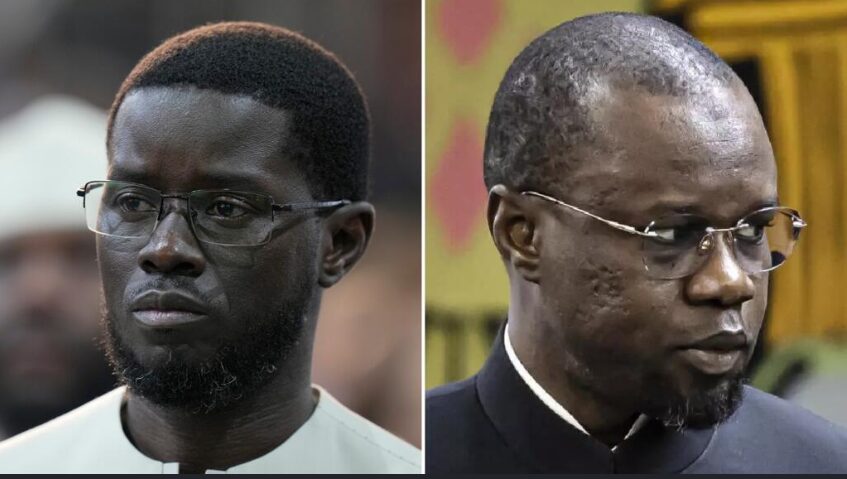
Babacar Ba: Urges Diomaye Faye to Resolve Executive-Parliament Tension
Summary
- Babacar Ba, former OFNAC vice-president and president of Forum du justiciable Sénégal, has called for appeasement between Senegal's Executive and Parliament.
- He made a solemn appeal to President Bassirou Diomaye Faye to end the ongoing parliamentary "guerrilla" or tensions.
- Ba urged the Head of State to take initiatives to resolve the institutional conflict.
- The intervention highlights concerns over the stability of executive-legislative relations in Senegal.
Call for Executive-Parliamentary Appeasement
This public plea from a prominent civil society figure like Babacar Ba emphasizes the urgency of addressing the current executive-legislative conflict in Senegal, aiming to foster a more cooperative environment between the branches of government.
Babacar Ba, who previously served as the vice-president of the National Office for the Fight Against Fraud and Corruption (OFNAC) and currently presides over the Forum du justiciable Sénégal, has publicly urged for a resolution to the escalating tensions between Senegal's Executive and Parliament. His intervention highlights growing concerns over the stability of institutional relations within the country's political landscape. Ba's statement underscores a perceived need for immediate action to de-escalate what he describes as a parliamentary "guerrilla," a term suggesting persistent and disruptive conflict.
In a direct and solemn appeal, Ba specifically called upon President Bassirou Diomaye Faye, the Head of State, to take decisive steps. The objective of this appeal is to bring an end to the ongoing legislative friction, which he believes is detrimental to effective governance. This public plea from a prominent civil society figure like Babacar Ba emphasizes the urgency of addressing the current executive-legislative conflict in Senegal, aiming to foster a more cooperative environment between the branches of government.
Addressing Institutional Tensions
The core of Babacar Ba's message revolves around the need for institutional appeasement in Senegal, particularly focusing on the dynamic between the executive and legislative branches. He has directly invited President Diomaye Faye to initiate measures that could alleviate the current parliamentary tensions. This call for presidential initiatives is framed as essential for navigating the prevailing institutional challenges and ensuring the smooth functioning of the state apparatus.
Ba's statement, made in his capacity as president of the Forum du justiciable Sénégal, reflects a broader concern among civil society about the potential impact of such discord on national progress and stability. The ongoing executive-parliament tension, characterized by a "parliamentary guerrilla," suggests a significant level of disagreement or obstruction that requires high-level intervention. His emphasis on the Head of State's role underscores the perceived gravity of the situation and the expectation that the presidency will lead efforts to restore harmony.
Why Institutional Stability Matters
The appeal by Babacar Ba for an end to the executive-parliament tension carries significant weight, pointing to potential Senegal constitutional stability concerns. When a prominent figure like the former vice-president of OFNAC and leader of the Forum du justiciable Sénégal calls for such appeasement, it signals that the ongoing Diomaye Faye parliamentary tensions are not merely routine political disagreements but could pose a risk to the country's governance framework.
Effective collaboration between the Executive and Parliament is fundamental for legislative progress, policy implementation, and maintaining public trust. The presence of a "parliamentary guerrilla" suggests a breakdown in this crucial relationship, which could impede the government's ability to address national priorities. Babacar Ba's call for President Faye to take initiatives is therefore a plea for proactive leadership to safeguard the integrity and functionality of Senegal's democratic institutions, ensuring that the executive and legislative branches can work constructively rather than in conflict.
Practical Implications
Lawyers and compliance officers in Senegal should monitor the evolving relationship between the Executive and Parliament. Ongoing institutional tensions could signal potential shifts in policy or regulatory stability, impacting client operations and legal risk assessments.
Source
How does this affect you?
Get an AI analysis of this article grounded in your jurisdictions, practice areas, and any policy documents you've uploaded to Wansom.
Finish Reading the Full Story and the Expert Analysis.
Get the latest legal & regulatory intelligence in Senegal
Wansom is AI and can make mistakes.