
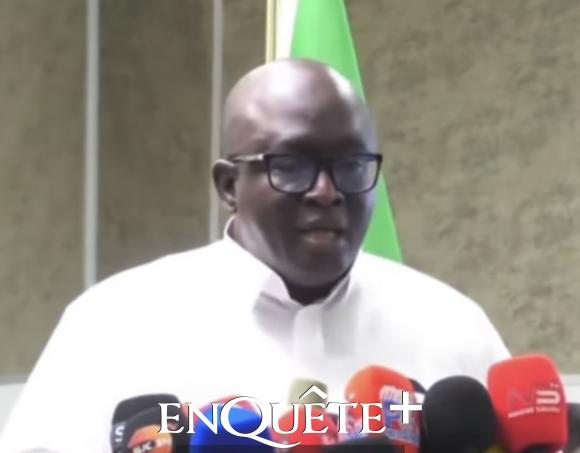
Ayib Daffé: Denounces 3-Month Delay in LFR 2026 Adoption
Summary
- Ayib Daffé, Pastef parliamentary group president, criticized a three-month delay in depositing the 2026 Rectifying Finance Law (LFR) after its adoption.
- The LFR revises energy subsidies to 790.3 billion CFA francs, an increase of 540.3 billion CFA francs from the initial budget.
- Amadou Ba highlighted 2027 debt service projections of 5,855 billion CFA francs and questioned macroeconomic indicators.
- Moody's downgraded Senegal's sovereign rating to Ca on October 30, 2026, citing concerns over weak parliamentary support for government policies.
- Pastef, controlling the Assembly, threatens to block the LFR amidst a political power struggle.
Legislative Delays and Transparency Concerns
Moody's assessment explicitly linked this downgrade to the potential for weak parliamentary support, suggesting it could impede the adoption of crucial prerequisites for the IMF program.
Ayib Daffé, who leads the Pastef parliamentary group, has voiced significant concerns regarding the timeline and transparency surrounding the 2026 Rectifying Finance Law (LFR). He specifically pointed to a three-month interval between the LFR's adoption by the Council of Ministers on June 17, 2026, and its subsequent submission to the National Assembly on September 18, 2026, a delay he found unacceptable.
Daffé also criticized the practice of issuing advance decrees without promptly informing deputies, arguing that this undermines effective parliamentary oversight. He has explicitly called for access to critical documents, including the report from the Inspection générale des finances, various audit findings, and the specific parameters agreed upon with the International Monetary Fund (IMF). These materials, he contends, are essential for proper legislative scrutiny, and he has declared his refusal to endorse a budget he deems "insincère."
The LFR 2026 aims to rebalance the national budget, primarily due to a significant increase in energy subsidy costs. The revised budget now allocates 790.3 billion CFA francs for energy subsidies, representing a substantial increase of 540.3 billion CFA francs from the initial provision of 250 billion CFA francs. Furthermore, Pastef has highlighted nearly 555 billion CFA francs in cuts within this rectifying budget, intensifying the legislative debate.
Mounting Fiscal Pressures and International Scrutiny
Beyond the immediate legislative process, Senegal's national debt has become a central point of contention. Amadou Ba, a prominent figure, provided detailed projections for the 2027 debt service, indicating principal repayments of 4,552 billion CFA francs and interest payments totaling 1,303 billion CFA francs. This amounts to an estimated 5,855 billion CFA francs for the year, translating to an approximate daily charge of 16 billion CFA francs.
Ba also noted that a substantial portion of the 2,829 billion CFA francs the state plans to raise from financial markets would be allocated to refinancing existing debt. He expressed skepticism regarding the macroeconomic indicators presented by the administration and questioned the analytical methodology used for the debt viability assessment associated with the proposed 2.2 billion dollar program with the IMF.
While the IMF program has reached an agreement at the services level, it still requires final approval from the Fund's board of directors. The successful implementation of this program, particularly its debt restructuring components, is heavily dependent on securing robust parliamentary support, underscoring the critical international financial context surrounding these domestic budgetary discussions.
Political Standoff and Economic Repercussions
The current legislative gridlock is deeply intertwined with an ongoing political struggle between President Bassirou Diomaye Faye and Ousmane Sonko, who currently serves as the President of the National Assembly. Pastef, which commands a majority in the National Assembly, has openly threatened to block the LFR text as part of this broader power dynamic, adding a significant political dimension to the already complex economic situation.
In a related development, the international credit rating agency Moody's downgraded Senegal's sovereign foreign currency rating from Caa2 to Ca on October 30, 2026, marking the sixth consecutive downgrade. Moody's assessment explicitly linked this downgrade to the potential for weak parliamentary support, suggesting it could impede the adoption of crucial prerequisites for the IMF program.
During a public conference on budgetary matters, Amadou Ba asserted that "The Assembly has blocked nothing." He also raised the possibility of dissolving the legislative body or calling for early presidential elections, emphasizing the high stakes involved in the current political and budgetary impasse. Ayib Daffé noted that deputies have been working extended hours, including weekends, from 9 AM to nearly midnight, to address these pressing legislative issues.
Source
Source: Original reporting via EnQuête+
How does this affect you?
Get an AI analysis of this article grounded in your jurisdictions, practice areas, and any policy documents you've uploaded to Wansom.
Finish Reading the Full Story and the Expert Analysis.
Get the latest legal & regulatory intelligence in Senegal
Wansom is AI and can make mistakes.