
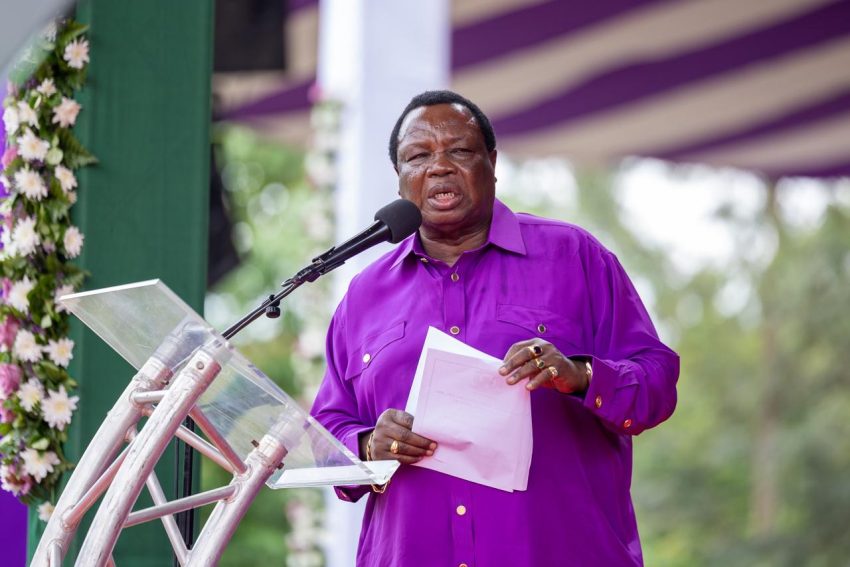
Atwoli Warns Gachagua: IEBC Procurement, Smartmatic Kenya Integrity
Summary
- COTU (K) Secretary-General Francis Atwoli warned political leaders against statements undermining the 2027 General Election and potentially triggering unrest.
- Atwoli responded to Rigathi Gachagua's allegations concerning the IEBC's Integrated Elections Management System (IEMS) procurement, accusing him of a 'proof by assertion fallacy'.
- He reminded Gachagua that the IEBC is an independent constitutional commission under Article 249(2) and that legal channels exist for procurement concerns.
- Atwoli questioned Gachagua's reported preference for Smartmatic, an election technology company, asking him to explain his advocacy for a specific private firm.
- The trade union leader urged political actors to prioritize peace, stability, and national cohesion to protect livelihoods ahead of the 2027 polls.
Warning Issued Over Electoral Integrity
The trade union leader underscored that the Independent Electoral and Boundaries Commission operates as an independent constitutional body, established under Article 249(2) of the Constitution, and its mandate cannot be dictated by any individual.
The Secretary-General of the Central Organisation of Trade Unions (Kenya), Francis Atwoli, has issued a stern caution to political figures regarding pronouncements that could jeopardize the integrity of the 2027 General Election and potentially incite post-election instability. Atwoli's remarks were made in direct response to allegations by Rigathi Gachagua, leader of the DCP party, concerning the procurement process for the Independent Electoral and Boundaries Commission's (IEBC) Integrated Elections Management System (IEMS).
Atwoli specifically accused the former Deputy President of employing a 'proof by assertion fallacy,' arguing that persistent, unsubstantiated attacks on the electoral commission's credibility could prematurely establish a political pretext for disputing the outcomes of the 2027 polls. The trade union body, COTU (K), expressed particular apprehension that such statements might be laying the groundwork for an advance rejection of the 2027 General Election results.
Constitutional Mandate and Legal Avenues
The trade union leader underscored that the Independent Electoral and Boundaries Commission operates as an independent constitutional body, established under Article 249(2) of the Constitution, and its mandate cannot be dictated by any individual. Atwoli delivered these observations as Kenya commemorated 16 years since the enactment of its 2010 Constitution, using the occasion to remind Gachagua of the IEBC's autonomous status.
He further emphasized that if genuine concerns arise regarding procurement processes, Kenyan law provides established institutions, clear procedures, and appropriate remedies through which such issues can be formally raised and adjudicated. This framework, Atwoli noted, is the proper channel for addressing any perceived irregularities, rather than public assertions.
Scrutiny Over Technology Preference
Atwoli also raised questions about Gachagua's reported inclination towards Smartmatic, an election technology company. He challenged the former Deputy President to clarify why he appeared to be advocating for a specific private entity, especially after having accused the IEBC of allegedly structuring its procurement process to favor a particular supplier. Atwoli asserted that Gachagua must provide a clear rationale to Kenyans for his conclusion that Smartmatic is the appropriate technology for the IEBC to adopt.
This line of questioning highlights the sensitivity surrounding election technology procurement in Kenya and the need for transparency and impartiality in such processes. The call for Gachagua to justify his preference underscores the public expectation for leaders to avoid perceived conflicts of interest or undue influence in critical national undertakings.
Call for Restraint and National Cohesion
In his address, Atwoli issued a stark warning about the potential repercussions of political instability, cautioning that a resurgence of tribal or electoral violence would disproportionately impact vulnerable populations, including workers, women, and children. Such unrest, he stressed, would inevitably jeopardize livelihoods and undermine economic stability across the nation.
Consequently, Atwoli urged Gachagua and all other political leaders to exercise considerable restraint as the country approaches the 2027 General Election. He called upon political actors to prioritize peace and stability, emphasizing that safeguarding national cohesion is paramount for protecting the economic well-being and livelihoods of all Kenyans.
Practical Implications
Lawyers advising political clients or entities involved in election technology procurement in Kenya should note the heightened scrutiny and potential for legal challenges regarding the IEBC's processes. This development underscores the importance of adhering to established legal procedures for addressing procurement concerns, rather than relying on public assertions, to mitigate risks of electoral disputes and maintain institutional credibility.
Source
How does this affect you?
Get an AI analysis of this article grounded in your jurisdictions, practice areas, and any policy documents you've uploaded to Wansom.
Finish this article free. Just your email for instant unlock.
Wansom is AI and can make mistakes.