
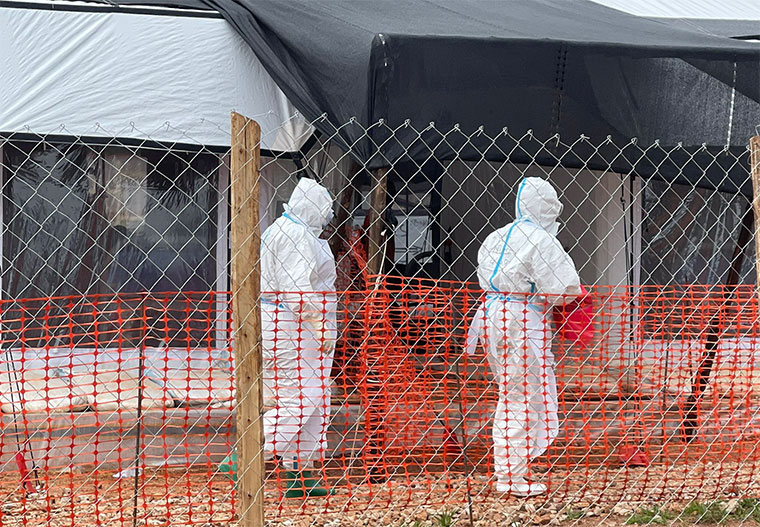
Dr. Atwine: Orders Stricter Ebola Screening at DRC Border Crossings
Summary
- Uganda has ordered stricter Ebola screening at its border crossings with the Democratic Republic of Congo.
- The directive also mandates the enforcement of standard operating procedures in public places and border communities.
- Health Ministry Permanent Secretary Dr. Diana Atwine issued the order during a meeting in Mpondwe, Kasese district.
- These measures are a response to an ongoing Ebola outbreak in the neighboring Democratic Republic of Congo.
- Dr. Atwine also criticized immigration officials during her address.
Heightened Vigilance at Borders
The Ugandan government's proactive stance, spearheaded by the Ministry of Health, aims to significantly fortify the nation's defenses against the persistent Ebola threat emanating from its western neighbor, emphasizing a unified, coordinated, and highly vigilant response across all relevant sectors to protect its citizens.
Uganda has initiated a robust public health response by mandating more stringent Ebola screening protocols at all border crossings shared with the Democratic Republic of Congo (DRC). This directive comes as the neighboring nation grapples with an ongoing Ebola outbreak, posing a significant cross-border transmission risk that necessitates immediate and decisive action. The enhanced measures are specifically designed to detect potential cases early among travelers and prevent the insidious spread of the deadly virus into Ugandan territory, thereby safeguarding the health and well-being of its population.
The order was formally issued by Dr. Diana Atwine, the Permanent Secretary of Uganda's Ministry of Health, during a key meeting held on a recent Thursday. The gathering took place in Mpondwe, a town strategically located within the Kasese district, a region that shares a direct and often porous border with the DRC. Her pronouncements underscored the critical urgency of the situation and the imperative for immediate, coordinated action to fortify public health defenses against the looming threat.
Comprehensive Public Health Directives
Beyond the immediate controls at official entry points, Dr. Atwine's directive also extends to the rigorous enforcement of standard operating procedures (SOPs) across various public spaces and within communities situated near the border. These essential SOPs typically encompass a range of preventative measures, including enhanced hygiene practices such as handwashing, public health awareness campaigns to educate citizens on symptoms and prevention, and strict protocols for reporting any suspected cases to health authorities. The overarching aim is to establish a multi-layered defense against the pathogen, ensuring that even if the virus were to cross the border, its potential for widespread dissemination could be quickly identified and contained.
The emphasis on both public places and border communities highlights a nuanced understanding that disease transmission is not limited solely to official entry points. High-traffic areas, such as markets and transport hubs, and densely populated border regions are particularly vulnerable to rapid disease spread, necessitating a comprehensive and integrated approach. This holistic strategy is considered crucial for effectively mitigating the significant risks associated with a highly contagious and often fatal disease like Ebola, requiring vigilance from both authorities and the general public.
Addressing Operational Challenges and Regional Context
During her address, Dr. Atwine also voiced specific concerns regarding the operational performance of immigration officials at the border. While the precise nature of her criticism was not extensively detailed in the report, it strongly suggests a perceived need for improved vigilance, enhanced coordination among different agencies, or more stringent adherence to established health protocols among those responsible for managing cross-border movement. The effective and consistent implementation of public health directives, especially during an epidemic, relies heavily on the unwavering cooperation and diligent execution by all government agencies and personnel involved at the border.
This critique underscores the inherent operational complexities and inter-agency challenges in managing a severe public health crisis at international frontiers. Ensuring that all frontline personnel are adequately trained, properly equipped with necessary resources, and deeply committed to consistently enforcing health regulations is paramount for success. The Ugandan government's proactive stance, spearheaded by the Ministry of Health, aims to significantly fortify the nation's defenses against the persistent Ebola threat emanating from its western neighbor, emphasizing a unified, coordinated, and highly vigilant response across all relevant sectors to protect its citizens.
Source
How does this affect you?
Get an AI analysis of this article grounded in your jurisdictions, practice areas, and any policy documents you've uploaded to Wansom.
Finish Reading the Full Story and the Expert Analysis.
Get the latest legal & regulatory intelligence in Uganda
Wansom is AI and can make mistakes.