
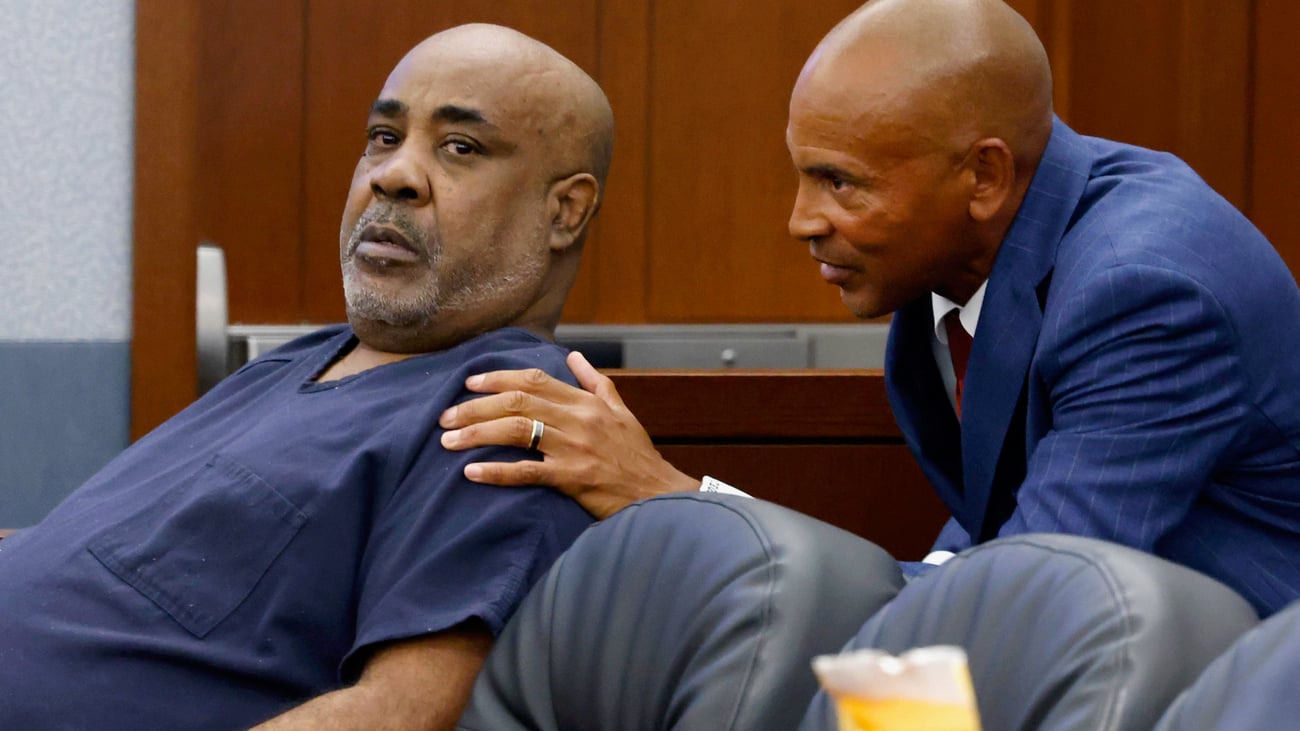
Attorneys in Tupac murder case battle over evidence days before trial
Summary
- Duane "Keffe D" Davis's murder trial for the 1996 killing of Tupac Shakur is set to begin, with a key dispute over a 2008 statement he made to authorities.
- The defense argues the 2008 statement should be suppressed because Davis was allegedly offered immunity from prosecution at the time.
- Prosecutors contend the circumstances do not warrant suppression and highlight inconsistencies in Davis's various accounts of the shooting.
- Judge Carli Kierny has ruled that the 2008 statement is admissible, which both sides view as central to their cases.
- The court previously ruled that jurors can hear about Davis's past as a gang "shot caller" and details from his book, where he also claims immunity.
Key Evidence Disputed Ahead of Trial
The dispute over the Duane Davis 2008 statement immunity underscores the critical importance of clearly defined terms in such agreements and highlights the potential for Fifth Amendment self-incrimination challenges to prior statements made to authorities.
The murder trial of Duane "Keffe D" Davis, accused of orchestrating the 1996 killing of hip-hop icon Tupac Shakur, is set to commence shortly, but not without significant legal skirmishes over crucial prosecution evidence. Davis, a 63-year-old former Compton gang leader, was arrested in 2023 in connection with Shakur's death. A central point of contention in the Clark County criminal trial revolves around the admissibility of a statement Davis made to Los Angeles law enforcement in 2008.
During a recent hearing before Clark County Judge Carli Kierny, attorneys debated whether jurors should be permitted to hear this 2008 statement. Defense attorney Michael Sanft argued for its suppression, asserting that Davis provided the proffer statement only after being offered immunity from prosecution. Prosecutors, however, are keen to present this evidence, portions of which have also appeared in a documentary released a decade after Davis's discussion with authorities. Judge Kierny has ruled that this critical evidentiary matter is admissible.
Separately, Davis's defense sought a postponement of the trial to allow his client to post a $750,000 bond. Chief Deputy District Attorney Marc DiGiacomo opposed the delay, noting that Davis could post bail at any time. Judge Kierny concurred, stating that the bond issue would only become relevant upon a jury verdict, and that Davis could post bail even as the trial, expected to last four to five weeks, proceeds. Davis has pleaded not guilty to the charges.
Legal Battle Over Immunity and Self-Incrimination
The core of the defense's argument for suppressing the Duane Davis 2008 statement immunity claim rests on the principle of the Fifth Amendment right against self-incrimination. Defense attorney Sanft contends that the 2008 proffer statement was made under the specific condition of an immunity agreement, rendering it inadmissible in the current Keffe D Tupac murder trial. Judge Kierny acknowledged the statement's foundational role, remarking that "It would be the proffer where everything starts," for both the prosecution and defense cases.
Chief Deputy District Attorney Binu Palal countered the defense's position by drawing a distinction to the high-profile case of comedian Bill Cosby. In that instance, a prosecutor's promise not to prosecute Cosby for sexual assault led his attorneys to believe he could not invoke his Fifth Amendment rights during a civil deposition. The Pennsylvania Supreme Court ultimately overturned Cosby's 2018 convictions in 2021 based on this understanding, though Cosby still faces civil litigation. Palal emphasized that the circumstances surrounding Davis's 2008 statement were fundamentally different from the Cosby precedent, stating, "That’s not what happened here."
Prosecutors also highlighted inconsistencies in Davis's past accounts. While his 2008 discussion with authorities, appearances in BET’s “Death Row Chronicles,” and his own book, “Compton Street Legend,” all place him at the scene of Shakur's shooting, Davis has also made conflicting statements, including one instance where he claimed not to have been in Las Vegas at the time of the incident. Palal argued that such a claim would contradict several other statements made by Davis, including the pivotal 2008 discussion, which forms a significant part of the Tupac Shakur prosecution evidence.
Prior Rulings and Davis's Own Narrative
The court has already made several rulings impacting the scope of evidence in the Keffe D Tupac murder trial. In June, Judge Kierny determined that jurors would be permitted to hear about Davis's past role as a "shot caller" for the Southside Compton Crips. This information, detailed in his 2019 book “Compton Street Legend,” provides a firsthand account of the events leading up to the 1996 murder of Tupac Shakur and the 1997 murder of Christopher Wallace, also known as The Notorious B.I.G. or Biggie Smalls. In this same book, Davis explicitly states that he was promised immunity, a claim central to the current debate over the proffer statement admissibility.
Davis's book details his presence in a car with his nephew, Orlando “Baby Lane” Anderson, at the time of Shakur's shooting near the Las Vegas Strip in 1996, asserting that Anderson was the shooter. Anderson, who denied involvement, died in a 1998 shooting in Compton, California. The prosecution aims to use Davis's own published words, alongside the 2008 statement, as key components of the Tupac Shakur prosecution evidence.
Beyond the murder charge, Davis's legal journey since his 2023 arrest has included other brushes with the law. He was convicted of misdemeanors and sentenced to 16 to 40 months in prison following a 2024 jailhouse fight. He also unsuccessfully appealed for a new trial in that case, citing alleged juror misconduct.
Why the Admissibility Debate Matters
This high-profile Clark County criminal trial serves as a compelling illustration of the intricate legal challenges surrounding the admissibility of proffer statements and alleged immunity agreements. The dispute over the Duane Davis 2008 statement immunity underscores the critical importance of clearly defined terms in such agreements and highlights the potential for Fifth Amendment self-incrimination challenges to prior statements made to authorities. The outcome of Judge Kierny's ruling on the 2008 statement will significantly shape the evidence presented to the jury and could set important precedents for future cases involving similar circumstances.
The ongoing legal battle emphasizes how a defendant's own words, whether in formal statements, books, or documentaries, can become central to a prosecution, even decades after they were uttered or published. For the Keffe D Tupac murder trial, the decision on this piece of Tupac Shakur prosecution evidence could be determinative, influencing how the jury perceives Davis's involvement and credibility. The complexities involved highlight the delicate balance between securing cooperation from individuals and protecting their constitutional rights against self-incrimination.
Practical Implications
This case provides a high-profile example of the legal complexities surrounding the admissibility of proffer statements and alleged immunity agreements in criminal trials, underscoring the critical importance of clearly defined terms and the potential for Fifth Amendment challenges to prior statements.
Source
How does this affect your business?
Get an AI analysis of this article grounded in your jurisdictions, practice areas, and any policy documents you've uploaded to Wansom.
Wansom is AI and can make mistakes.