
Asylum system reopens after ConCourt judgment
Summary
- South Africa's asylum system has reopened to all applicants, including those who entered unlawfully or without a visa, following a Home Affairs circular issued on September 28.
- This reopening comes after the Constitutional Court, on July 7, confirmed a ruling that struck down restrictive amendments to the Refugees Act from January 2020.
- The amendments, which excluded applicants based on entry method or reporting deadlines, were found to risk returning individuals to danger, violating international law.
- While advocates welcome the change, concerns remain about the practical implementation, potential processing inconsistencies, and the historical high rejection rates for South Africa refugee applications.
- Community leaders and legal representatives are cautiously optimistic but emphasize the need for fair access, proper consideration of claims, and adherence to legal principles in the processing of applications.
South Africa's Asylum System Reopens
The court determined that these amendments to the Refugees Act posed a risk of individuals being forcibly returned to dangerous situations without their refugee status being properly determined, a practice that directly contravenes international law.
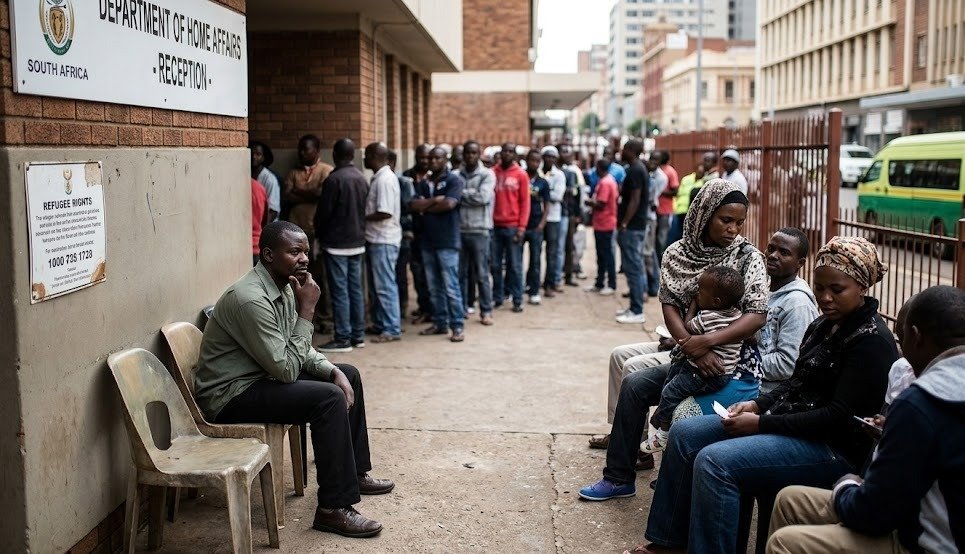
The South Africa asylum system reopens ConCourt judgment has paved the way for a significant shift in the country's approach to refugee applications. For the first time in several years, all individuals seeking asylum, including those who entered the country without legal documentation or through unofficial ports of entry, are now granted access to the formal asylum system. This change follows a directive issued by the Department of Home Affairs on September 28, which explicitly states that Refugee Reception Offices (RROs) must accept applications from every new applicant.
This development marks the end of a period of restricted access and operational challenges. From March 2020 until May 2022, Refugee Reception Offices were entirely closed to new applications, primarily due to the COVID-19 pandemic. Prior to this, amendments to the Refugees Act, which came into effect in January 2020, had already enabled Home Affairs to exclude certain individuals from the asylum process before their claims could even be assessed.
Legal Challenge and Constitutional Mandate
The restrictive amendments to the Refugees Act had created significant barriers for asylum seekers. Specifically, individuals who had not entered South Africa through an official port of entry or failed to report to a refugee office within five days of arrival were automatically excluded, unless they could demonstrate “compelling reasons” for their non-compliance. Furthermore, those without an asylum transit visa were required to show “good cause” for their unlawful entry before being permitted to apply for asylum. The scarcity of such visas was evident, with only 91 transit visas issued between April 2022 and March 2024.
These provisions were challenged by the Scalabrini Centre of Cape Town, represented by Lawyers for Human Rights, which argued before the Constitutional Court that “hundreds of thousands of people” were adversely affected. On July 7, the Constitutional Court confirmed a 2025 Western Cape High Court ruling, effectively striking down these contentious provisions. The court determined that these amendments to the Refugees Act posed a risk of individuals being forcibly returned to dangerous situations without their refugee status being properly determined, a practice that directly contravenes international law.
Implementation and Lingering Concerns
Despite the positive legal outcome, the practical implementation of the reopened system is under scrutiny. A visit to the Gqeberha Refugee Reception Office revealed that while applications are being processed, there are still potential inconsistencies. For instance, a Bangladeshi national residing in Jeffreys Bay was observed receiving an appointment for November 24, with approximately 50 applicants present inside the office. An anonymous Home Affairs official at the Gqeberha office advised applicants to arrive early and provide proof of identification detailing their origins, or a letter from human rights lawyers.
However, this advice appears to contradict the Home Affairs asylum circular itself, which explicitly prohibits officials from refusing an application due to “the absence of documentation.” The cautious optimism surrounding the reopening was echoed by Tibebu Solomon, leader of the Ethiopian and Eritrean community in the Eastern Cape. He led a protest of around 400 asylum seekers outside the Gqeberha office on September 9, giving Home Affairs 14 days to reopen the offices to new applicants. Solomon stated that while it was “promising to see the department has responded and that our concerns have been acknowledged,” the response was “not yet a victory,” emphasizing that a true victory would involve fair access, proper consideration of applications, and decisions made according to law and individual circumstances. He also voiced concerns that applications might be processed too quickly, without adequate opportunity for applicants to explain their situations.
Historical Challenges and Future Outlook
James Chapman of Scalabrini Centre expressed satisfaction that the department had finally acted on the Constitutional Court judgment. He conveyed hope for a smooth processing of new applicants and optimism that the Refugee Reception Offices would not be overwhelmed, trusting that the department has established systems to manage the anticipated numbers. Chapman indicated that Scalabrini would engage with the department if capacity issues arise, but remains hopeful for effective management.
A significant concern for Chapman, however, revolves around the historical efficacy of the refugee status determination process, given its past record of high rejection rates. He expressed apprehension that even individuals in “very clear refugee situations” might face rejection. Data analyzed by the Helen Suzman Foundation from 2017 illustrates this challenge: only 479 applicants without family ties in South Africa were granted refugee status at their initial interview, while a substantial 25,713 were rejected during the same period. This historical context underscores the ongoing need for vigilance to ensure that the South Africa refugee applications are handled fairly and in accordance with legal principles.
Practical Implications
Lawyers can now advise asylum-seeking clients, including those previously excluded due to entry method or lack of documentation, that Refugee Reception Offices are accepting new applications following the Constitutional Court's striking down of restrictive Refugees Act amendments. Practitioners should monitor Home Affairs' implementation to ensure fair and efficient processing, and be prepared to address potential administrative hurdles or rejections.
Source
Source: Original reporting via GroundUp
How does this affect you?
Get an AI analysis of this article grounded in your jurisdictions, practice areas, and any policy documents you've uploaded to Wansom.
Finish Reading the Full Story and the Expert Analysis.
Get the latest legal & regulatory intelligence in South Africa
Wansom is AI and can make mistakes.