
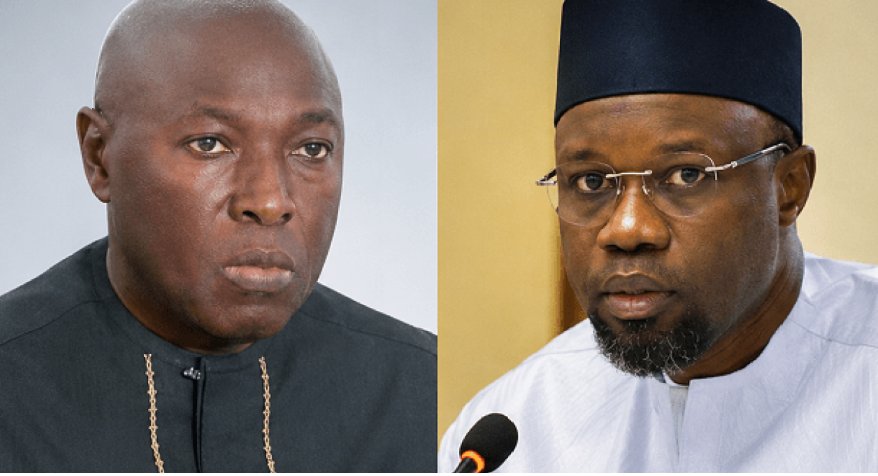
Arona Coumba Ndoffène Diouf Dément Sonko: Nie Allégations d'Élimination Physique
Summary
- Arona Coumba Ndoffène Diouf denies Pastef's accusation that he called for the physical elimination of Ousmane Sonko.
- The controversy began after a Kiiraay press conference where Diouf allegedly said to "find a solution on Ousmane Sonko."
- Pastef's National Political Bureau interpellated the prosecutor and called Diouf's remarks "extremely dangerous" in an October 28 communiqué.
- Diouf, a Kiiraay member and former advisor to Macky Sall, claims his words referred to legal political opposition and citizen mobilization for upcoming elections.
- He explicitly denies advocating violence or a plot against Sonko, urging Pastef to consider the context of his statements.
The Accusations and Immediate Rebuttal
The controversy highlights the critical importance of precise language in public discourse, particularly when addressing political rivals, to prevent accusations of incitement.
Arona Coumba Ndoffène Diouf has publicly refuted allegations made by Pastef, the political party that accused him of advocating for the physical removal of Ousmane Sonko. Sonko currently serves as both the president of the National Assembly and the leader of Pastef. The dispute originated from a press conference hosted by the Kiiraay movement on a recent Monday, where Diouf, a prominent member of Kiiraay and a former ministerial advisor to Macky Sall, was reported to have called for "finding a solution on Ousmane Sonko."
Following these remarks, Pastef's National Political Bureau took swift action, formally appealing to the public prosecutor. In a communiqué issued on Wednesday, October 28, the party characterized Diouf's statements as "extremely dangerous," suggesting they posed a serious threat. Diouf, however, strongly contests this interpretation, asserting that his words were taken out of context and did not imply any form of violence against the Pastef leader.
Diouf's Defense and Contextualization
In his subsequent clarification, as reported by Rewmi, Arona Coumba Ndoffène Diouf, representing Kiiraay – Les Patriotes républicains, firmly denied that his use of the word "arrêter" (to stop or arrest) was intended to target Ousmane Sonko's physical well-being. He maintained that his discourse centered on engaging in political opposition through entirely legal, democratic, and political avenues. Diouf explicitly rejected Pastef's National Political Bureau's reading of his comments, stating unequivocally that he did not endorse violence or any conspiratorial plot against a political adversary.
He further urged Pastef officials to consider the full context of his statements. Diouf clarified that his remarks were primarily addressed to his fellow Kiiraay members, focusing on strategies for citizen mobilization and electoral competition in the upcoming legislative and municipal elections. He reiterated his firm stance against any form of political violence, emphasizing that his intentions were purely related to democratic engagement.
Broader Implications for Senegalese Politics
This incident underscores the heightened sensitivity surrounding public statements by political figures in Senegal, particularly when they involve prominent personalities like Ousmane Sonko. Pastef's decision to formally involve the prosecutor highlights the serious legal and political ramifications that can arise from perceived incitement to violence. The differing interpretations of phrases such as "find a solution" and "arrêter" reveal the inherent risks of ambiguity in political rhetoric, which can be either genuinely misunderstood or strategically misrepresented by opponents.
The controversy highlights the critical importance of precise language in public discourse, particularly when addressing political rivals, to prevent accusations of incitement. For legal professionals, this situation serves as a potent reminder of the need to advise clients on crafting public communications with utmost clarity to avoid potential prosecutorial actions or misinterpretations that could escalate political tensions. The ongoing debate surrounding Arona Coumba Ndoffène Diouf's comments contributes to the broader discussion on responsible political speech within Senegal's democratic framework.
Practical Implications
This incident underscores the legal risks associated with public statements by political figures in Senegal, particularly regarding incitement to violence. Lawyers should advise clients on the precise wording of public communications to avoid misinterpretation and potential prosecutorial action, as seen with Pastef's interpellation of the prosecutor.
Source
How does this affect you?
Get an AI analysis of this article grounded in your jurisdictions, practice areas, and any policy documents you've uploaded to Wansom.
Finish Reading the Full Story and the Expert Analysis.
Wansom is AI and can make mistakes.