
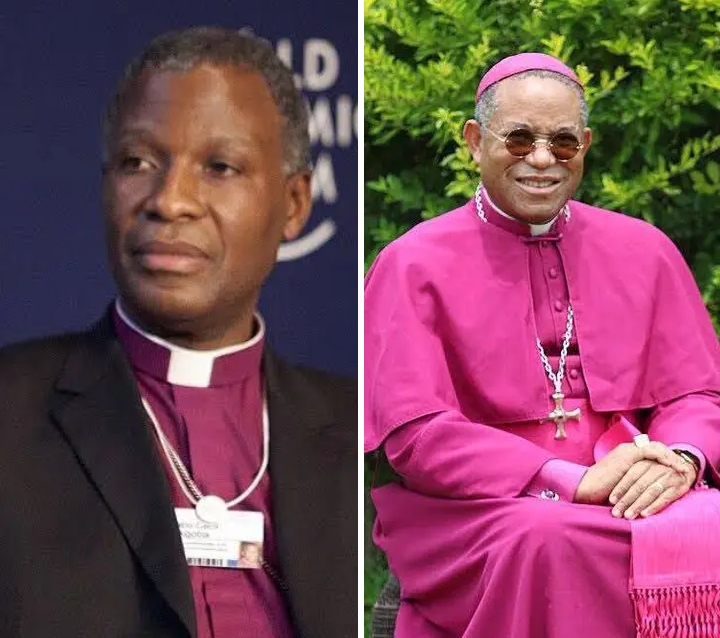
Archbishop Makgoba Calls for Prayers Over Bishop Mwamba's Detention
Anglican Archbishop Thabo Makgoba of Southern Africa issued a statement expressing deep disturbance over the detention of Bishop Trevor Mwamba and an unspecified number of other individuals in Zambia following the country's disputed election. The Archbishop's statement, which also called for prayers for Zambia and emphasized healing, reconciliation, and unity, highlights growing international concern over the human rights situation in the country during a period of political tension. The specific reasons for Bishop Mwamba's detention are not detailed in the provided excerpt.
This development carries significant legal and human rights implications for Zambia. The detention of religious leaders and other citizens, particularly in the aftermath of a contentious election, raises serious questions about the adherence to due process, the protection of personal liberty, freedom of assembly, and freedom of expression, all of which are enshrined in the Zambian Constitution. International attention from prominent religious figures like Archbishop Makgoba can exert considerable moral and diplomatic pressure on the Zambian government to ensure transparency in legal processes and uphold human rights standards. For legal practitioners, this situation underscores the critical importance of monitoring arbitrary detentions and ensuring that all detainees have immediate access to legal representation.
The legal context for such detentions is primarily found in the Zambian Constitution, particularly Part III, which guarantees fundamental rights and freedoms. Article 13 protects personal liberty, stipulating that no person shall be deprived of their liberty save in accordance with the law. Article 19 guarantees freedom of conscience, while Article 21 protects freedom of assembly and association. Any detention must be lawful, meaning it must be based on a legitimate arrest and the detainee must be promptly brought before a court. The Public Order Act (Chapter 113 of the Laws of Zambia) regulates public gatherings, but its application must not infringe upon constitutional rights. The Zambian courts, including the High Court and subordinate courts, have the power to review the legality of detentions through mechanisms such as habeas corpus. The involvement of international religious bodies also brings into focus Zambia's obligations under international human rights instruments.
The key parties involved include Bishop Trevor Mwamba and other unnamed detained individuals, Anglican Archbishop Thabo Makgoba and the Anglican Church of Southern Africa, and the Zambian State, which is responsible for the detentions. The excerpt does not specify the detaining authority or any charges laid. Legal professionals, particularly those specializing in human rights and criminal defense, should remain vigilant in monitoring these detentions. It is imperative to ensure that due process is strictly followed, that detainees have unhindered access to legal counsel, and that any charges brought are legitimate and not politically motivated. This situation serves as a crucial reminder for civil society organizations and legal aid providers to be prepared to offer assistance to those whose rights may be compromised during periods of political unrest. The international scrutiny implies that any legal proceedings will be closely observed for fairness and adherence to both national and international legal standards.
How does this affect you?
Get an AI analysis of this article grounded in your jurisdictions, practice areas, and any policy documents you've uploaded to Wansom.
Finish Reading the Full Story and the Expert Analysis.
Wansom is AI and can make mistakes.