
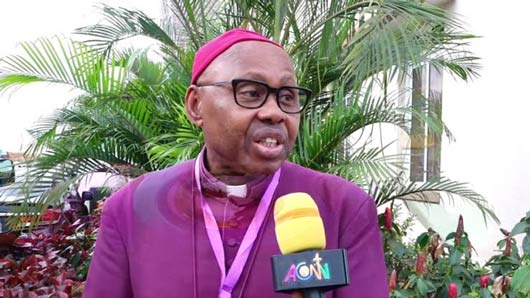
Archbishop Ibezim Withdraws Ndukuba Suit, Ending Suspension Challenge
Summary
- Archbishop Alexander Ibezim has withdrawn his lawsuit against Primate Henry Ndukuba.
- The lawsuit challenged a six-month suspension imposed on Ibezim by Ndukuba.
- The suspension was due to allegations concerning Ibezim's administration, including the alleged sale of church land.
- The withdrawal aims "to pave the way for amicable settlement" of the dispute.
Legal Action Withdrawn
The decision to withdraw the Alexander Ibezim suspension lawsuit was explicitly made "to pave the way for amicable settlement," according to reports.
Archbishop Alexander Ibezim, who holds the dual roles of suspended Bishop of Awka Diocese and Archbishop of the Province of the Niger within the Anglican Communion, has taken the significant step of formally withdrawing the legal action he initiated against Primate Henry Ndukuba. This pivotal development marks a potential turning point in what has been a high-profile Anglican Communion legal dispute. The lawsuit had been specifically filed to contest a six-month suspension that Primate Ndukuba, who serves as the leader of the Church of Nigeria (Anglican Communion), had previously imposed upon Archbishop Ibezim. The withdrawal of the Alexander Ibezim suspension lawsuit is a notable event in the ongoing ecclesiastical proceedings.
Genesis of the Conflict
The origins of this ecclesiastical conflict trace back to a six-month suspension imposed upon Archbishop Ibezim by Primate Ndukuba. This disciplinary measure was a direct consequence of various allegations that had surfaced concerning Archbishop Ibezim's administrative conduct and oversight within his diocese. Among the most serious accusations leveled against him was the alleged sale of church land, a sensitive issue that frequently ignites significant internal scrutiny and can lead to profound disagreements within religious organizations. The Awka Diocese church land dispute, therefore, became a central point of contention.
These administrative allegations and the subsequent suspension prompted Archbishop Ibezim to seek redress through the legal system, initiating the lawsuit to challenge the Primate's decision. By doing so, an internal matter typically governed by Nigeria ecclesiastical law was brought into the public legal arena, highlighting the depth of the disagreements. The legal challenge aimed to overturn the suspension, signaling a firm disagreement with the disciplinary action taken by the Primate and escalating the internal church dispute to a formal legal confrontation.
Implications for Resolution and Ecclesiastical Law
The withdrawal of the lawsuit by Archbishop Ibezim against Primate Ndukuba signifies a crucial shift in the approach to resolving this Anglican Communion legal dispute. By opting to step back from litigation, the involved parties are indicating a willingness to engage in direct discussions aimed at achieving a Primate Henry Ndukuba settlement. This strategic choice aligns with the long-standing principles often favored by religious institutions, where the preservation of institutional harmony, the integrity of the faith, and the resolution of internal conflicts through spiritual and communal means are often prioritized over adversarial legal processes.
This development could potentially establish a significant precedent for how similar internal conflicts within religious bodies across Nigeria are managed in the future. It underscores the strategic utility of withdrawing legal challenges to facilitate alternative dispute resolution, thereby potentially avoiding prolonged and costly court battles. The explicit focus on an "amicable settlement" suggests a collective desire to find common ground, heal divisions, and restore order within the church, rather than allowing the judicial system to impose an external resolution. This move highlights the evolving landscape of Nigeria ecclesiastical law and the increasing emphasis on internal conflict resolution mechanisms.
Practical Implications
This development signals a shift from litigation to potential alternative dispute resolution (ADR) in a high-profile ecclesiastical dispute. Lawyers advising religious institutions or individuals in similar internal conflicts should note the strategic use of suit withdrawal to facilitate amicable settlement discussions, potentially avoiding prolonged court battles and preserving institutional harmony.
Source
How does this affect you?
Get an AI analysis of this article grounded in your jurisdictions, practice areas, and any policy documents you've uploaded to Wansom.
Finish Reading the Full Story and the Expert Analysis.
Get the latest legal & regulatory intelligence in Nigeria
Wansom is AI and can make mistakes.