
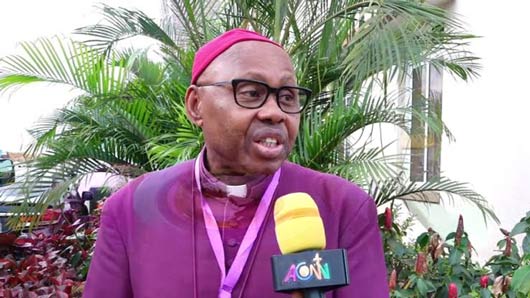
Archbishop Ibezim: Anambra High Court Hears Anglican Suspension Challenge
Summary
- Archbishop Alexander Chibuzo Ibezim has initiated a lawsuit in the Anambra State High Court.
- The legal action seeks to restrain the Primate and Dean of the Church of Nigeria (Anglican Communion) from suspending him.
- Archbishop Ibezim asserts that no formal charges have been brought against him, and no trial has taken place.
- The suit challenges an alleged suspension threat, citing a lack of due process in the church's internal procedures.
Judicial Intervention in Church Governance
The intervention of the Anambra State High Court in this matter underscores the judiciary's role in ensuring that even autonomous religious bodies do not act arbitrarily, especially when such actions could significantly impact an individual's rights or standing within the organization.
Most Reverend Alexander Chibuzo Ibezim, who holds the esteemed positions of Archbishop of the Province of the Niger and Bishop of the Diocese of Awka, has initiated legal proceedings at the High Court of Anambra State. His action seeks a court order to prevent the Primate of the Church of Nigeria (Anglican Communion), Most Reverend Henry C. Ndukuba, and the Church's Dean, Most Reverend Blessing [...], from taking certain actions against him. The core of Archbishop Ibezim's legal challenge centers on an alleged threat of suspension, which he contends is being pursued without adherence to established disciplinary protocols.
The Archbishop's petition to the Anambra State High Court explicitly states that he has not been formally charged with any offense, nor has any trial or disciplinary hearing taken place concerning the purported grounds for his suspension. This assertion forms the bedrock of his argument, suggesting a fundamental lack of due process in the internal ecclesiastical proceedings. The lawsuit aims to secure an injunction that would legally bar the named church leaders from proceeding with any suspension until proper procedures are followed.
The Principle of Due Process in Ecclesiastical Disputes
This legal challenge by Archbishop Ibezim brings into sharp focus the intricate relationship between internal church governance and the broader legal framework governing due process. While religious organizations typically operate under their own ecclesiastical laws and disciplinary codes, courts in Nigeria, as in many jurisdictions, retain the authority to review whether these internal processes adhere to fundamental principles of fairness and natural justice. The absence of formal charges and a trial, as alleged by Archbishop Ibezim, directly implicates these principles, suggesting a potential bypass of established procedural safeguards.
The intervention of the Anambra State High Court in this matter underscores the judiciary's role in ensuring that even autonomous religious bodies do not act arbitrarily, especially when such actions could significantly impact an individual's rights or standing within the organization. This case could serve as an important precedent regarding the extent to which secular courts will scrutinize the internal disciplinary actions of religious institutions, particularly when allegations of procedural irregularities, such as a lack of formal accusation or trial, are raised. It highlights the expectation that even within church governance, due process must be observed.
Implications for Church Autonomy and Legal Oversight
The lawsuit filed by Archbishop Alexander Chibuzo Ibezim carries significant implications for the Church of Nigeria Anglican Communion and other religious organizations across the nation. It raises critical questions about the balance between the inherent autonomy of religious institutions to manage their internal affairs and the overarching legal requirement for fair administrative processes. Should the court rule in favor of Archbishop Ibezim, it would reinforce the principle that internal disciplinary measures, even those rooted in ecclesiastical law, are subject to judicial oversight to ensure procedural fairness.
This dispute could compel religious bodies to meticulously review and adhere to their own established disciplinary procedures, ensuring that all members, regardless of their rank, are afforded the right to be formally charged and tried before any punitive action, such as suspension, is taken. The outcome will be closely watched by legal practitioners advising religious organizations, as it will further define the boundaries of judicial intervention in what are often considered purely spiritual or internal matters. The case emphasizes that claims of "no charge" and "no trial" can indeed trigger legal action, potentially halting church disciplinary processes until judicial review is complete.
Practical Implications
This case highlights the judicial oversight of internal disciplinary actions within religious organizations, particularly concerning due process. Lawyers advising religious bodies or individuals within them should note the potential for courts to intervene when procedural fairness is questioned, even in matters of ecclesiastical governance.
Source
How does this affect you?
Get an AI analysis of this article grounded in your jurisdictions, practice areas, and any policy documents you've uploaded to Wansom.
Finish Reading the Full Story and the Expert Analysis.
Get the latest legal & regulatory intelligence in Nigeria
Wansom is AI and can make mistakes.