
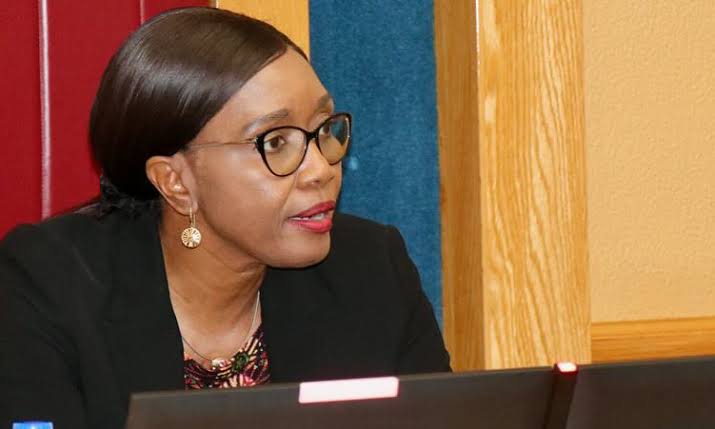
AR Calls For Namibia Speaker Removal: Cites Abuse Of Authority
Summary
- Affirmative Repositioning (AR) has called for the immediate removal of National Assembly Speaker Saara Kuugongelwa-Amadhila.
- AR accused Speaker Kuugongelwa-Amadhila of undermining the dignity and proper functioning of parliament.
- The political organization also alleged that she treats the National Assembly as a personal space.
- A further accusation from AR states that the Speaker has abused the authority attached to her position.
- These demands and accusations were made in a statement issued by AR on Tuesday.
Demand for Leadership Change in Namibia's Parliament
The demand for the Namibia National Assembly speaker removal, coupled with the specific accusations made by Affirmative Repositioning, signals potential political instability and raises critical questions about the health of legislative processes in the country.
The political organization Affirmative Repositioning (AR) has formally demanded the immediate removal of Saara Kuugongelwa-Amadhila from her position as Speaker of Namibia's National Assembly. This significant call for Namibia Speaker removal was articulated in a public statement released by the group on Tuesday.
AR's primary contention centers on allegations that Speaker Kuugongelwa-Amadhila has compromised the fundamental principles governing the legislative body. Specifically, the group accuses her of undermining both the inherent dignity of the parliament and its capacity for proper, impartial functioning. Such accusations against a high-ranking official like Saara Kuugongelwa-Amadhila regarding her conduct in parliament underscore a serious challenge to the perceived integrity of the institution.
Allegations of Misconduct and Authority Abuse
Further detailing their grievances, Affirmative Repositioning Kuugongelwa-Amadhila explicitly charged the Speaker with treating the National Assembly not as a public institution, but rather as if it were her personal domain. This particular accusation suggests a profound disregard for the collective and representative nature of parliamentary proceedings, implying a lack of respect for established protocols, democratic norms, and the diverse voices within the legislative chamber. Such a perception could significantly undermine the credibility of the Speaker's office.
The organization also leveled a direct accusation of abuse of authority Namibia parliament against Speaker Kuugongelwa-Amadhila. This charge implies that the powers and privileges inherent in her leadership role have been improperly exercised, potentially to the detriment of fair debate, legislative process, or the rights of other members. These allegations, which touch upon the very essence of parliamentary conduct, if substantiated, could significantly erode public trust in the impartiality and fairness of parliamentary leadership, posing a substantial parliamentary integrity Namibia challenge and potentially impacting the legislative agenda.
Broader Implications for Namibian Governance
The demand for the Namibia National Assembly speaker removal, coupled with the specific accusations made by Affirmative Repositioning, signals potential political instability and raises critical questions about the health of legislative processes in the country. When a prominent political movement formally challenges the conduct of the parliamentary head, it often reflects deeper concerns within the political landscape regarding governance standards, accountability, and the proper functioning of democratic institutions. This situation could lead to increased scrutiny of parliamentary procedures and leadership roles.
This development highlights the ongoing scrutiny faced by public officials and the imperative of maintaining perceived neutrality and strict adherence to institutional norms, particularly within legislative bodies that serve as cornerstones of democratic governance. Legal professionals advising on public law or government relations would find this situation noteworthy, as challenges to parliamentary integrity Namibia challenge could foreshadow shifts in legislative dynamics, potential policy changes, or even broader political realignments. The allegations of undermining dignity and abusing authority, therefore, extend beyond individual conduct to touch upon the foundational principles of democratic governance and the stability of the nation's political framework.
Practical Implications
This development highlights potential political instability and challenges to parliamentary integrity in Namibia, which legal professionals advising on public law or government relations should monitor for potential impacts on legislative processes or future policy changes.
Source
How does this affect you?
Get an AI analysis of this article grounded in your jurisdictions, practice areas, and any policy documents you've uploaded to Wansom.
Finish Reading the Full Story and the Expert Analysis.
Get the latest legal & regulatory intelligence in Namibia
Wansom is AI and can make mistakes.