
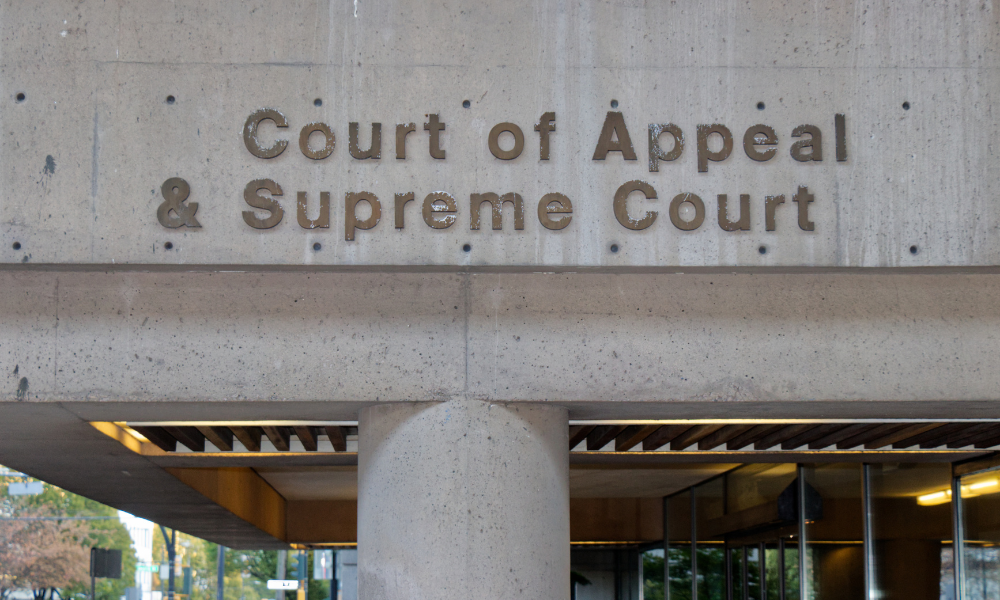
BCSC: Antepyan-Ruckenstein v Cadili BCSC Malpractice Action Dismissed
Summary
- The British Columbia Supreme Court dismissed a medical malpractice claim against an oral maxillofacial surgeon regarding jaw surgery for obstructive sleep apnea.
- The plaintiff failed to prove the surgeon breached the standard of care concerning surgical technique or planning, or that informed consent was not obtained.
- The court found no causal link between the surgeon's treatment and the plaintiff's alleged new or aggravated symptoms.
- The plaintiff's pre-existing symptoms, lack of expert witnesses, and subsequent surgeries complicated the causation argument.
- The ruling emphasizes the high evidentiary bar for proving breach of standard of care, lack of informed consent, and causation in BC medical malpractice cases.
Case Overview: Jaw Surgery Malpractice Claim Dismissed
To succeed, claimants must not only demonstrate a breach of the maxillofacial surgery standard of care but also definitively prove a direct causal link between that breach and the alleged injuries.
The British Columbia Supreme Court recently dismissed a medical malpractice action, Antepyan-Ruckenstein v Cadili, 2026 BCSC 1715, brought by a pharmacist against an oral maxillofacial surgeon and his corporation. The plaintiff, a Coquitlam resident, alleged that jaw surgery performed in June 2022 at UBC Hospital to address his obstructive sleep apnea (OSA) symptoms constituted malpractice. He had been diagnosed with OSA in 2022, though he believed his fatigue and sleep apnea issues might have originated from premolar extractions during his childhood, progressively worsening to the point of preventing him from working.
The core of the plaintiff's claim centered on allegations that the surgeon's treatment deviated from an agreed-upon plan, breached the standard of care, and lacked proper informed consent. Despite these assertions, the court ultimately found insufficient evidence to support the plaintiff's claims, leading to the dismissal of the entire action. This ruling underscores the significant evidentiary hurdles plaintiffs face in BC medical malpractice causation cases, particularly those involving complex surgical procedures like obstructive sleep apnea surgery malpractice claims.
Court Rejects Claims on Surgical Technique and Informed Consent
The plaintiff advanced several specific contentions regarding the surgeon's conduct. He claimed the defendant breached the maxillofacial surgery standard of care by performing a straight advancement of the jaws with a Genioplasty Advancement (GTA) instead of a counterclockwise movement during the Maxillomandibular Advancement (MMA) procedure. Furthermore, the plaintiff asserted that the surgeon failed to meet the standard of care for surgical planning and execution by utilizing two-dimensional planning models and stents, rather than the more advanced three-dimensional virtual modeling he believed was promised.
However, the Supreme Court found no evidence of a specific contractual agreement for the use of a counterclockwise movement during the MMA. Similarly, the court determined there was no representation by the doctor that he would employ virtual 3D modeling for planning or executing the surgery. Crucially, the court also concluded that the plaintiff failed to establish a lack of informed consent for the MMA or GTA, acknowledging that the known risks of the treatment were adequately discussed at the time. The court's factual findings indicated that the surgeon performed the procedure precisely as discussed and agreed upon with the patient, directly refuting the plaintiff's allegation that a different treatment was administered. Consequently, the court rejected the plaintiff's battery claim, which was predicated on the assertion of an unauthorized procedure.
Failure to Prove Causation and Negligent Misrepresentation
Beyond the specifics of surgical technique and consent, a fundamental aspect of the court's decision rested on the plaintiff's failure to prove causation. The court found no medical, temporal, or other connection between the oral maxillofacial surgeon's treatment and any new or aggravated symptoms associated with the plaintiff's obstructive sleep apnea. The plaintiff had alleged that the successful surgery caused or worsened his sleep interruptions, fatigue, headaches, and slight cognitive impairment, among other injuries.
However, the court noted that the plaintiff's OSA symptoms clearly predated the surgical intervention. Furthermore, the plaintiff did not present any witnesses to elucidate the significance of the extensive clinical records submitted as evidence. The court also highlighted that the plaintiff underwent three additional surgical procedures subsequent to the one performed by the defendant, which could have potentially influenced his pre-existing condition. These factors collectively contributed to the court's conclusion that the plaintiff could not establish that the defendant's actions were the cause of his alleged post-operative issues. The court also dismissed a negligent misrepresentation claim, noting the plaintiff chose the defendant based on timing and cost, not representations about the doctor's experience.
Implications for Medical Malpractice Litigation in BC
The ruling in Antepyan-Ruckenstein v Cadili serves as a significant reminder of the stringent evidentiary burden placed on plaintiffs in British Columbia medical malpractice cases. To succeed, claimants must not only demonstrate a breach of the maxillofacial surgery standard of care but also definitively prove a direct causal link between that breach and the alleged injuries. The court's detailed analysis of the plaintiff's claims regarding specific surgical techniques, planning methods, and informed consent for jaw surgery underscores the necessity of clear, documented evidence for each element.
This case highlights that mere dissatisfaction with an outcome or a belief about a different, preferred technique is insufficient without concrete proof of a deviation from accepted professional standards or a failure to properly inform the patient of risks. For legal practitioners advising plaintiffs in BC medical malpractice causation cases, this decision reinforces the critical importance of robust expert testimony and meticulous documentation to establish both a breach of the standard of care and a direct causal nexus to the patient's harm.
Practical Implications
Lawyers advising plaintiffs in medical malpractice cases in British Columbia should note the high evidentiary bar for proving causation, breach of standard of care, and lack of informed consent, particularly concerning specific surgical techniques and planning. For medical professionals, it underscores the importance of clear documentation of patient discussions and consent regarding surgical plans and known risks.
Source
How does this affect you?
Get an AI analysis of this article grounded in your jurisdictions, practice areas, and any policy documents you've uploaded to Wansom.
Finish Reading the Full Story and the Expert Analysis.
Get the latest legal & regulatory intelligence in Canada
Wansom is AI and can make mistakes.