
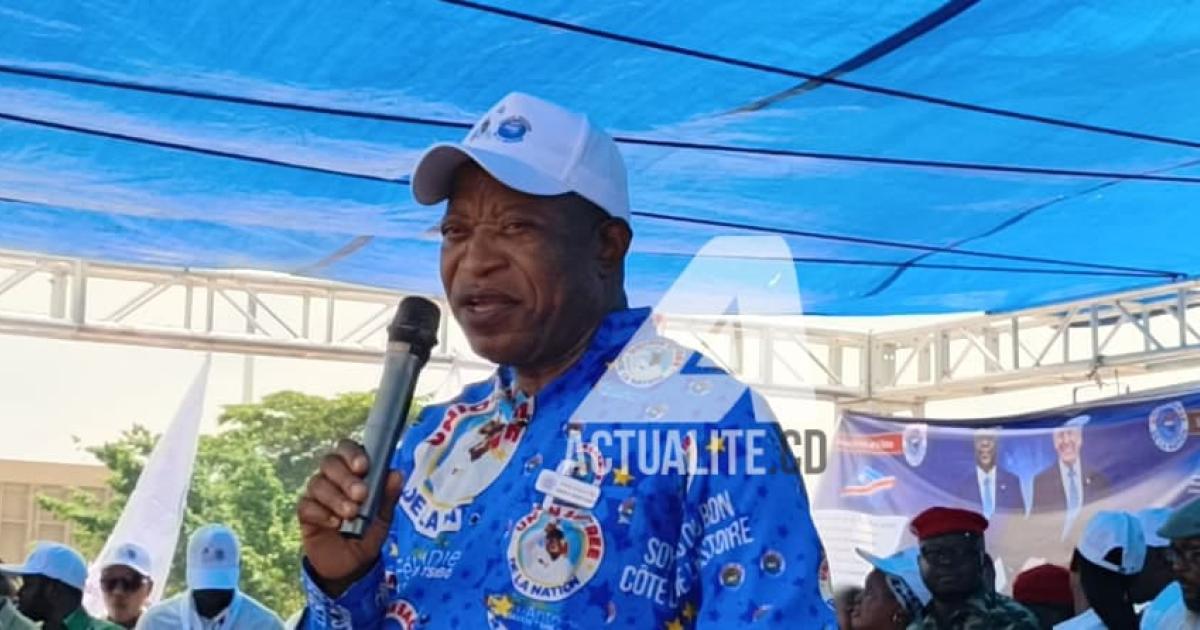
André Mbata: RDC Loi Référendum Permits New Constitution
Summary
- André Mbata, First Vice President of the National Assembly and Permanent Secretary of the Sacred Union of the Nation, commented on the referendum law in the Democratic Republic of Congo.
- Mbata indicated that the law creates a pathway for the adoption of a new Constitution in the République démocratique du Congo.
- He clarified that the referendum law does not mandate the implementation of a new constitutional framework.
- This development suggests that a new Constitution is now legally possible but not obligatory for the RDC.
Political Commentary on Constitutional Reform
However, Mbata was careful to qualify his statement, emphasizing that while the loi référendaire RDC facilitates such a change, it does not, by its very nature, mandate or impose the creation of a new constitutional document.
André Mbata, who serves as the First Vice President of the National Assembly and Permanent Secretary of the Sacred Union of the Nation in the Democratic Republic of Congo, recently offered his perspective on the nation's referendum law. Mbata articulated that this legislative instrument now provides a viable pathway for the potential adoption of a new Constitution within the République démocratique du Congo. His comments underscore the current political discourse surrounding fundamental legal frameworks in the country.
However, Mbata was careful to qualify his statement, emphasizing that while the loi référendaire RDC facilitates such a change, it does not, by its very nature, mandate or impose the creation of a new constitutional document. This distinction is crucial, suggesting that the law opens a door for constitutional evolution rather than forcing it upon the nation. The remarks from a key figure within the ruling political bloc highlight the ongoing consideration of significant legal reforms.
The Role of Referendum Legislation
The existence of a robust loi référendaire RDC is fundamental to any process involving significant constitutional amendments or the drafting of an entirely new Constitution. Such a law typically outlines the procedures, conditions, and mechanisms through which citizens can directly vote on proposed changes to their nation's foundational legal text. Mbata's assessment points to the operational readiness of this legal framework to support a potential référendum constitutionnel RDC.
This legislative tool is designed to ensure popular sovereignty in matters of national governance, allowing the populace to have the final say on profound shifts in the country's legal and political structure. The First Vice President of the National Assembly's comments therefore signal that the procedural groundwork is in place should the political will emerge to pursue a new Constitution for the Democratic Republic of Congo, making the process legally feasible without being compulsory.
Implications for Governance and Stability
The possibility of a new Constitution, as framed by André Mbata, carries substantial implications for the future governance and stability of the République démocratique du Congo. A new constitutional framework could redefine the powers of various state institutions, alter the rights and responsibilities of citizens, and fundamentally reshape the political landscape. Mbata's clarification that the referendum law merely enables, rather than compels, this outcome suggests that any move towards a new Constitution would be a deliberate political choice, subject to extensive public debate and political consensus.
For legal practitioners and political observers, the statement from the Permanent Secretary of the Sacred Union of the Nation indicates a critical juncture where the nation could embark on a path of significant legal transformation. The existence of a clear legal mechanism for such a change, without it being an automatic trigger, underscores the importance of political leadership in determining the country's constitutional trajectory. The emphasis on the law not imposing a new Constitution implies that the ultimate decision remains firmly within the political sphere, requiring careful consideration of its necessity and broad public support before any référendum constitutionnel RDC is initiated. This nuanced position highlights the delicate balance between legislative enablement and political discretion in matters of national constitutional reform, signaling that while the tools are available, the decision to use them rests on broader political will and public engagement.
Practical Implications
This development signals a potential future shift in the constitutional framework of the Democratic Republic of Congo. Lawyers should monitor legislative developments concerning the referendum law and any subsequent constitutional drafting processes to anticipate changes in legal and regulatory compliance requirements.
Source
Source: Original reporting via PMaki.
How does this affect you?
Get an AI analysis of this article grounded in your jurisdictions, practice areas, and any policy documents you've uploaded to Wansom.
Finish Reading the Full Story and the Expert Analysis.
Get the latest legal & regulatory intelligence in DR Congo
Wansom is AI and can make mistakes.