
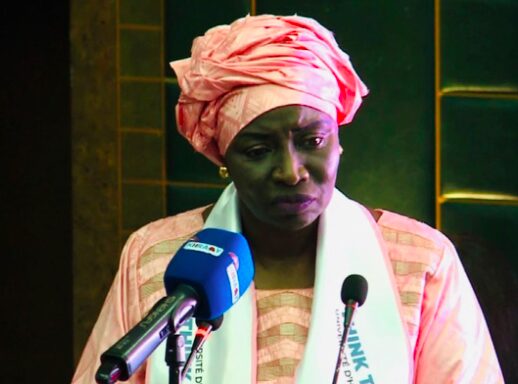
Aminata Touré: Rejet Budget Commission Sénégal Raises Concerns
Summary
- Aminata Touré, High Representative of the President of the Republic and former Prime Minister, has expressed concern over ministerial budget rejections impacting public services and infrastructure in Senegal.
- A negative vote in a parliamentary commission is distinct from a definitive rejection by the full National Assembly.
- Commission votes alone do not automatically halt public action or project financing.
- Nine projects for 2027 faced rejection at the commission level on November 11 and 12.
- Deputies also questioned the coherence of forecasts with the 2026 rectifying finance law.
Understanding Budgetary Scrutiny in Senegal
For legal professionals advising on public procurement, infrastructure development, or government funding in Senegal, it is imperative to monitor the entire legislative journey.
Aminata Touré, High Representative of the President of the Republic and former Prime Minister, has expressed considerable concern regarding the potential ramifications of ministerial budget rejections on public sector operations across Senegal. Her apprehension specifically targets the funding mechanisms for essential public services and critical infrastructure initiatives, underscoring urgent requirements in vital sectors such as healthcare, education, employment generation, and collective public amenities. This perspective highlights a crucial distinction within the Senegalese legislative framework: the difference between an unfavorable vote commission parlementaire Sénégal and a definitive rejection by the full National Assembly.
It is imperative to recognize that these two procedural stages carry distinct implications and do not necessarily yield identical outcomes. While parliamentary commissions are instrumental in scrutinizing draft legislation and providing a forum for deputies to debate governmental proposals, a negative vote at this preliminary stage does not, in isolation, signify a final repudiation of the budget by the entire National Assembly. The ultimate effects of such votes are contingent upon the subsequent phases of the procédure budgétaire Assemblée nationale Sénégal and the eventual decisions rendered by the competent authorities.
The Nuances of Parliamentary Oversight
The legislative process in Senegal mandates a structured approach to budget approval, where parliamentary bodies are empowered to exercise rigorous oversight over the allocation of public funds. Deputies are tasked with ensuring the prudent utilization of state resources and verifying the consistency of proposed expenditures. Conversely, the government bears the responsibility of articulating and securing the financial provisions essential for implementing its policy agenda. This dynamic interaction forms the bedrock of the contrôle parlementaire budget Sénégal.
Reports, including those from Xalima, have drawn attention to Ms. Touré's anxiety concerning the potential impact on public action. However, it is important to clarify that a widespread interruption of public services cannot be automatically inferred solely from votes cast within parliamentary commissions. The comprehensive review process means that initial rejections serve as a critical step in legislative deliberation, rather than an immediate halt to governmental functions or project financing.
Recent Budgetary Challenges and Future Outlook
The issue of rejet budget ministériel Sénégal gained significant prominence recently, particularly on November 11 and 12, when nine proposed projects for the 2027 fiscal year faced rejection at the commission level within the National Assembly. During these specific deliberations, deputies also raised objections concerning the framework of the financial forecasts and their alignment with the loi de finances rectificative 2026 Sénégal. These instances underscore the rigorous scrutiny applied by parliamentarians to governmental financial plans.
The complete rationale behind these votes and their ultimate consequences will become clearer as the parliamentary examination progresses and the official reports from the commissions are made public. For legal professionals advising on public procurement, infrastructure development, or government funding in Senegal, it is imperative to monitor the entire legislative journey. Initial commission rejections are not definitive, and a nuanced understanding of the budget approval stages is essential, as these actions do not automatically impede public action or project financing.
Practical Implications
Lawyers advising on public procurement, infrastructure projects, or government funding in Senegal should note that initial rejections of ministerial budgets by parliamentary commissions are not definitive. It is crucial to monitor the full legislative process, as these rejections do not automatically halt public action or project financing, requiring a nuanced understanding of the budget approval stages.
Source
Source: Original reporting via Xalima.
How does this affect you?
Get an AI analysis of this article grounded in your jurisdictions, practice areas, and any policy documents you've uploaded to Wansom.
Finish Reading the Full Story and the Expert Analysis.
Get the latest legal & regulatory intelligence in Senegal
Wansom is AI and can make mistakes.