
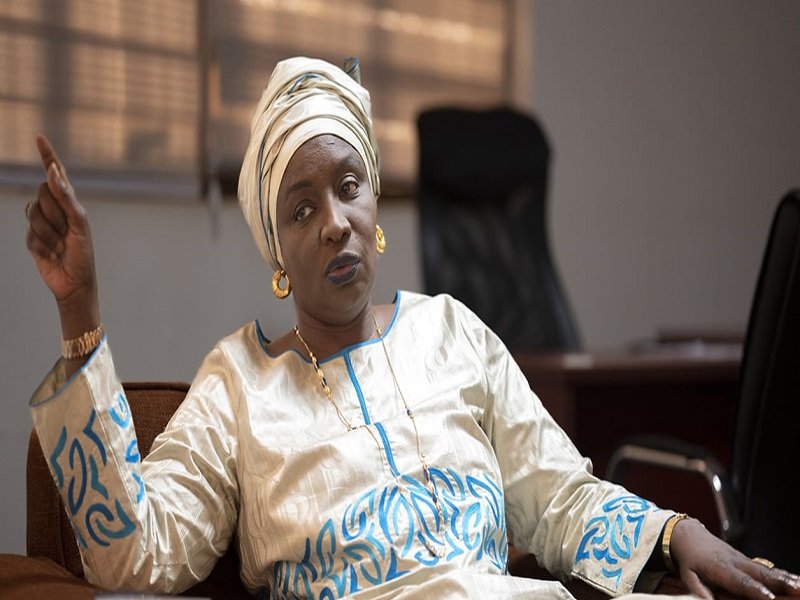
Aminata Touré: Saisine Cour des Comptes, Inspection Générale d’État
Summary
- Aminata Touré, coordinator of the Kiiraay political party, urged that parliamentary inquiry matters be sent to Senegal's competent control bodies.
- She identified the Cour des comptes and the Inspection générale d’État as the legally competent institutions for controlling public funds.
- Touré argued that deputies lack the legal and technical expertise required for financial verification, which demands specialized studies.
- She specifically requested that the case of the fonds Jaam de la Casamance be addressed to these specialized oversight bodies.
- Touré also questioned the transparency within the National Assembly and who would oversee its investigators.
What Happened
In her assessment, Aminata Touré firmly asserted that members of parliament are not endowed with the necessary legal competence or the requisite technical expertise to effectively carry out financial verification missions.
Aminata Touré, who serves as the coordinator for the Kiiraay political party, has publicly called for all matters raised during parliamentary inquiry commission debates to be formally referred to Senegal's legally mandated control institutions. Her demand emphasizes the critical importance of good governance and transparency as foundational elements for the nation's advancement. Touré articulated a clear desire to shield these republican principles from political maneuvering and opportunistic calculations, advocating for a rigorous and impartial approach to the oversight of public funds.
Specifically addressing the control of public finances, Ms. Touré identified the Cour des comptes as the institution legally equipped to undertake such responsibilities. She attributed an identical mandate and function to the Inspection générale d’État, positioning both bodies as the appropriate authorities for scrutinizing the use of state resources. This stance underscores a push for specialized, rather than politically driven, oversight mechanisms in the management of public funds.
Legal and Institutional Framework
In her assessment, Aminata Touré firmly asserted that members of parliament are not endowed with the necessary legal competence or the requisite technical expertise to effectively carry out financial verification missions. She highlighted that a thorough financial audit demands a specialized educational background and professional training, rejecting any notion that such critical oversight could be reduced to mere populism. Touré’s argument posits that each state institution must adhere strictly to its designated role to ensure the overall well-being and proper functioning of the Republic.
This perspective reinforces the distinct roles of the Cour des comptes and the Inspection générale d’État in the framework of Sénégal contrôle fonds publics. The Cour des comptes Sénégal, as an independent judicial body, is tasked with auditing public accounts and ensuring the proper use of public funds, while the Inspection générale d’État compétences involve administrative and financial inspections across state entities. Touré’s intervention, particularly her request for the fonds Jaam de la Casamance audit to be handled by these bodies, underscores a belief in their specific legal authority and technical capacity over parliamentary committees for such complex financial inquiries.
Implications for Public Transparency
The call by Aminata Touré carries significant weight for the ongoing discourse surrounding transparence gestion publique Sénégal. By advocating for the Cour des comptes and the Inspection générale d’État to take charge of these investigations, she is pushing for a more robust and expert-driven approach to accountability. Her remarks suggest a potential deficiency in the current parliamentary oversight process, particularly regarding its capacity for detailed financial scrutiny.
Furthermore, Touré extended her concerns about transparency to the National Assembly itself, raising a pertinent question about who would, in turn, supervise the investigators conducting these inquiries. This query, reported by Rewmi, highlights a broader anxiety about accountability mechanisms within the legislative branch and the need for comprehensive oversight at all levels of government. Her insistence on specialized bodies for the fonds Jaam de la Casamance audit exemplifies a broader demand for rigorous, non-political examination of public spending.
Practical Implications
Lawyers and compliance officers in Senegal should note the reinforced emphasis on the Cour des comptes and Inspection générale d’État as the primary, legally competent bodies for auditing public funds, including specific allocations like the fonds Jaam de la Casamance. This signals a potential increase in scrutiny and the need to understand the investigative powers and processes of these institutions regarding public finance management, rather than relying solely on parliamentary oversight.
Source
Source: Original reporting via Rewmi
How does this affect you?
Get an AI analysis of this article grounded in your jurisdictions, practice areas, and any policy documents you've uploaded to Wansom.
Finish Reading the Full Story and the Expert Analysis.
Get the latest legal & regulatory intelligence in Senegal
Wansom is AI and can make mistakes.