
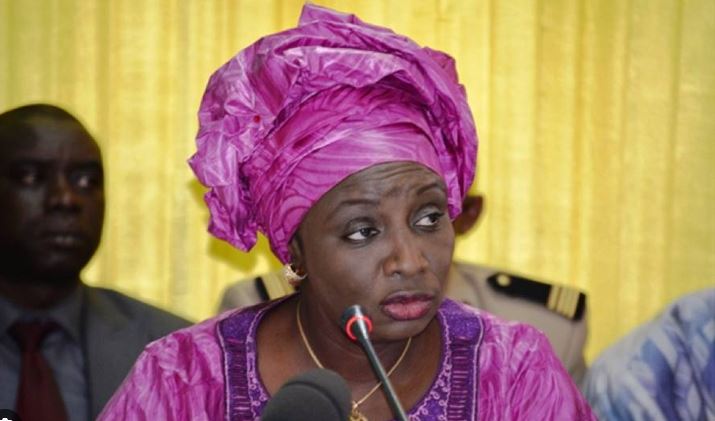
Aminata Touré: Réserves Sur Enquête Fonds Spéciaux Sénégal
Summary
- Former Prime Minister Aminata Touré has voiced reservations regarding a proposed parliamentary inquiry.
- The inquiry, initiated by the PASTEF-Les Patriotes parliamentary group, targets special funds.
- These funds are associated with the Primature, CESE, and HCCT.
- The investigation would cover the period from 2012 to 2026.
- Touré believes the control of public funds falls under specific established mechanisms.
Proposed Inquiry and Initial Reactions
Her comments, grounded in her experience as a former Prime Minister, bring to light important considerations about the institutional division of labor in financial oversight.
The parliamentary group PASTEF-Les Patriotes has put forward a resolution advocating for the establishment of a special commission of inquiry. This proposed parliamentary body would be tasked with scrutinizing the utilization of special funds allocated to the Primature, the Economic, Social and Environmental Council (CESE), and the High Council of Territorial Collectivities (HCCT). The scope of this investigation is extensive, covering financial activities from 2012 up to 2026, aiming to provide a comprehensive overview of how these specific public resources have been managed over more than a decade.
However, this initiative has already drawn significant commentary, notably from former Prime Minister Aminata Touré. She has publicly voiced her reservations regarding the proposed parliamentary inquiry into these special funds. Her perspective, as a seasoned political figure, adds a layer of critical assessment to the resolution put forth by PASTEF-Les Patriotes, suggesting potential complexities or alternative approaches to ensuring accountability in public finance.
Legal and Institutional Context
The call for a commission d'enquête parlementaire fonds spéciaux targets key governmental and advisory bodies within the Senegalese administrative structure. The Primature, as the office of the Prime Minister, plays a central role in executive governance. The CESE serves as a consultative assembly, advising on economic, social, and environmental policies, while the HCCT is dedicated to matters concerning local governance and territorial development. Investigating the special funds associated with these entities implies a deep dive into various facets of state expenditure and resource allocation.
The period under review, spanning from 2012 to 2026, encompasses multiple presidential mandates and governmental compositions, making the inquiry into Aminata Touré fonds spéciaux 2012-2026 particularly broad. Such an extensive timeframe suggests an intent to examine patterns and practices in the management of these funds across different political eras, rather than focusing on a single administration. The very nature of "special funds" often implies a degree of discretionary spending, which can attract heightened scrutiny regarding transparency and proper use.
Aminata Touré's Reservations and Oversight Principles
Aminata Touré, a former head of government, has expressed her reservations concerning the proposed parliamentary inquiry into the special funds of the Primature, CESE, and HCCT. Her stance underscores a fundamental principle regarding the oversight of state finances. She maintains that the control of the proper use of public funds falls under specific established mechanisms and authorities. This perspective suggests a belief that existing frameworks or designated institutions are already equipped or better suited to perform such audits and ensure financial probity.
The former Prime Minister's comments highlight a potential debate over the most effective and appropriate channels for ensuring accountability in the management of public resources. While a parliamentary inquiry offers a direct legislative oversight mechanism, Touré's reservations imply a preference for, or confidence in, other forms of financial scrutiny. This divergence of opinion on how best to achieve contrôle deniers publics Sénégal adds a significant dimension to the ongoing discussion surrounding the PASTEF-Les Patriotes fonds spéciaux resolution.
Why It Matters
The proposal for a parliamentary inquiry into the special funds of the Primature, CESE, and HCCT, and the subsequent Aminata Touré réserves enquête fonds spéciaux Sénégal, carries substantial weight for public governance and transparency in the nation. The very discussion around establishing such a commission signals a heightened demand for accountability concerning how public money is utilized, particularly within high-level government institutions. This push for scrutiny reflects a broader public interest in ensuring that all state expenditures, including those from special funds, are conducted with utmost integrity and in adherence to established financial regulations.
The involvement of a prominent political figure like Aminata Touré in expressing reservations further elevates the profile of this debate. Her comments, grounded in her experience as a former Prime Minister, bring to light important considerations about the institutional division of labor in financial oversight. Ultimately, the outcome of this resolution and the subsequent discourse will shape perceptions of governmental transparency and the robustness of accountability mechanisms for public funds in Senegal for years to come.
Practical Implications
Lawyers advising public entities or those involved in public procurement in Senegal should monitor developments regarding this proposed parliamentary inquiry into special funds. While reservations exist, the initiative signals potential future scrutiny, audits, or new compliance requirements for public financial management within the Primature, CESE, and HCCT.
Source
Source: Reporting from Senegalese media.
How does this affect you?
Get an AI analysis of this article grounded in your jurisdictions, practice areas, and any policy documents you've uploaded to Wansom.
Finish Reading the Full Story and the Expert Analysis.
Get the latest legal & regulatory intelligence in Senegal
Wansom is AI and can make mistakes.