
Allahabad High Court: Illegal Detention Cannot Be Cured by Later Arrest, Remand
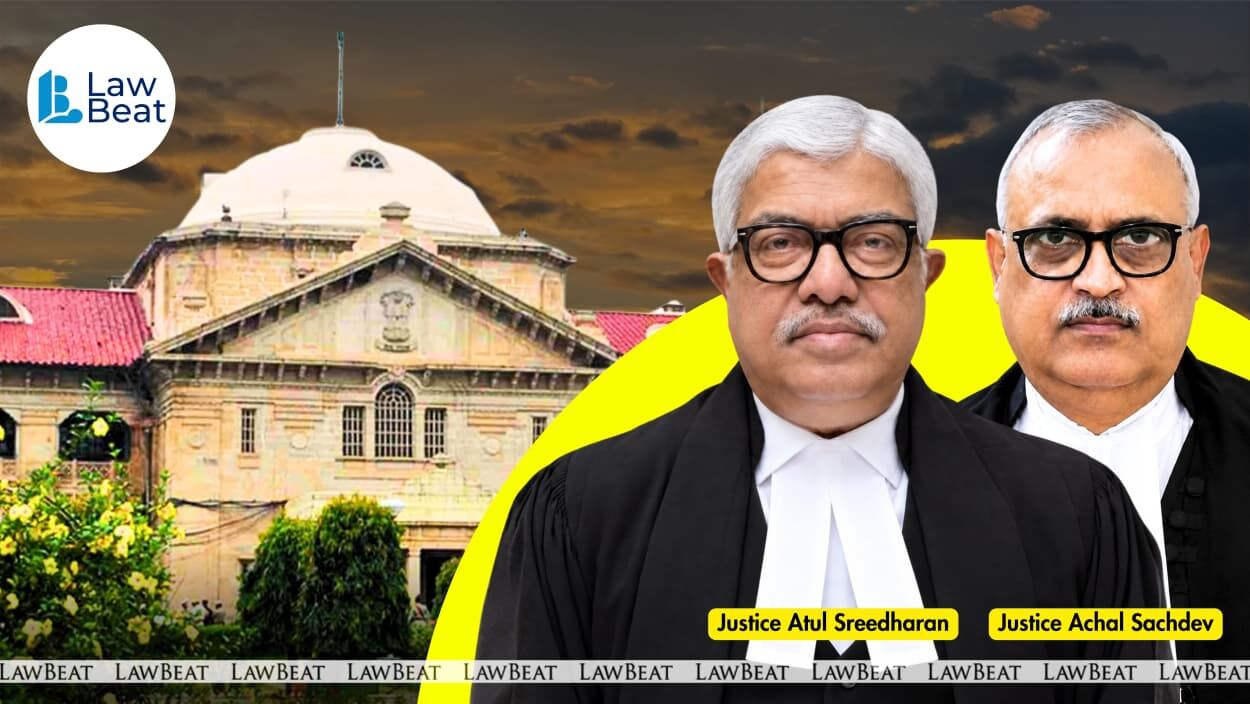
Home / News updates Police Cannot ‘Forget’ To Record Custody; Later Formal Arrest, Remand Cannot Cure Illegal Detention: Allahabad HC X Allahabad High Court says later arrest cannot cure illegal detention. Allahabad High Court applies the Fruit of the Poisonous Tree doctrine to hold that illegal detention violating Articles 21 and 22 cannot be cured by subsequent arrest and remand under BNSS. Allahabad High Court has held that a subsequent formal arrest and judicial remand cannot legitimise an initial illegal detention , applying the “Fruit of the Poisonous Tree” doctrine to constitutional protections under Article 21 (protection of life and personal liberty) and Article 22 (protection against arrest and detention in certain cases). The American ‘Fruit of the Poisonous Tree’ doctrine ordinarily concerns the exclusion of evidence obtained through an unlawful search or other constitutional violation. It means that if the original action is unlawful, any subsequent action flowing directly from that illegality may also be treated as tainted. The bench of Justices Atul Sreedharan and Achal Sachdev noted that Indian courts have not adopted the Fruit of the Poisonous Tree doctrine as a general rule of evidence, but it was using the doctrine in a different context of constitutional rights relating to detention and arrest. Court relied upon the Supreme Court's 2026 judgment in Jaskaran Jeet Singh Deol v. State of Punjab , particularly its holding that where an arrest itself is unconstitutional and violates Article 22(1), subsequent orders of remand are also vitiated and later filing of a chargesheet or taking of cognisance cannot validate the unconstitutional arrest. "This Court extends the same principal and holds that where the detention in police custody itself is violative of Art 21 and 22, the subsequent arrest, even where valid grounds of arrest are provided, and the remand proceedings before the Magistrate may otherwise appear legitimate, all stand vitiated by the application of the Fruit of the Poisonous Tree doctrine as actions subsequent to an illegal detention are also per se illegal and violative of Art 21 and 22 of the Constitution and that illegality perpetuates in all subsequent actions and proceedings," the bench said. The court was dealing with a habeas corpus petition filed by one Ravi Chaurasiya and another raising the grievance of illegal detention by the police. Senior Advocate Imran Ullah and Advocates Vineet Vikram and Devesh Kumar Shukla appeared for the petitioner. According to the petitioner, in relation to a case of purchasing property belonging to a gangster under the Gangsters Act, he was taken into police custody by officers of Police Station Soraon, Prayagraj, on September 14, 2026 at about 9 pm from Ayodhya. He was brought to Soraon police station the same day, but no arrest was shown. On September 15, the petitioner's mother went to the police station to ascertain his whereabouts/wellbeing. The habeas corpus petition was filed before the high court on September 15 itself. The following day, September 16, the police formally arrested the petitioner at 10.45 am, entered the arrest in the general diary, medically examined him and produced him before a Magistrate, who remanded him to judicial custody. During the proceedings in the petition, the high court called for the police station's CCTV footage. However, the SHO of Soraon, who was also the Investigating Officer, made a candid admission in his counter-affidavit that the General Diary entry relating to bringing the petitioner to the police station had not been made. The SHO described the omission as an “inadvertent mistake" . Since the police had admitted the relevant lapse, court opined it was no longer necessary to examine the CCTV footage. Court, however, found that the petitioner had effectively remained in police custody without a formal arrest or production before a Magistrate for more than 24 hours. Court's observations Court rejected the SHO's at
How does this affect you?
Get an AI analysis of this article grounded in your jurisdictions, practice areas, and any policy documents you've uploaded to Wansom.
Finish Reading the Full Story and the Expert Analysis.
Get the latest legal & regulatory intelligence in India
Wansom is AI and can make mistakes.