
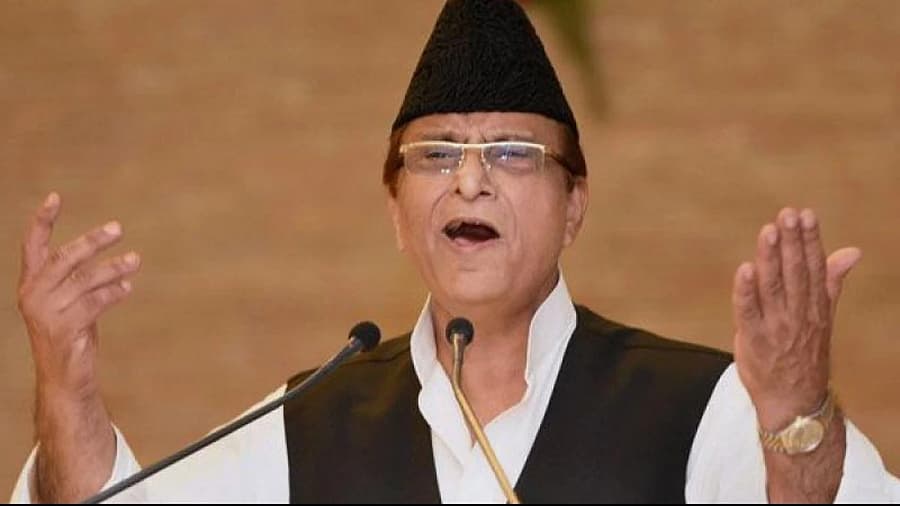
Allahabad High Court: ED Must File Affidavit on Azam Khan Arrest Grounds
Summary
- The Allahabad High Court ordered the Enforcement Directorate to file an affidavit regarding the service of arrest grounds to Mohd Azam Khan.
- The ED claimed it attempted to serve the grounds, but Khan refused, with video evidence supporting this.
- Khan's counsel disputed the ED's claim, stating no video evidence exists.
- Khan was arrested by the ED in a money laundering case immediately after being granted bail in a separate dual PAN card case.
- The money laundering case involves allegations of forced land occupation for Mohammad Ali Jauhar University.
Court Demands Clarification on Arrest Procedure
This development underscores the judiciary's scrutiny of procedural compliance by enforcement agencies like the ED, particularly regarding the mandatory serving of grounds of arrest.
The Allahabad High Court recently directed the Enforcement Directorate (ED) to submit an affidavit clarifying whether it attempted to provide Samajwadi Party leader Mohd Azam Khan with the grounds for his arrest in a money laundering investigation. This directive came from a Division Bench comprising Justice Rajiv Gupta and Justice Devendra Singh, who are overseeing the case titled Mohd Azam Khan v Directorate of Enforcement and 4 Others. The court's order highlights a critical procedural dispute surrounding Khan's detention.
The ED, through Assistant Director Praveen Kumar, asserted that an attempt was made to serve the grounds of arrest to Khan, but he reportedly declined to accept them. The agency further claimed to possess video evidence supporting this assertion. However, counsel representing Khan contested this account, arguing that no video evidence substantiated the ED's submission. Given these conflicting statements, the High Court decided to adjourn the proceedings to the following day for further orders, specifically instructing the ED to formalize its position.
"We are keeping this matter tomorrow. You [ED] file an affidavit. Let it be on record," the Court stated, emphasizing the need for official documentation of the ED's claims. This judicial demand underscores the importance of procedural transparency and accountability, particularly concerning the rights of an individual at the point of arrest. The outcome of the ED's affidavit filing is expected to be crucial in resolving the factual discrepancy.
Background to the Money Laundering Case
Mohd Azam Khan's current legal troubles with the ED stem from a money laundering case that alleges financial irregularities connected to the Mohammad Ali Jauhar University. This investigation centers on accusations that agricultural land belonging to local farmers was forcibly acquired for the university's benefit. The Enforcement Directorate initiated its money laundering proceedings based on these serious allegations, which implicate the prominent political figure.
Khan's detention by the ED occurred immediately after his release from a separate legal matter. He and his son, Abdullah Azam, had been incarcerated in connection with a dual PAN card case. The Allahabad High Court had granted them bail in that particular case on October 29. However, as soon as Azam Khan exited jail on October 31, ED officials took him into custody, signaling the continuation of legal scrutiny against him under different charges.
This sequence of events underscores the persistent legal challenges faced by Khan, transitioning directly from one period of detention to another under the purview of a different investigative agency. The money laundering probe, with its focus on land acquisition and financial impropriety, represents a significant legal battle for the Samajwadi Party leader.
Judicial Scrutiny of ED Powers and Procedure
The Allahabad High Court's insistence on an affidavit from the Enforcement Directorate regarding the service of arrest grounds highlights a significant aspect of judicial oversight concerning the powers of enforcement agencies. The legal framework mandates that individuals being arrested must be informed of the reasons for their detention, a fundamental right that ensures transparency and prevents arbitrary arrests. The conflicting narratives presented by the ED and Azam Khan's legal team regarding this crucial procedural step have prompted the court to seek concrete, sworn evidence.
This development underscores the judiciary's scrutiny of procedural compliance by enforcement agencies like the ED, particularly regarding the mandatory serving of grounds of arrest. The court's demand for the ED to "let it be on record" through an affidavit demonstrates its commitment to verifying adherence to established legal protocols. Such judicial interventions are vital in upholding due process and ensuring that investigative agencies operate within the bounds of the law, especially when exercising powers of arrest and detention.
The resolution of this specific procedural question—whether Azam Khan was properly served with his grounds of arrest—could have broader implications for the legality of his subsequent detention and the ongoing money laundering proceedings. It serves as a reminder that even in high-profile cases, the foundational principles of criminal procedure, including the right to be informed of arrest grounds, remain paramount and subject to rigorous judicial review.
Practical Implications
This development underscores the judiciary's scrutiny of procedural compliance by enforcement agencies like the ED, particularly regarding the mandatory serving of grounds of arrest. Lawyers should advise clients on their right to receive grounds of arrest and be prepared to challenge any procedural lapses by agencies, as such challenges can impact the legality of detention and subsequent proceedings.
Source
How does this affect you?
Get an AI analysis of this article grounded in your jurisdictions, practice areas, and any policy documents you've uploaded to Wansom.
Finish Reading the Full Story and the Expert Analysis.
Get the latest legal & regulatory intelligence in India
Wansom is AI and can make mistakes.