
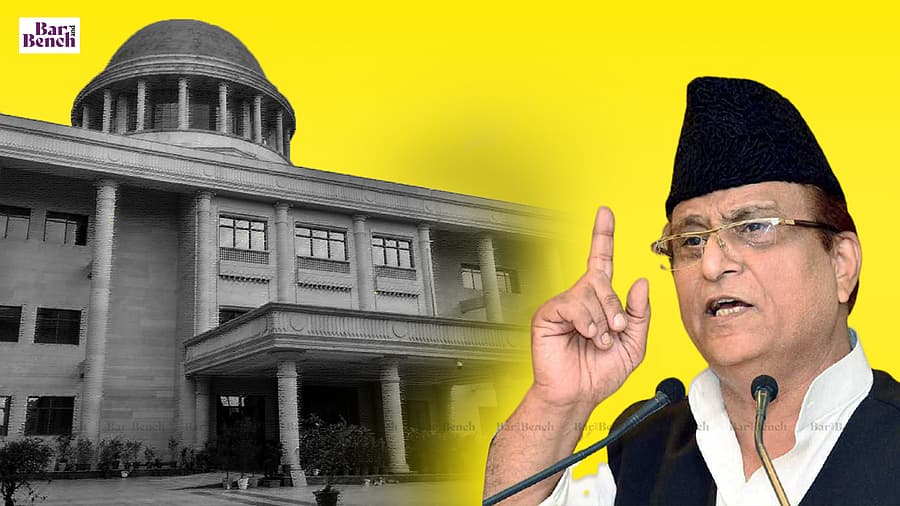
Allahabad High Court: Azam Khan, Son Granted Bail in Dual PAN Case
Summary
- The Allahabad High Court granted bail to Samajwadi Party leader Mohd Azam Khan and his son Abdullah Azam in the dual PAN card case.
- Justice Samit Gopal suspended their sentences, noting they had served substantial portions of their fixed-term sentences.
- The case originated from a 2019 complaint alleging Abdullah Azam used a forged PAN card to contest the 2017 Uttar Pradesh Assembly polls.
- A Rampur court initially convicted them in November 2025, with sentences up to 7 years, which were enhanced on appeal in May 2026 to 10 years for Azam Khan and 7 years for Abdullah Azam.
- Azam Khan had already spent over four years and one month in custody prior to the High Court's bail order.
What Happened
The court's explicit consideration of the "period of detention" and the "fixed term of sentence" as primary factors for bail, even without a stay on the conviction itself, provides an important precedent.
The Allahabad High Court recently granted bail to prominent Samajwadi Party leader Mohd Azam Khan and his son, Abdullah Azam, in a case involving the alleged use of a dual PAN card. Justice Samit Gopal of the High Court issued the order, which also suspended their sentences while their respective revision petitions, challenging their convictions, remain pending before the court. This decision comes after both individuals had spent a significant duration in custody following their initial conviction and subsequent enhanced sentencing.
The court's rationale for granting bail centered on the substantial period of detention already served by the father-son duo. Justice Gopal specifically noted the nature of the offense, the time already spent incarcerated, and the fact that the sentences imposed were for a fixed term. These factors collectively led the court to conclude that the present circumstances warranted their release on bail, pending the final resolution of their appeals. The case is formally known as *Mohd Azam Khan vs State of UP and 3 others*.
Case Background and Conviction
The origins of the dual PAN card case trace back to a 2019 complaint filed by BJP leader Akash Saxena. Saxena's allegations claimed that Abdullah Azam Khan, in concert with his father, orchestrated a scheme to obtain a second Permanent Account Number (PAN) card. This alleged fraudulent act involved using a forged date of birth, with the explicit purpose of circumventing age requirements to illegally participate in the 2017 Uttar Pradesh Assembly elections, having previously represented the Suar constituency in Rampur before his disqualification as an MLA.
Following these accusations, a Rampur Special MP/MLA Magistrate court delivered a conviction in November 2025, finding the accused guilty under various sections of the Indian Penal Code related to fraud. The initial judgment imposed sentences of up to seven years of imprisonment. However, an appeal heard in May 2026 by the Sessions Court resulted in an escalation of the penalties. The Sessions Court enhanced Azam Khan's punishment to a maximum of ten years, while Abdullah Azam's sentence was set at seven years. During the High Court proceedings, Senior Advocates Abhishek Manu Singhvi and N I Jafri, assisted by Advocate Shashwat Anand, represented the convicts, highlighting that Azam Khan had already served over four years and one month in custody.
Significance of the Bail Ruling
The Allahabad High Court's decision to grant bail to Azam Khan and his son, while simultaneously suspending their sentences, underscores a critical aspect of judicial discretion in cases involving fixed-term imprisonment. The court's explicit consideration of the "period of detention" and the "fixed term of sentence" as primary factors for bail, even without a stay on the conviction itself, provides an important precedent. This approach suggests that for individuals serving finite sentences, significant time already spent in custody can be a compelling argument for release during the pendency of appeals, particularly when the revision petitions are still under judicial review.
This ruling in the Azam Khan bail dual PAN case highlights the judiciary's role in balancing the punitive aspects of a conviction with the rights of an appellant, especially when substantial time has been served. The court's refusal to stay the conviction, yet granting bail, indicates a nuanced application of legal principles, acknowledging the ongoing legal challenge while mitigating further pre-appeal incarceration. This outcome could influence future bail applications for Samajwadi Party leader conviction cases or similar fraud cases under the Indian Penal Code, where appellants have already completed a considerable portion of their fixed sentences.
Practical Implications
Lawyers should note the Allahabad High Court's reasoning for granting bail to Azam Khan and his son, specifically the emphasis on substantial time served for a fixed-term sentence, even while refusing to stay the conviction. This provides a precedent for arguments in similar bail applications during appeals, particularly concerning the balance between judicial discretion and the nature of the sentence.
Source
How does this affect you?
Get an AI analysis of this article grounded in your jurisdictions, practice areas, and any policy documents you've uploaded to Wansom.
Finish Reading the Full Story and the Expert Analysis.
Wansom is AI and can make mistakes.