
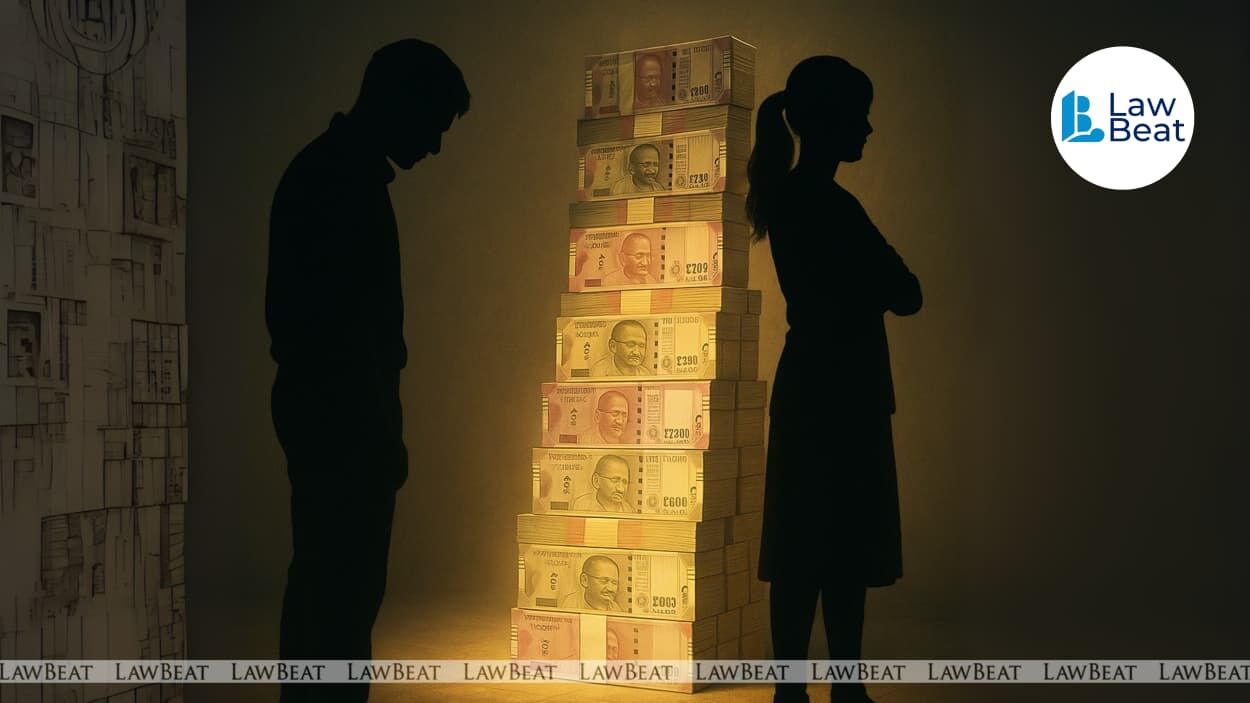
Allahabad HC: Declines Speedy Disposal Over Multiple Maintenance Proceedings
Summary
- The Allahabad High Court declined to expedite a maintenance execution case, citing the petitioner's pursuit of multiple, overlapping maintenance proceedings.
- Petitioner Shashi Gupta had secured maintenance orders under both Section 125 CrPC (now BNSS) and the Domestic Violence Act.
- The court observed that such repeated litigation creates an "unwarranted burden" on already strained family courts, contributing to delays.
- Justice Subhash Vidyarthi noted that the petitioner was "merely fighting for getting maintenance" across different forums rather than seeking a resolution to the matrimonial dispute.
- The High Court found no sufficient reason to grant expeditious disposal given the multiplication of optional and non-compulsive litigation.
High Court Declines Expedited Maintenance Request
The High Court emphasized that the proliferation of optional and non-compulsive legal actions places an undue strain on family courts, contributing significantly to delays in case resolution.
The Allahabad High Court recently refused to grant an expedited hearing for a maintenance execution case, citing concerns over the petitioner's pursuit of multiple, overlapping maintenance proceedings. Justice Subhash Vidyarthi, presiding over the matter, observed that such actions contribute to an "unwarranted burden" on the judiciary, particularly family courts already grappling with extensive caseloads.
The ruling came in response to a petition filed by Shashi Gupta under Article 227 of the Constitution. Gupta had sought a directive for the Additional Principal Judge-I, Family Court, Lucknow, to swiftly decide her pending Execution Case No. 1675 of 2024. This execution case, initiated on July 19, 2024, aimed to enforce a June 4, 2024 order from proceedings under Section 125 of the Criminal Procedure Code (now Section 144 of the Bharatiya Nagarik Suraksha Sanhita), which mandated her husband to pay Rs 7,000 monthly maintenance.
Further scrutiny revealed that Gupta had also filed a separate complaint under Section 12 of the Protection of Women from Domestic Violence Act, resulting in an additional maintenance order for Rs 4,500. The court also noted a prior settlement attempt where the husband agreed to pay Rs 1.51 lakh and return goods for a mutual consent divorce, but only Rs 50,000 was paid, and the divorce did not materialize. The High Court's decision to decline speedy disposal of the execution case highlights its stance on repeated maintenance litigation in India.
Judicial Scrutiny of Overlapping Claims
The Allahabad High Court critically assessed the petitioner's strategy, noting that Shashi Gupta had not initiated proceedings for divorce or restitution of conjugal rights. Instead, the court remarked that she was "merely fighting for getting maintenance from her husband in different proceedings before different Courts." While acknowledging a woman's legal right to institute maintenance proceedings under various statutory provisions, the court drew a clear distinction between possessing such a right and repeatedly pursuing claims with similar objectives.
The High Court emphasized that the proliferation of optional and non-compulsive legal actions places an undue strain on family courts, contributing significantly to delays in case resolution. It questioned the propriety of multiplying "non-compulsive litigation" when a claimant asserts an inability to maintain herself or afford basic necessities. This perspective underscores the judiciary's growing concern over the strategic use of Section 125 CrPC multiple claims and Domestic Violence Act maintenance overlap.
Burden on Family Courts and Judicial Efficiency
A central tenet of the High Court's decision was the impact of such litigation on the judicial system. Justice Vidyarthi explicitly stated that the "multiplication of optional and non-compulsive litigation is creating an unwarranted burden on the Family Courts which is causing delay in disposal of matters." The court highlighted that all judicial bodies operate under heavy workloads, and family courts, in particular, have been "artificially overburdened" by litigants pursuing multiple proceedings with similar objectives.
Given this context, the Allahabad HC declined speedy disposal maintenance, concluding that there was "no good ground" to issue a directive for the expeditious resolution of Gupta's pending execution case. The court's ruling reflects a broader concern about judicial efficiency and the need to manage the family court burden from multiple cases, suggesting that while legal avenues are available, their cumulative and repetitive use can be viewed unfavorably when seeking expedited relief.
Implications for Matrimonial Dispute Resolution
The High Court's observations extend beyond mere procedural efficiency, touching upon the fundamental approach to resolving matrimonial disputes. The court inferred that Gupta's failure to seek either restitution of conjugal rights or dissolution of marriage indicated her primary interest lay in claiming maintenance across different forums, rather than achieving a definitive resolution of the matrimonial dispute, whether through reconciliation or divorce.
This perspective suggests that courts may scrutinize the intent behind repeated maintenance litigation, particularly when it appears disconnected from a broader effort to settle the marital relationship "either way." The case of Shashi Gupta v. State of U.P. serves as a significant indicator that while legal remedies for maintenance are robust, their strategic and repetitive deployment without a clear path to marital resolution may not always garner judicial favor, especially when requesting expedited proceedings.
Practical Implications
This ruling indicates that courts may view the pursuit of multiple, overlapping maintenance proceedings as creating an 'unwarranted burden,' potentially leading to a refusal of expeditious disposal. Lawyers should advise clients on the strategic implications of such actions, manage expectations regarding judicial discretion in expedition requests, and consider consolidating claims where possible to avoid judicial disapproval.
Source
Source: Original reporting via Live Law
How does this affect you?
Get an AI analysis of this article grounded in your jurisdictions, practice areas, and any policy documents you've uploaded to Wansom.
Finish Reading the Full Story and the Expert Analysis.
Get the latest legal & regulatory intelligence in India
Wansom is AI and can make mistakes.