
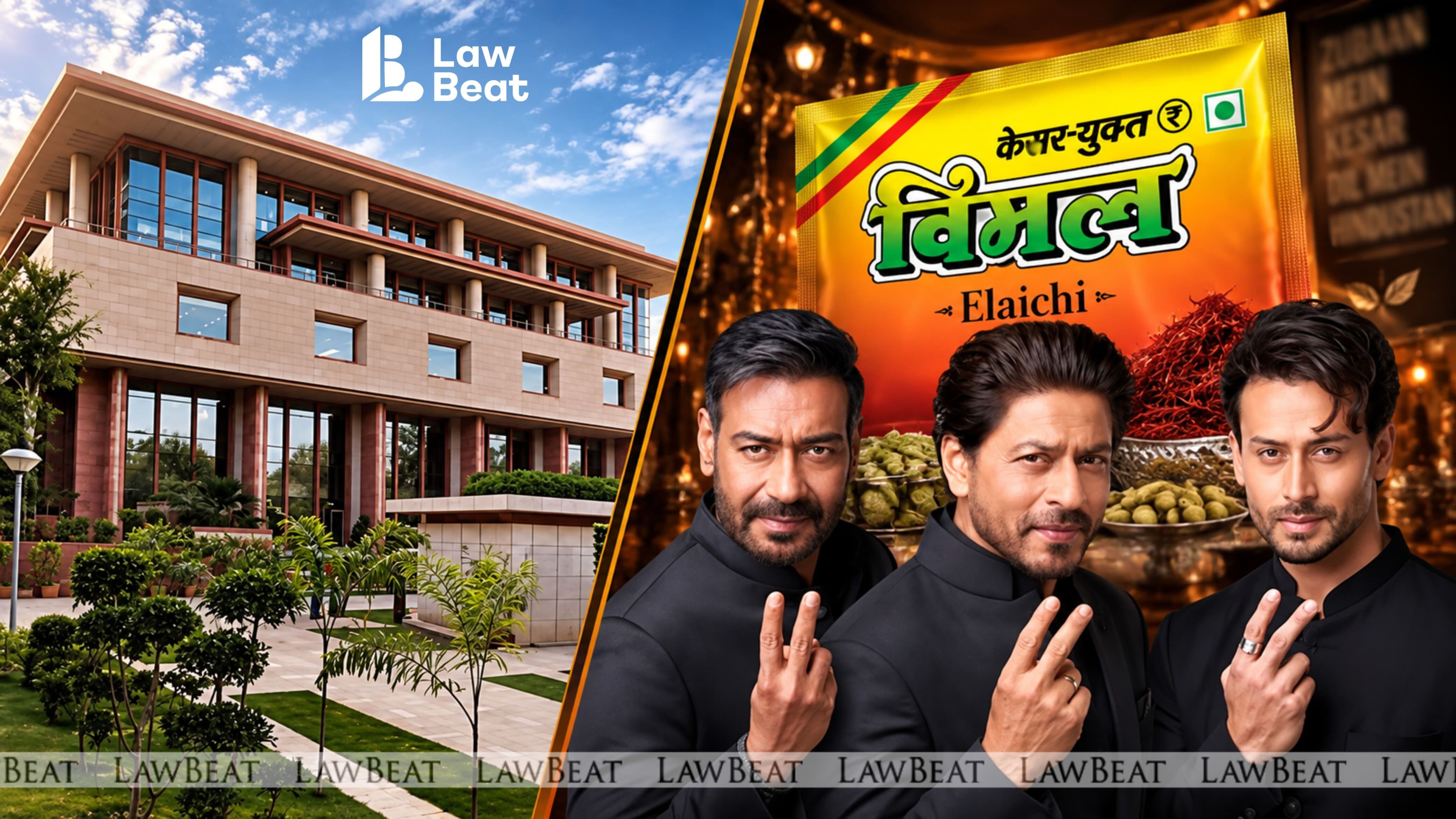
Delhi HC: Vimal Elaichi Show Cause Notice Lacks Territorial Jurisdiction
Summary
- The Delhi High Court dismissed a writ petition by P.B. Agro LLP, challenging an FDA Mumbai show cause notice to Vimal Elaichi brand ambassadors.
- The court ruled it lacked territorial jurisdiction, finding no substantial cause of action arose in Delhi.
- The notice, dated August 11, 2026, was issued by the Assistant Commissioner (Food), FDA, Greater Mumbai Division, to brand ambassadors like Shah Rukh Khan and Ajay Devgn.
- P.B. Agro LLP argued for Delhi jurisdiction based on its operations and the location of apex regulatory bodies (FSSAI, Ministry of Health and Family Welfare) in Delhi.
- The court emphasized that the petitioner's Delhi base alone was insufficient to confer jurisdiction for a notice issued by an authority outside the capital.
Delhi HC Dismisses Vimal Elaichi Challenge Over Jurisdiction
The Delhi High Court emphasized that the mere fact of the petitioner's operations or the presence of apex regulatory bodies in Delhi did not establish territorial jurisdiction for a challenge against a notice issued by an authority located outside the capital.
The Delhi High Court recently dismissed a writ petition filed by P.B. Agro LLP, the master licensee for VIMAL-branded Elaichi and Pan Masala products, challenging a show cause notice issued by the Food and Drug Administration (FDA), Mumbai. The court, in a judgment pronounced on September 14 by Justice Swarana Kanta Sharma, concluded that it lacked the territorial jurisdiction to entertain the plea, finding that no substantial or material part of the cause of action had arisen within its geographical limits.
The petition specifically sought to quash a show cause notice dated August 11, 2026, which had been issued by the Assistant Commissioner (Food), FDA, Greater Mumbai Division, to the company's brand ambassadors, including prominent figures like Shah Rukh Khan and Ajay Devgn. P.B. Agro LLP also requested an order restraining respondents from taking any coercive action against either the company or its brand ambassadors for alleged non-compliance with the notice.
According to the petitioner, they became aware of the impugned notice through media reports, claiming that they had not received direct communication nor been afforded an opportunity for a hearing. The notice reportedly directed the brand ambassadors to remove existing advertisements and refrain from assisting in their further dissemination.
Arguments for Delhi Jurisdiction Under Article 226
P.B. Agro LLP, represented by Senior Advocates Dayan Krishnan and Mohit Mathur, contended that the writ petition was maintainable under both Article 226(1) and 226(2) of the Constitution of India. Their arguments hinged on several points: the Food Safety and Standards Authority of India (FSSAI), which is the apex authority under the Food Safety and Standards Act, 2006, and the Ministry of Health and Family Welfare are both headquartered in Delhi.
Furthermore, the petitioner asserted that a significant portion of the cause of action originated in Delhi because P.B. Agro LLP conducts its entire business operations from the capital, manages and operates its advertising campaigns from Delhi, and processes payments to its brand ambassadors from this location. They argued that the notice, despite being addressed to brand ambassadors, effectively amounted to a directive for the removal and ban of the petitioner's advertisements, making it, in substance, equivalent to a notice issued directly to the petitioner in Delhi. The petitioner also cited precedents, Bakshish Ahmad v. Union of India and Nawal Kishore Sharma v. Union of India, and highlighted pending proceedings before the Central Consumer Protection Authority (CCPA) in New Delhi concerning the same surrogate advertising issue.
Conversely, the Central Government Standing Counsel, representing the Union and CCPA, along with counsel for FSSAI, opposed the petition's maintainability. They argued that neither Article 226(1) nor Article 226(2) was applicable, emphasizing that the Ministry played no role in the issuance of the notice. They further contended that the mere fact of the petitioner's base being in Delhi could not confer territorial jurisdiction upon the Delhi High Court, especially since the notice was issued by FDA, Mumbai, under the Government of Maharashtra, an entity not present before the Delhi court to defend its actions.
Court's Stance on Territorial Jurisdiction
The Delhi High Court ultimately framed the central question as whether it could exercise its writ jurisdiction under Article 226 of the Constitution concerning a show cause notice issued by the FDA, Mumbai, simply because the petitioner was based in Delhi. The court, having reserved its judgment on September 7, unequivocally ruled against the petitioner, affirming that P.B. Agro LLP failed to demonstrate that any substantial or material part of the cause of action had arisen within its territorial jurisdiction.
This ruling on the Delhi HC Vimal Elaichi show cause notice territorial jurisdiction underscores a strict interpretation of jurisdictional requirements for writ petitions in India. It clarifies that the location of the regulatory authority issuing the notice, rather than the petitioner's operational base or the management of advertising campaigns, is the paramount factor in determining the appropriate judicial forum. This decision has significant implications for entities challenging regulatory actions, particularly those initiated by state-level authorities, as it reinforces the principle that such challenges must typically be brought before courts within the territorial limits of the issuing authority.
Practical Implications
Lawyers and compliance officers should note the Delhi HC's strict interpretation of territorial jurisdiction for writ petitions, particularly when challenging regulatory actions. This ruling clarifies that the location of the regulatory authority issuing the notice, rather than the petitioner's base or campaign management, is paramount in determining the proper forum, impacting strategic decisions for challenging state-level regulatory actions.
Source
Source: Original reporting via LiveLaw
How does this affect you?
Get an AI analysis of this article grounded in your jurisdictions, practice areas, and any policy documents you've uploaded to Wansom.
Finish Reading the Full Story and the Expert Analysis.
Get the latest legal & regulatory intelligence in India
Wansom is AI and can make mistakes.