
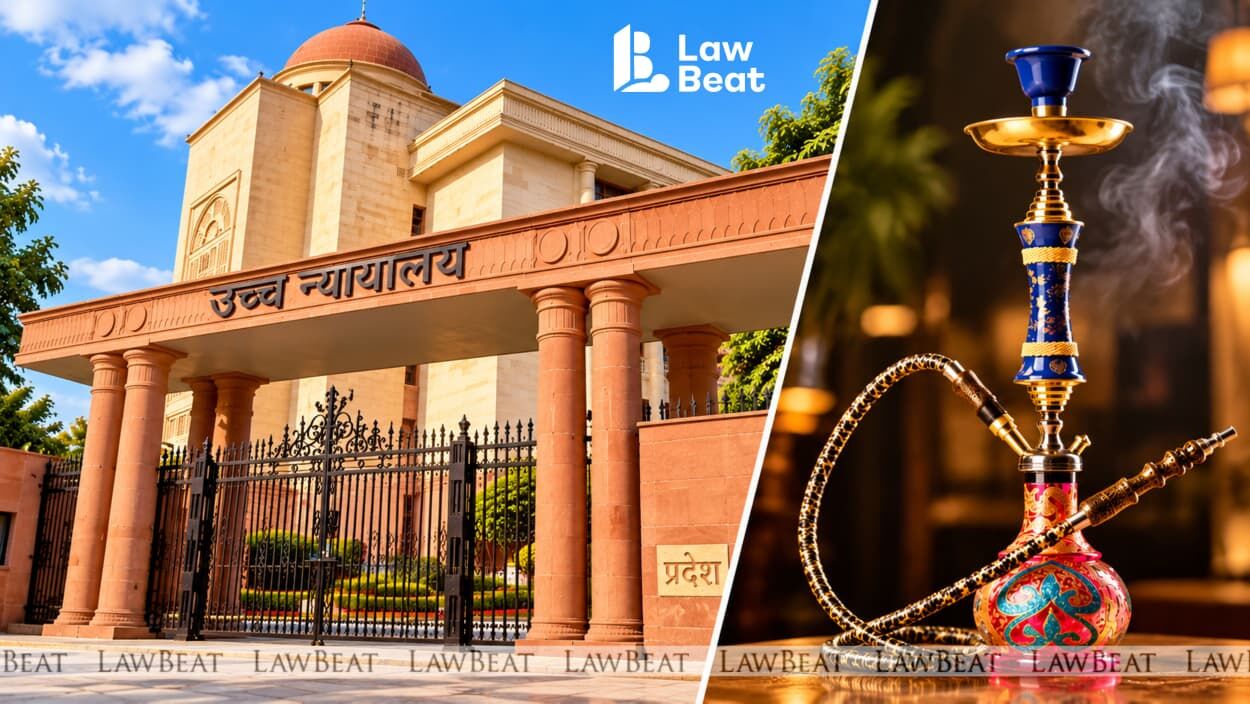
Allahabad HC: Bans UP Hookah Bars, Upholding 2008 Rules
Summary
- The Allahabad High Court has prohibited all hookah services across Uttar Pradesh, dismissing petitions from establishments seeking to operate them.
- The court ruled that hookah services violate Rule 4(3) of the 2008 Smoking Rules and are contrary to the Cigarettes and Other Tobacco Products Act, 2003 (COTPA).
- The 2017 amendment to Rule 4(3), changing 'no other service' to 'no service' in designated smoking areas, was interpreted as an absolute ban on all services, including hookah.
- The court rejected the 'self-service' argument, stating that preparing and maintaining a hookah constitutes a service requiring specific knowledge.
- The ruling prioritizes non-smokers' fundamental right to clean air over commercial interests and directs state authorities to ensure compliance, suggesting potential future legislative action.
Allahabad High Court Prohibits All Hookah Services in Uttar Pradesh
The right of the non-smoker to breathe clean air in a public place is a fundamental right, and this right cannot be abridged by the commercial interests of establishments.
The Allahabad High Court has issued a definitive ruling, effectively implementing an Allahabad HC bans UP hookah bars across the entire state of Uttar Pradesh. This significant judgment, delivered on September 29 by a division bench comprising Justices Shekhar B Saraf and Abdhesh Kumar Chaudhary, dismissed multiple legal challenges from establishments seeking to continue operating hookah facilities. The court's decision mandates that hookah services cannot lawfully be provided in public places, even within designated smoking areas.
The ruling specifically found that the provision of hookah services by restaurants constitutes a direct contravention of existing regulations. The court emphasized that such operations violate Rule 4(3) of the Prohibition of Smoking in Public Places Rules, 2008, as amended in 2017, and are fundamentally inconsistent with the objectives of the Cigarettes and Other Tobacco Products Act, 2003 (COTPA). This comprehensive Uttar Pradesh hookah ban signals a clear stance against the commercial offering of hookah in any form within the state's public spaces.
Interpreting the Law: Why Hookah Services Are Banned
Central to the Allahabad High Court hookah ruling was a meticulous examination of the 2017 amendment to Rule 4(3) of the Prohibition of Smoking in Public Places Rules 2008. This amendment critically altered the wording from “no other service” to “no service” in relation to designated smoking areas. The court interpreted this change as imposing an absolute prohibition on any form of service within these areas, extending beyond just food and beverages to include tobacco products, herbal products, and specifically, hookah.
The bench clarified that a designated smoking area is intended solely as a limited statutory exception to the general prohibition on smoking in public places. It is not to be considered an extension of a restaurant's regular service area. Therefore, any provision of designated smoking area services, including those related to COTPA 2003 hookah services, is now explicitly forbidden under this interpretation. This legal clarification underscores the court's intent to strictly regulate smoking environments.
Prioritizing Public Health and Rejecting Loopholes
The court firmly rejected arguments from establishments attempting to circumvent the prohibition by proposing a self-service model for hookah. The judges determined that the intricate process of preparing, assembling, lighting, replenishing, and maintaining a hookah for a customer inherently involves a service. They noted that hookah smoking requires specific technical preparation, including filling the base with water, placing tobacco in the bowl, and heating charcoal, a process demanding particular knowledge that patrons cannot realistically perform as self-service.
Crucially, the Allahabad High Court underscored that the fundamental right of non-smokers to breathe clean air in public places, enshrined under Article 21 of the Constitution, must take precedence. This right, the court asserted, cannot be diminished by the commercial interests of businesses operating under Article 19(1)(g). The ruling also clarified that neither the Food Safety department nor municipal corporations possess the jurisdiction to issue licenses for regulating hookah bars in Uttar Pradesh, further solidifying the state's inability to permit such operations.
Mandatory Compliance and Future Regulatory Measures
To ensure immediate and widespread adherence, the court directed its Registry to promptly dispatch a copy of the judgment to the Chief Secretary and the Director General of Police, Uttar Pradesh, for their information and necessary compliance. This directive highlights the court's expectation for swift and effective enforcement of the Uttar Pradesh hookah ban across the state.
Furthermore, the bench expressed a reasonable expectation that the Uttar Pradesh government would take proactive steps, including issuing a notification similar to those implemented in other states. The court specifically referenced Gujarat, Punjab, Rajasthan, Maharashtra, and Karnataka, which have enacted state-level amendments to COTPA, explicitly banning hookah bars and imposing more stringent penalties and fines for violations. This suggests a potential future for enhanced legislative action to reinforce the Allahabad High Court hookah ruling.
Practical Implications
Lawyers advising hospitality businesses in Uttar Pradesh must inform clients that the Allahabad High Court has absolutely prohibited hookah services, even in designated smoking areas, requiring immediate cessation of such operations to avoid legal penalties and ensure compliance with the ruling.
Source
Source: Original reporting via Live Law
How does this affect you?
Get an AI analysis of this article grounded in your jurisdictions, practice areas, and any policy documents you've uploaded to Wansom.
Finish Reading the Full Story and the Expert Analysis.
Get the latest legal & regulatory intelligence in India
Wansom is AI and can make mistakes.