
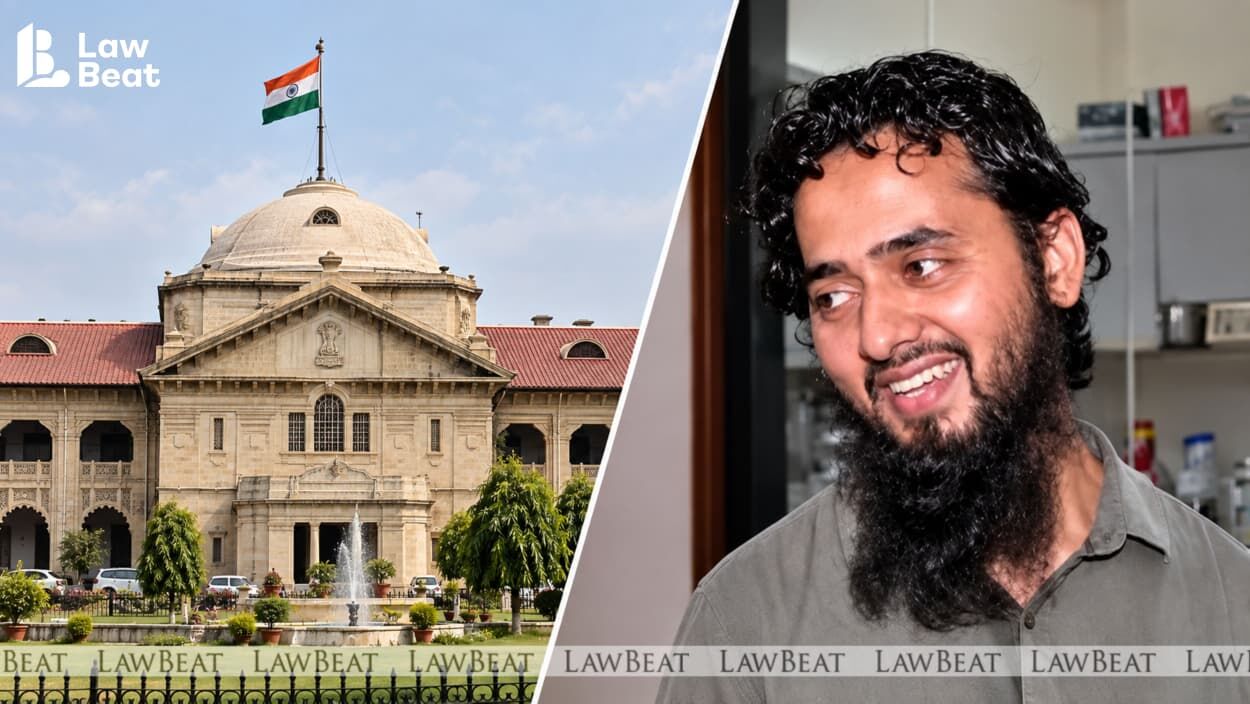
Allahabad HC: Ayush Malik Conversion Marriage, Personal Liberty Upheld
Summary
- The Allahabad High Court affirmed Ayush Malik's right to choose his religion and spouse despite family opposition.
- The court invoked Articles 21 and 25, protecting the 31-year-old's personal liberty and religious freedom.
- Malik, a Bachelor of Pharmacy graduate, stated his 2014 conversion to Islam and intent to marry Chandni Qureshi were voluntary.
- The ruling followed a habeas corpus petition alleging Malik was illegally confined by his family since June 4.
- The court found no reason to disbelieve Malik's account, emphasizing an adult's autonomy over life decisions.
Court Affirms Adult Autonomy in Faith and Marriage
The court unequivocally stated that an adult's decision regarding their faith and choice of life partner constitutes a fundamental aspect of individual autonomy, protected by constitutional rights.
The Allahabad High Court recently upheld the fundamental right of a 31-year-old man, Ayush Malik, to choose his religion and life partner, despite strong opposition from his family. The court's ruling, delivered by Justice Sandeep Jain, emphasized that a major individual's voluntary decisions regarding their faith and marital status cannot be curtailed simply because family members find those choices unacceptable. This decision came in response to a habeas corpus petition filed on Malik's behalf, seeking his release from alleged illegal confinement.
Malik, a Bachelor of Pharmacy graduate from Shamli, informed the court that he had voluntarily embraced Islam in 2014 and intended to solemnize his marriage with Chandni Qureshi. He explicitly stated that his conversion was not influenced by any threat, coercion, undue influence, or inducement. The court personally interacted with Malik, who was produced before the bench following directions issued on September 9, and found no reason to doubt his account of events or his capacity to make independent life decisions.
Allegations of Illegal Detention and Family Disagreement
The legal proceedings were initiated through a habeas corpus petition filed by Malik's friend, Sultan, which alleged that Malik had been illegally confined at his family home since June 4 of the current year. The petition further claimed that state machinery was colluding with Malik's father, Devraj Singh Malik, to facilitate this detention. The court had previously deemed these allegations to be of a "serious in nature" and requiring "immediate consideration," leading to a directive for the state and the father to produce Malik before the bench.
During the hearing, Devraj Singh Malik presented his side, disputing his son's narrative. He contended that Ayush had been "brainwashed" into converting rather than making a voluntary choice, and expressed that his objections stemmed from a genuine concern for his son's welfare. However, after weighing both statements, the court found no evidence on record to discredit Ayush Malik's assertion that his decisions were made freely and consciously.
Constitutional Safeguards for Personal Liberty and Religious Freedom
In its landmark ruling, the Allahabad High Court invoked Articles 21 and 25 of the Indian Constitution, underscoring the integral nature of personal liberty and religious freedom. The court observed that the freedom of conscience and the right to profess, practice, and propagate religion empower an adult to determine their faith according to their own conscience, a choice that cannot be overridden by family disapproval. This choice, being an expression of individual autonomy and freedom of conscience, is constitutionally protected.
Furthermore, the court affirmed that the right to choose one's spouse is an equally integral component of the right to life and personal liberty under Article 21. It clarified that a choice running contrary to familial expectations does not, by itself, provide a legitimate basis for curtailing that choice. While acknowledging the father's understandable concern for his son's welfare, the court stressed that such familial concern cannot supersede an adult's constitutionally protected autonomy over their faith, residence, and choice of partner.
Practical Implications
This ruling reinforces the legal precedent that adult individuals have constitutional autonomy over their religious conversion and choice of spouse, even against family opposition. Lawyers can cite this judgment in cases involving personal liberty, religious freedom, or interfaith relationships to protect clients' rights under Articles 21 and 25.
Source
How does this affect you?
Get an AI analysis of this article grounded in your jurisdictions, practice areas, and any policy documents you've uploaded to Wansom.
Finish Reading the Full Story and the Expert Analysis.
Get the latest legal & regulatory intelligence in India
Wansom is AI and can make mistakes.