
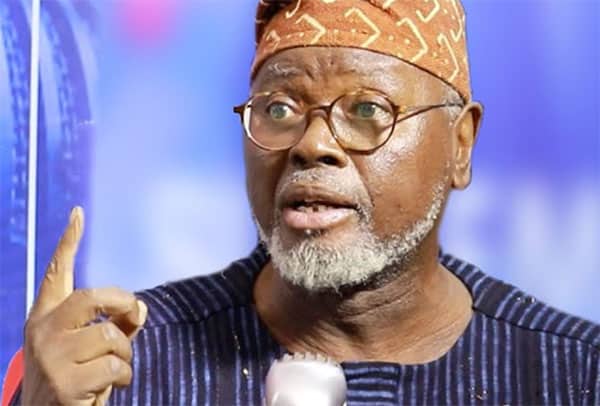
Alioune Tine: Sénégal Premier Ministre Majorité Parlementaire Résout Blocage
Summary
- Alioune Tine advocates for a Senegalese Prime Minister to be appointed from the parliamentary majority to resolve institutional deadlock.
- This proposal gains urgency as President Diomaye publicly considered replacing Ousmane Sonko as Prime Minister on May 2, 2026.
- The current debate highlights issues like the electoral code's "blind spot" regarding the incompatibility of governmental and parliamentary roles, exemplified by Ousmane Sonko's dual position.
- A forthcoming constitutional revision by Pastef seeks to curb hyper-presidentialism by establishing a Constitutional Court and increasing the Prime Minister's powers.
- Tine, founder of Afrikajom Center, emphasized the need to understand the complex context before implementing solutions, as noted in his August 29, 2026, publication.
Addressing Senegal's Institutional Impasse
The proposed constitutional revision aims to address the issue of hyper-presidentialism in Sénégal, seeking to rebalance power dynamics within the government.
Alioune Tine, founder of the Afrikajom Center, has put forward a significant proposal to resolve the institutional deadlock currently facing Senegal. He argues that the most logical and effective solution involves appointing a Prime Minister who emerges directly from the parliamentary majority. This approach, according to Tine, is crucial for navigating the complex political landscape and finding a way out of the prevailing challenges.
The urgency of this discussion around a Prime Minister backed by the parliamentary majority has been heightened by recent political developments. Specifically, President Diomaye publicly indicated on May 2, 2026, his consideration of replacing Ousmane Sonko from the Prime Ministerial post. Such a potential change underscores the critical need for a stable and constitutionally sound framework for executive leadership.
In a publication dated August 29, 2026, and relayed by Senegal7, Alioune Tine emphasized that any proposed solution to the institutional blockage in Senegal must first thoroughly account for the intricate context that led to the current situation. He also questioned the underlying processes that have contributed to this state of affairs, highlighting the necessity of a comprehensive understanding before implementing reforms.
Constitutional Framework and Executive Dynamics
The current debate over the role of the Prime Minister and the parliamentary majority directly implicates Article 42 of the Constitution of Sénégal. This article designates the head of state as the ultimate guarantor of the regular functioning of institutions, thereby placing significant power and responsibility within the presidency. This constitutional provision forms a critical backdrop to discussions about the balance of power within the executive and legislative branches.
The relationship between the executive and Parliament presents a particular challenge within the Senegalese political system. A notable example is the situation involving Ousmane Sonko, who was reinstated to the National Assembly before subsequently being elected as its president. This scenario brings to light a significant "blind spot" within the electoral code, which currently lacks clear provisions regarding the incompatibility between holding a governmental function and serving as a deputy in the legislature.
Consequently, the decision to appoint a Prime Minister from the parliamentary majority transcends mere political arbitration. It fundamentally raises questions about the effective distribution of responsibilities and authority among the presidency, the government, and the National Assembly, highlighting the need for clearer institutional demarcation.
Proposed Reforms to Rebalance Power
In response to these institutional challenges, the Pastef party is preparing to hold a press conference ahead of the examination of a significant constitutional revision. This proposed revision aims to address the issue of hyper-presidentialism in Sénégal, seeking to rebalance power dynamics within the government. Key components of this reform include the planned creation of a dedicated Cour constitutionnelle Sénégal and a substantial expansion of the powers vested in the Premier ministre Sénégal.
These anticipated changes are designed to provide a robust institutional framework that could offer a viable solution to the ongoing crisis and the perceived blocage institutionnel Sénégal. However, the effectiveness of these reforms is contingent upon a clear and precise clarification of the roles and responsibilities of each entity within the executive branch. The reform of the pouvoirs Premier ministre Sénégal is central to this rebalancing effort.
Ultimately, the selection of a Prime Minister who commands the support of the parliamentary majority is not simply a political maneuver. It represents a fundamental inquiry into the actual allocation of authority and accountability across the presidency, the government, and the legislative assembly, aiming to foster greater institutional stability and democratic governance.
Practical Implications
Lawyers and compliance officers in Senegal should closely monitor the proposed constitutional revision, particularly changes aimed at reducing hyper-presidentialism, establishing a Constitutional Court, and expanding the Prime Minister's powers. These reforms could significantly alter the balance of power and institutional framework, impacting legal interpretations, political risk assessments, and client advisory on governance matters.
Source
How does this affect you?
Get an AI analysis of this article grounded in your jurisdictions, practice areas, and any policy documents you've uploaded to Wansom.
Finish Reading the Full Story and the Expert Analysis.
Wansom is AI and can make mistakes.