
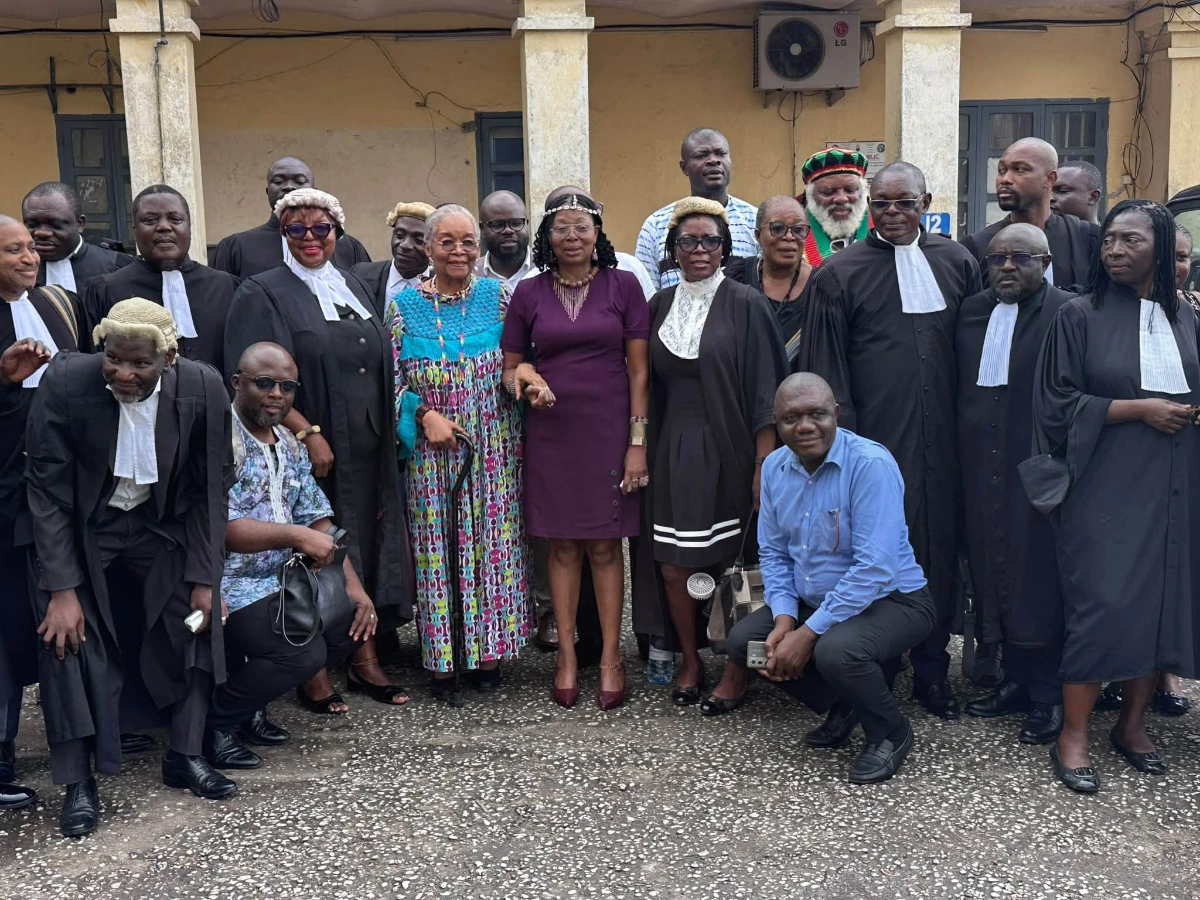
Alice Nkom, Maximilienne Ngo Mbe REDHAC Bris Scellés Case Postponed
Summary
- Alice Nkom and Maximilienne Ngo Mbe of REDHAC appeared in court on September 7 for charges of breaking seals on their organization's premises.
- The court postponed its deliberation on the case to September 21.
- The charges stem from a December 2024 order by the Minister of Territorial Administration to suspend REDHAC and seal its offices due to alleged 'illicit financing'.
- Alice Nkom reopened the premises in October 2025 after an administrative tribunal decision in September 2025, leading to the 'bris de scellés' accusation.
- Both defendants have pleaded not guilty, arguing the procedure lacks legal foundation, and have received support from public and political figures.
Latest Court Developments
The eventual judgment from the Tribunal de première instance de Douala-Bonanjo will be closely watched by legal professionals advising civil society organizations, as it could establish important precedents concerning administrative enforcement and compliance best practices within the country.
The Tribunal de première instance (TPI) de Douala-Bonanjo recently heard the ongoing case involving Alice Nkom and Maximilienne Ngo Mbe, key figures from the Réseau des défenseurs des droits humains en Afrique centrale (REDHAC). Both individuals appeared before the court this Monday, September 7, to address charges related to the alleged breaking of seals on REDHAC's premises. This appearance marks another chapter in the high-profile REDHAC affaire bris de scellés Cameroun, which has drawn significant attention to the operations of civil society organizations in the country.
During the proceedings, the court announced that its deliberation on the matter has been postponed, with a new date set for September 21. Alice Nkom, who serves as the President of the Board of Directors (PCA) for REDHAC, and Maximilienne Ngo Mbe, the Executive Director, were accompanied by their legal counsel for this crucial hearing. The case, which has seen the two human rights defenders make multiple appearances before the Douala-Bonanjo Tribunal, continues to unfold as the legal process progresses.
Origin of the Charges
The legal action against Alice Nkom and Maximilienne Ngo Mbe stems from events that date back to December 2024. At that time, the Minister of Territorial Administration issued an order for the suspension of REDHAC and the sealing of its offices. The official justification for these measures was cited as 'financement illicite' (illicit financing), a charge that often carries severe implications for associations Cameroun. The premises of the organization were consequently sealed for a period of three months, initiating the dispute that led to the current legal proceedings.
Subsequently, in October 2025, Alice Nkom took action to reopen REDHAC's offices. This decision followed a ruling by the administrative tribunal in September 2025. However, her action led to the accusation that she and Maximilienne Ngo Mbe had broken the seals, forming the basis of the 'bris de scellés' charges they now face. The defense has consistently maintained a plea of not guilty, asserting that the entire procedure lacks a sound legal foundation, highlighting the contentious nature of the Alice Nkom procès Douala-Bonanjo.
Broader Implications for Civil Society
The case against Alice Nkom and Maximilienne Ngo Mbe, particularly concerning the REDHAC affaire bris de scellés Cameroun, carries significant weight for the broader landscape of droit des associations Cameroun. The defense's argument that the procedure is without legal basis underscores the challenges faced by civil society organizations when confronted with administrative actions and accusations of illicit financing. The ongoing legal battle, which has seen both individuals plead not guilty in 2025, has garnered support from various public figures and political actors, reflecting its perceived importance beyond the immediate parties involved.
This situation highlights the legal risks for NGOs in Cameroon, particularly regarding administrative suspensions and allegations of 'illicit financing.' The severe consequences of non-compliance with sealing orders, even when an administrative tribunal has issued a favorable decision, are a central theme of this case. The eventual judgment from the Tribunal de première instance de Douala-Bonanjo will be closely watched by legal professionals advising civil society organizations, as it could establish important precedents concerning administrative enforcement and compliance best practices within the country.
Practical Implications
This case underscores the legal risks for NGOs in Cameroon facing administrative suspension and 'illicit financing' accusations, particularly the severe consequences of non-compliance with sealing orders. Lawyers advising civil society organizations should monitor the final judgment for precedents on administrative enforcement and compliance best practices.
Source
How does this affect you?
Get an AI analysis of this article grounded in your jurisdictions, practice areas, and any policy documents you've uploaded to Wansom.
Finish Reading the Full Story and the Expert Analysis.
Wansom is AI and can make mistakes.