
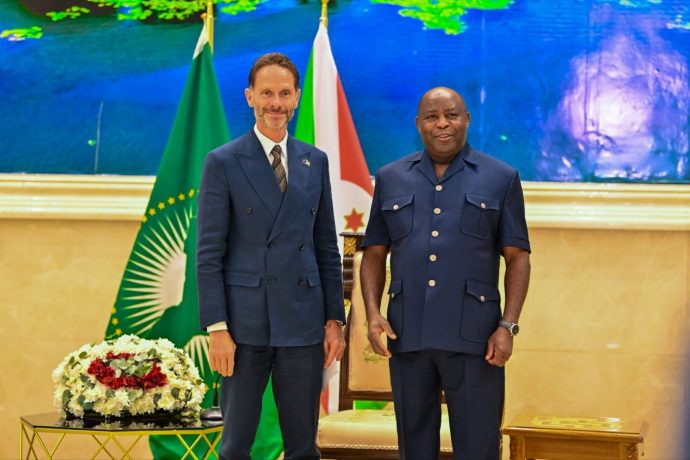
Burundi: Alessandro Villa Presents EU Ambassador Credentials
Summary
- EU Ambassador Alessandro Villa officially presented his letters of credence to Burundian President Évariste Ndayishimiye on September 29, 2026.
- This ceremony formally marks the commencement of Ambassador Villa's diplomatic mission in Burundi.
- Two weeks prior, copies of his credentials were submitted to Burundi's Minister of Foreign Affairs, Édouard Bizimana.
- The presentation of credentials is a fundamental diplomatic act, signifying official recognition and enabling an ambassador to fully exercise their functions.
- While a legally mandated diplomatic step, this event does not directly create new legal obligations or risks for businesses or individuals.
Official Commencement of Mission
For legal and compliance professionals, it is important to understand that while the presentation of "Ndayishimiye EU Ambassador credentials" is a legally mandated diplomatic act, it does not, in itself, introduce new legal obligations, risks, or precedents for businesses or individuals.
On September 29, 2026, a pivotal moment in diplomatic protocol unfolded in Burundi as His Excellency Mr. Alessandro Villa, the European Union's designated Ambassador to the nation, formally presented his letters of credence to President Évariste Ndayishimiye. This significant ceremony at the presidential palace officially inaugurated Ambassador Villa's diplomatic mission within the East African country. The presentation of these crucial documents, often referred to as "lettres de créance Burundi" in diplomatic parlance, marks the definitive start of an ambassador's tenure, granting them full recognition and authority to represent their sending entity.
This formal presentation to the head of state followed an earlier, equally important procedural step. Approximately two weeks prior to the main ceremony, Ambassador Villa had already submitted copies of his credentials, known as "copies figurées," to the Burundian Minister of Foreign Affairs, Édouard Bizimana. This two-stage process is a standard practice in international diplomacy, ensuring that the host nation's foreign ministry is fully apprised of the incoming envoy's status before their formal introduction to the head of state. The event underscores the established diplomatic channels between the European Union and Burundi, with Alessandro Villa now fully accredited to foster and manage these relations.
The Diplomatic Significance of Credentials
The act of presenting letters of credence is far more than a mere formality; it is a cornerstone of international diplomatic law and practice, signifying the official recognition of an ambassador by the receiving state. These documents, issued by the head of the sending state or international organization, formally introduce the ambassador and request that full faith and credit be given to their representations. Without the successful presentation of these credentials, an ambassador cannot fully exercise their functions, engage in official negotiations, or represent their government with complete authority. This process is enshrined in international conventions governing diplomatic relations, ensuring clarity and legitimacy in bilateral and multilateral engagements.
For legal and compliance professionals, it is important to understand that while the presentation of "Ndayishimiye EU Ambassador credentials" is a legally mandated diplomatic act, it does not, in itself, introduce new legal obligations, risks, or precedents for businesses or individuals. Rather, it is a procedural step that enables future diplomatic activities which *might* eventually influence legal and regulatory frameworks. The ceremony itself is primarily symbolic and ceremonial, confirming the ambassador's status and the continuation of diplomatic ties. It is the foundation upon which subsequent diplomatic work, including potential negotiations on trade agreements, aid packages, or policy discussions, can be built, but it is not an immediate trigger for new legal compliance requirements.
Strengthening Burundi-EU Diplomatic Relations
The formal accreditation of Alessandro Villa as the EU Ambassador to Burundi carries significant weight for the ongoing "Burundi EU diplomatic relations." The European Union, as a major international actor, maintains extensive diplomatic ties globally, and the presence of a fully accredited ambassador in Bujumbura signals the EU's continued commitment to engagement with Burundi. Ambassador Villa's mission will involve representing the EU's interests, promoting cooperation across various sectors, and facilitating dialogue on matters of mutual concern. This diplomatic exchange is crucial for maintaining open lines of communication and fostering understanding between the two entities.
The ceremony on September 29, 2026, therefore, is a key event in the broader landscape of "Burundi international relations." It reaffirms the established diplomatic channels and provides a renewed impetus for collaborative efforts. The ambassador's role extends to monitoring political and economic developments, engaging with local authorities, and overseeing EU-funded projects within the country. His official recognition by President Ndayishimiye ensures that he can now fully undertake these responsibilities, contributing to the framework of international cooperation that underpins global stability and development. The formal acceptance of his credentials by the Burundian head of state is a clear indication of the host nation's acknowledgment of the EU's diplomatic presence and its readiness to engage at the highest level.
Practical Implications
The presentation of diplomatic credentials is a formal, ceremonial act marking the official start of an ambassador's mission. While the ambassador's future activities may influence legal and regulatory frameworks, this specific event does not present an immediate, direct actionable implication for lawyers or compliance officers in terms of new obligations, risks, or precedents.
Source
How does this affect you?
Get an AI analysis of this article grounded in your jurisdictions, practice areas, and any policy documents you've uploaded to Wansom.
Finish Reading the Full Story and the Expert Analysis.
Get the latest legal & regulatory intelligence in Burundi
Wansom is AI and can make mistakes.