
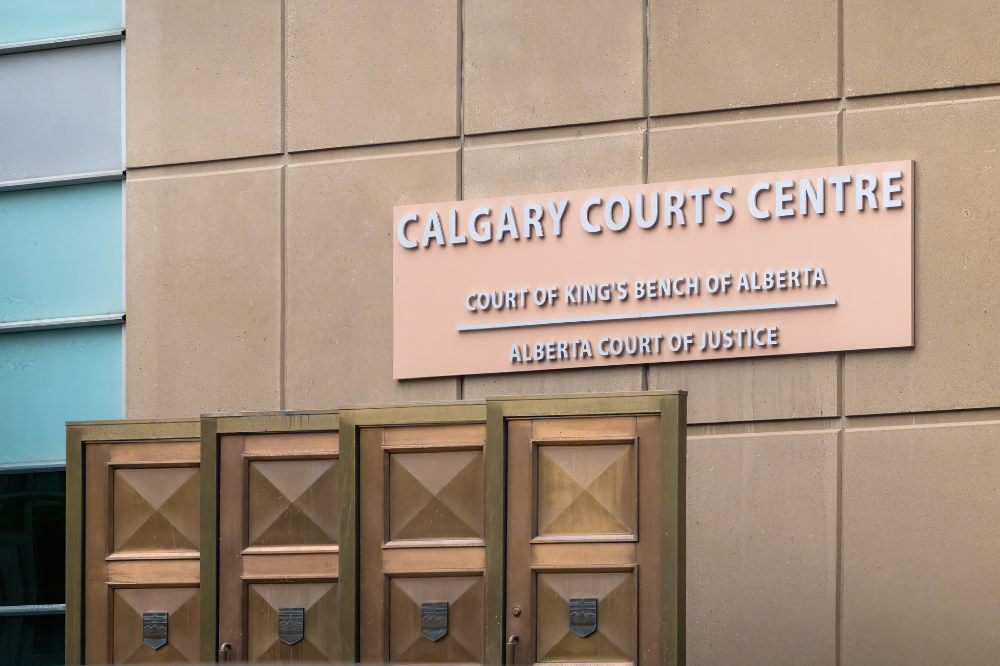
Alberta Court Upholds Injury Claim Dismissal for Long Delay
Dismissal for long delay confirmed after steps in related action fail the significant advance test Gordon Ryley Travis lost two personal injury cases because his former lawyer, Toby D. Schultz, let them sit too long. When Travis sued Schultz for negligence, the same thing happened to that case too. The Court of King’s Bench of Alberta upheld the dismissal for long delay of Travis’ negligence claim after finding the action had not advanced in more than three years. The court dismissed the appeal, leaving Travis to pay a $20,000 costs award, with appeal costs still to be determined. Under Rule 4.33 of the Alberta Rules of Court, a dismissal for long delay is mandatory when three or more years pass without a significant advance in an action. This Rule is sometimes called the “drop dead rule” because courts have no discretion to overlook it. As such, the merits of the claim and whether a party has legal representation are both irrelevant. However, there are two exceptions under Rule 4.33(2) that can prevent a dismissal: In Travis v. Schultz , 2026 ABKB 693 , the court found neither exception applied. The last step taken in Travis’ negligence claim against Schultz (the Schultz Action) was the service of an expert report on September 14, 2021. Schultz filed his dismissal for long delay application on November 8, 2024, more than three years later. A significant advance is a step that moves litigation toward resolution in an essential way. The assessment is functional, as courts look at substance and effect, not what a step was labelled or how it was filed. This decision cited three cases where the Alberta Court of Appeal confirmed this approach. Travis argued that the activity in a parallel proceeding (the Denis Action) should count as advancing his case against Schultz. The Denis Action was a fee recovery claim by Jonathan B. Denis, Travis’ original lawyer before Schultz, against Schultz directly. Notably, Travis was not a party to that proceeding. He pointed to two events: However, the court rejected both. Citing Center Street Limited Partnership v. Nuera Platinum Construction Ltd , 2025 ABCA 290 , the court stated that the steps in a related action can only count when that action is potentially dispositive of the case at hand. Here, the court held that the Denis Action was not. Its resolution could not decide any issue in the Schultz Action, and the settlement only removed a possible deduction from a future damages award . In short, nothing in the Denis Action moved Travis any closer to winning against Schultz. Bookmark Canadian Lawyer’s Personal Injury page for more news, articles, and legal updates in this practice area. The Canadian Legal Newswire is a FREE newsletter that keeps you up to date on news and analysis about the Canadian legal scene, providing targeted news and information of interest to Canadian Lawyers. Please enter your email address below to subscribe.
How does this affect you?
Get an AI analysis of this article grounded in your jurisdictions, practice areas, and any policy documents you've uploaded to Wansom.
Finish Reading the Full Story and the Expert Analysis.
Get the latest legal & regulatory intelligence in Canada
Wansom is AI and can make mistakes.