
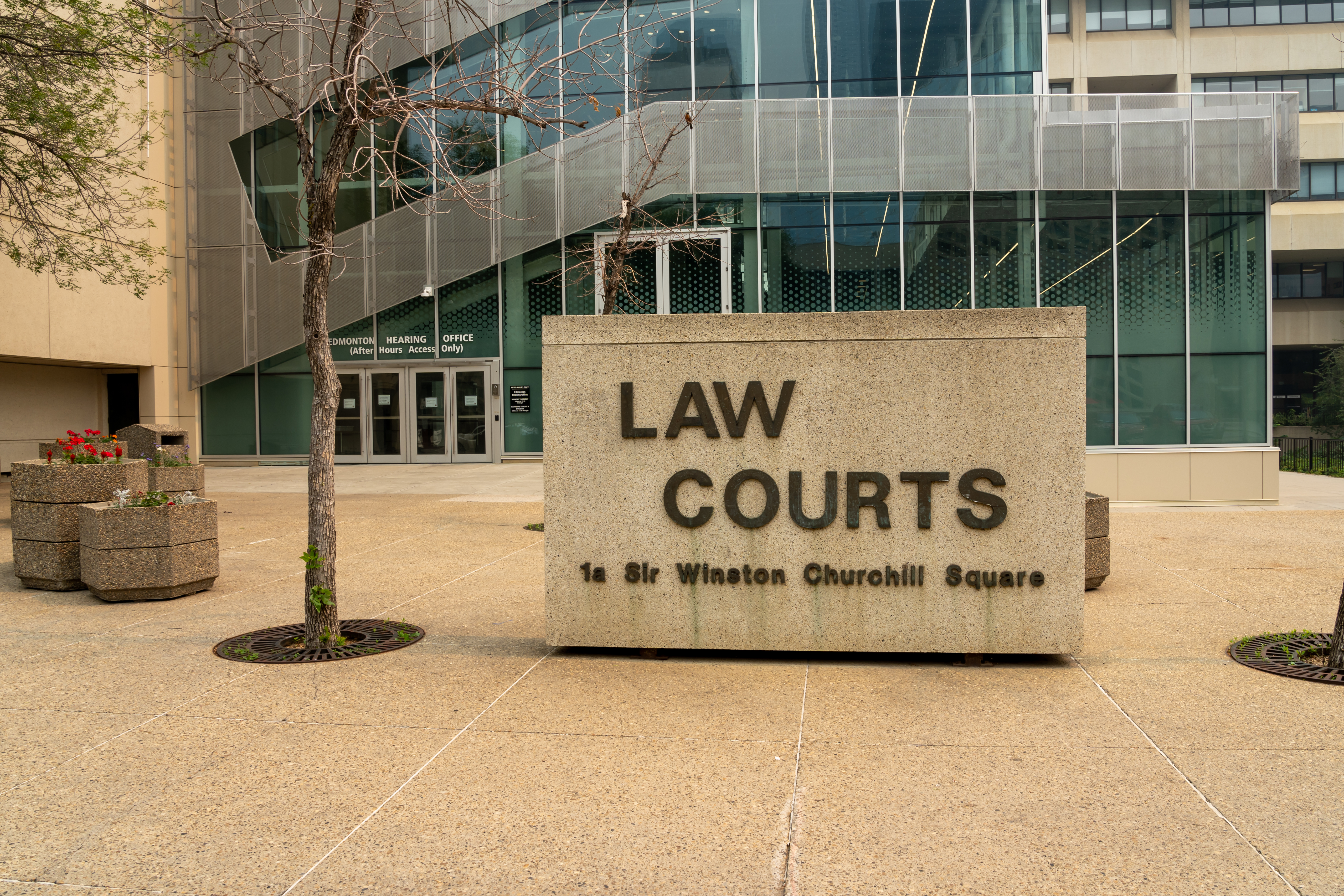
Alberta Court of King's Bench: Affirms New Tort Intrusion Upon Seclusion
Summary
- The Alberta Court of King's Bench has officially recognized the new tort of intrusion upon seclusion.
- This decision arose from a case where a man secretly recorded 117 individuals, including the plaintiff, in private spaces over six years.
- The plaintiff, an Alberta government employee, was secretly recorded undressing in a workplace bathroom.
- The court found existing legal remedies insufficient and granted judgment to the plaintiff for both intrusion upon seclusion and intentional infliction of mental suffering.
- This ruling establishes a new civil remedy for privacy breaches in Alberta, expanding potential liability for such violations.
Egregious Privacy Breach Uncovered in Alberta
This landmark decision establishes a new civil remedy for privacy breaches in Alberta, significantly expanding the avenues for individuals to seek damages for violations of their personal space and autonomy.
A significant ruling from the Alberta Court of King's Bench has formally recognized the **Alberta new tort intrusion upon seclusion**, stemming from a disturbing case of widespread voyeurism. The events unfolded on March 24, 2020, when an employee at an Alberta government office discovered the defendant hiding in a closet within a workplace bathroom. This discovery initiated an investigation by the Edmonton Police Service (EPS), which subsequently uncovered a vast collection of illicit recordings.
Police searches of the defendant's cell phone revealed 111 voyeuristic video recordings captured over a six-year period. Further investigations located additional videos on his laptops. The EPS geolocated these recordings, identifying a total of 117 victims. Of these, 31 individuals were positively identified, including at least two who were under the age of 18. The defendant, leveraging his professional access as a plumber, gas fitter, and HVAC technician, systematically entered private spaces to make these secret recordings.
The plaintiff in the landmark case, `BD v Germain, 2026 ABKB 590`, was an employee of the Alberta government. On April 21, 2020, her employer informed her about a secret recording of her in a workplace bathroom, based on a video provided by the EPS. This particular recording also captured two other employees. Days later, on April 26, 2020, the plaintiff viewed the full video at the EPS downtown division, which depicted her undressing, using the toilet, and wiping her genitals. Police confirmed the defendant was the individual responsible for recording her. The defendant later pleaded guilty to voyeurism under s 162(1)(a) of the Criminal Code, 1985, on March 10, 2021, receiving a 15-month conditional sentence order and two years’ probation. An appeal by the Crown regarding the sentence was dismissed in 2022.
Alberta Establishes New Civil Remedy for Privacy Violations
In a pivotal decision, Justice E.C. Lew of the Alberta Court of King’s Bench deemed it appropriate to recognize the **Alberta new tort intrusion upon seclusion**, emphasizing the critical societal value of protecting individual privacy. This ruling establishes a **new tortious cause of action Alberta**, providing a civil remedy for victims of severe privacy breaches. The court outlined the necessary elements for establishing this tort on a balance of probabilities, noting a distinction from Ontario's formulation regarding the third element, specifically the inclusion of the phrase 'in the position of the plaintiff.' The court clarified its preference for the 'reasonable person' standard to be viewed from the perspective of the individual affected by the recording, rather than a viewer, citing precedents such as `Campbell v MGN Ltd, [2004] UKHL 22` and `ES v Shillington, 2021 ABQB 739`.
The court's decision to recognize this tort followed a rigorous application of the three-part test outlined in `Nevsun Resources Ltd v Araya, 2020 SCC 5`. Firstly, the court determined that existing statutory and tortious causes of action in Alberta offered no sufficient alternative remedies to address the profound harm suffered by the plaintiff. Specifically, traditional torts such as trespass, breach of confidence, and **intentional infliction of mental suffering Alberta** were deemed unsuitable as primary avenues for redress. Secondly, the court identified a clear need for a remedy to address the defendant's egregious wrongs, which had a devastating impact on the plaintiff, who was innocuously using a workplace bathroom. The court found that the plaintiff satisfied all three parts of the test, paving the way for this significant legal development.
Impact on Alberta Privacy Tort Law
On September 23, 2025, Justice Aloneissi granted judgment to the plaintiff for both **intrusion upon seclusion** and **intentional infliction of mental suffering Alberta**. The plaintiff's experience following the discovery of the recording was severe; she took a leave of absence from work, attended therapy sessions, and required medication to manage symptoms of depression and anxiety. This outcome underscores the profound personal toll that such privacy violations can inflict.
This landmark decision establishes a new civil remedy for privacy breaches in Alberta, significantly expanding the avenues for individuals to seek damages for violations of their personal space and autonomy. It marks a critical evolution in **Alberta privacy tort law**, particularly relevant for cases involving **workplace privacy breach Alberta** and **voyeurism civil claim Alberta**. The recognition of this tort means that victims now have a direct legal mechanism to pursue civil claims against those who intentionally intrude upon their seclusion, offering a vital layer of protection beyond criminal prosecution.
Practical Implications
This decision establishes a new civil remedy for privacy breaches in Alberta, enabling lawyers to advise clients on pursuing damages for 'intrusion upon seclusion' and expanding potential liability for privacy violations, especially in workplace contexts. Compliance officers should review existing policies to mitigate risks associated with this new cause of action.
Source
How does this affect you?
Get an AI analysis of this article grounded in your jurisdictions, practice areas, and any policy documents you've uploaded to Wansom.
Finish Reading the Full Story and the Expert Analysis.
Wansom is AI and can make mistakes.