
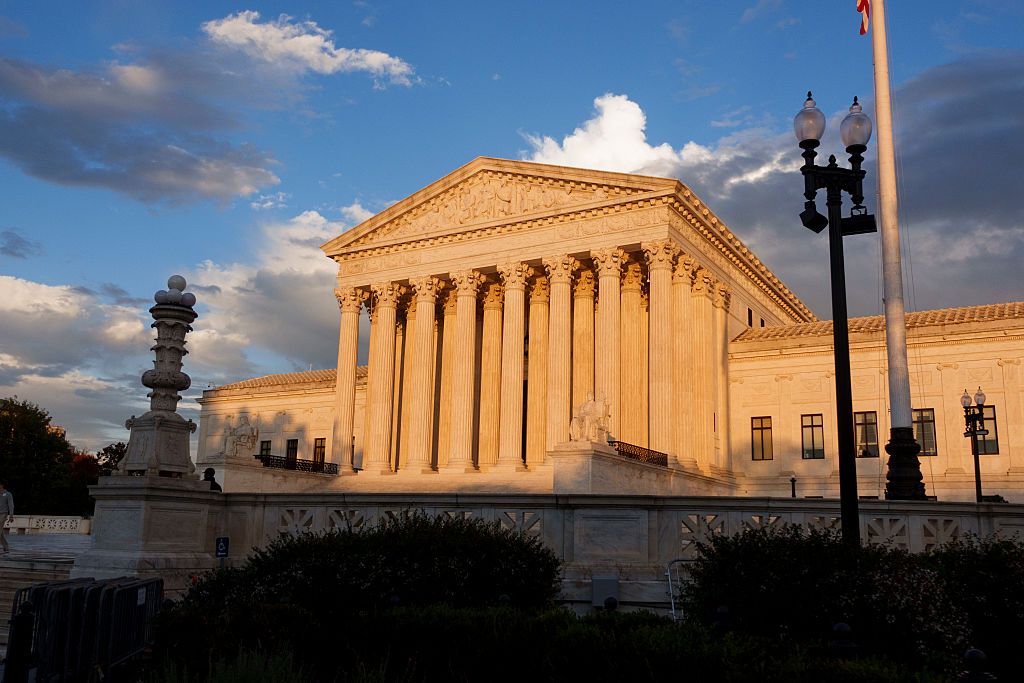
Supreme Court: Alaska Plane Seizure Tests Eighth Amendment Fine
Summary
- The Supreme Court will hear arguments regarding the forfeiture of an Alaskan bush pilot's $95,000 airplane.
- Pilot Ken Jouppi was convicted in 2012 for knowingly transporting beer to Beaver, a "dry" Alaskan village.
- Jouppi argues that the forfeiture of his aircraft violates the Eighth Amendment's ban on excessive fines.
- State troopers found the equivalent of three cases of beer on Jouppi's plane, intended for a passenger's husband.
- The case will examine the proportionality of civil forfeiture penalties in relation to regulatory violations.
The Incident and Initial Conviction
The core of the legal dispute now before the Supreme Court centers on whether the forfeiture of Jouppi's aircraft constitutes an excessive penalty, thereby violating the Eighth Amendment’s prohibition against excessive fines.
The Supreme Court is set to hear arguments concerning the forfeiture of a $95,000 aircraft belonging to Alaskan bush pilot Ken Jouppi, an 83-year-old man. This legal challenge stems from an incident in April 2012 when Jouppi was scheduled to fly a passenger from Fairbanks to Beaver, Alaska, a journey lasting less than an hour. Beaver, a remote community with a 2020 census population of 48, operates as a "dry" village, strictly prohibiting the sale, importation, and possession of alcohol. The village is inaccessible by road, with Fairbanks being home to its nearest hospital.
Prior to Jouppi's departure, state troopers intercepted his plane at the airport, armed with a warrant for a search. Authorities stated they had received intelligence indicating that Jouppi had a history of transporting passengers carrying alcohol into dry villages. During the search, officers discovered the equivalent of three cases of beer, which the passenger intended to deliver to her husband, who was employed in Beaver. Consequently, charges were filed against the passenger, Jouppi, and his company for knowingly bringing alcohol into a prohibited village.
The passenger involved in the incident subsequently pleaded guilty. Jouppi, however, opted for a trial, where he was ultimately found guilty of the charges. Following his conviction, the trial judge imposed a sentence that included three days in prison and an order to pay a fine, setting the stage for the protracted legal battle that now reaches the nation's highest court.
Eighth Amendment Challenge
The core of the legal dispute now before the Supreme Court centers on whether the forfeiture of Jouppi's aircraft constitutes an excessive penalty, thereby violating the Eighth Amendment’s prohibition against excessive fines. Prosecutors in Alaska sought the forfeiture of the plane based on their contention that Jouppi must have been aware that his passenger was transporting beer into a village where alcohol is strictly forbidden. This action by the state of Alaska directly led to the Alaska plane seizure Eighth Amendment challenge.
Jouppi's legal team argues that the penalty, specifically the seizure of his $95,000 airplane, is disproportionate to the offense and falls under the purview of the excessive fines clause Alaska. The upcoming oral argument will provide the Supreme Court with the opportunity to examine the application of this constitutional protection in the context of state-initiated civil forfeiture actions, particularly those involving regulatory violations like dry village alcohol transport.
Context of Alaska's Dry Village Laws
Alaska's "dry village" laws are a critical component of the regulatory context surrounding this case. These regulations are designed to control or prohibit alcohol within specific communities, often due to historical or social reasons, and are enforced rigorously. The state's decision to pursue the forfeiture of Jouppi's aircraft underscores the seriousness with which it treats violations of these alcohol control measures, especially when there is an allegation of repeated infractions, as claimed by law enforcement officials regarding Jouppi's activities.
The state's justification for the forfeiture hinges on the premise that Jouppi's alleged knowledge and repeated actions warranted such a severe penalty. This approach to enforcement, utilizing asset forfeiture, is now under scrutiny by SCOTUS, raising questions about the balance between state regulatory authority and individual constitutional protections against excessive punishment. The Ken Jouppi forfeiture SCOTUS case will therefore have significant implications for how states can enforce their laws through property seizures.
Why This Case Matters
The Supreme Court's review of the Alaska plane seizure Eighth Amendment case carries substantial weight for the future of civil forfeiture laws across the United States. A ruling in favor of Jouppi could redefine the boundaries of what constitutes an excessive fine under the Eighth Amendment, potentially limiting the ability of states to seize property in cases of regulatory non-compliance. This examination of the excessive fines clause Alaska will provide crucial guidance on the proportionality of penalties.
This case, often referred to as the Ken Jouppi forfeiture SCOTUS challenge, highlights the ongoing debate surrounding civil forfeiture Eighth Amendment applications. The outcome could influence how various jurisdictions approach property seizures for offenses, from minor infractions to more serious crimes, by establishing a precedent for assessing the proportionality of such penalties. The decision will be closely watched by legal professionals and property rights advocates alike, as it could reshape the landscape of asset forfeiture and its constitutional limitations.
Practical Implications
Lawyers should monitor this Supreme Court case for its implications on the Excessive Fines Clause of the Eighth Amendment, particularly concerning civil forfeiture actions by states. A ruling limiting Alaska's ability to seize property could establish a precedent affecting the proportionality of penalties for regulatory violations across various jurisdictions and industries, requiring re-evaluation of potential client exposures to property forfeiture.
Source
How does this affect you?
Get an AI analysis of this article grounded in your jurisdictions, practice areas, and any policy documents you've uploaded to Wansom.
Finish Reading the Full Story and the Expert Analysis.
Get the latest legal & regulatory intelligence in United States
Wansom is AI and can make mistakes.