
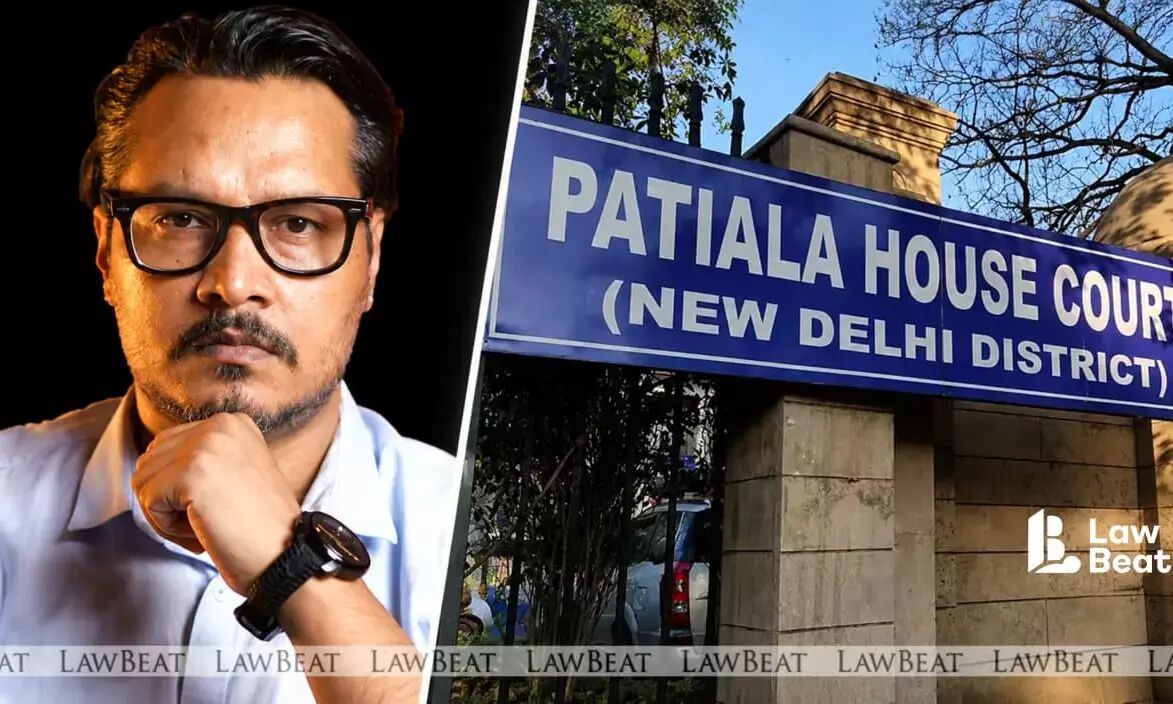
Delhi Court: Ajeet Bharti Anticipatory Bail Dismissed in SC/ST Act Case
Summary
- A Delhi Court dismissed YouTuber Ajeet Bharti's anticipatory bail plea in a case under the SC/ST Act.
- The Patiala House Court decision was pronounced by Additional Sessions Judge Saurabh Pratap Singh Laler on September 7.
- Bharti's counsel argued that the Section 18 bar on anticipatory bail requires a prima facie disclosure of an offense, citing `Prathvi Raj Chauhan v. Union of India`.
- The FIR, filed by Balakram Bauddh of the Azad Samaj Party, alleges caste-based and abusive remarks made during an August 22 YouTube broadcast.
- The court directed that any notice issued by the Investigating Officer must be placed before it to examine the prima facie satisfaction of offense ingredients.
Court Rejects Anticipatory Bail
This decision reinforces the high threshold required for securing pre-arrest bail, particularly when defense arguments challenge the prima facie disclosure of an offense within the initial complaint or FIR.
A Delhi Court has dismissed the anticipatory bail plea filed by YouTuber Ajeet Bharti in a case registered under the Scheduled Castes and Scheduled Tribes (Prevention of Atrocities) Act. The decision, delivered by Additional Sessions Judge (ASJ) Saurabh Pratap Singh Laler at Patiala House Court on Monday, September 7, follows extensive arguments presented by Bharti's legal team seeking protection from arrest. A detailed explanation of the court's reasoning was anticipated later the same day.
During the proceedings, the court issued a directive that should the Investigating Officer (IO) issue a notice in the matter, a copy of that notice must also be submitted to the court. This measure was put in place to allow the court to review the date of the notice's issuance and to assess the prima facie satisfaction regarding the essential elements of an offense under the SC/ST Act. The Investigating Officer has been summoned, and a notice has been served to the police concerning the anticipatory bail application.
Defense Arguments Against Statutory Bar
Advocate Jai Anant Dehadrai, representing Ajeet Bharti, contended that the statutory prohibition on anticipatory bail, as outlined in Section 18 of the SC/ST Act, should only be applied when the allegations contained within the First Information Report (FIR) or complaint clearly establish a prima facie offense under the Act. Drawing upon the Supreme Court's ruling in `Prathvi Raj Chauhan v. Union of India`, Dehadrai asserted that the court bears the responsibility to ascertain whether the fundamental ingredients of the alleged offense are present before invoking the statutory bar.
Dehadrai further argued that not every statement deemed offensive or objectionable, even if directed at an individual from a Scheduled Caste or Scheduled Tribe community, automatically constitutes an offense under the Act. He specifically addressed the requirements of Sections 3(1)(r) and 3(1)(s) of the SC/ST Act, emphasizing the necessity of proving intentional insult or intimidation, an intent to humiliate, and a direct link between the alleged conduct and the victim's caste identity. The defense also sought to contextualize Bharti's alleged remarks, explaining they arose from a social media exchange involving a comment about Bharti's sister and Chandrashekhar Azad. It was argued that Bharti's comments were aimed at a particular individual, rather than an entire caste or community, and were not intended to humiliate them.
Moreover, Bharti's counsel submitted that a comprehensive reading of his statements would reveal his opposition to caste discrimination, advocating for a scientific caste census and a quota-within-quota system to ensure reservation benefits reached under-represented communities. The defense also invoked the doctrine of grave and sudden provocation, suggesting that the alleged remarks should not be evaluated in isolation from the circumstances in which they were made.
Origin of the Allegations
The case against YouTuber Ajeet Bharti stems from an FIR lodged at the North Avenue Police Station in Delhi. The complaint was filed by Balakram Bauddh, who serves as the Delhi State President of the Azad Samaj Party (Kanshi Ram), a political entity led by Nagina MP Chandrashekhar Azad.
The allegations relate to remarks purportedly made by Bharti during a YouTube program broadcast on August 22, titled “SB79: Reservation Hatao Andolan Nautanki & More | Saptahik Bakaiti.” The complainant alleges that Bharti uttered caste-based and abusive comments concerning Chandrashekhar Azad and Dr BR Ambedkar. Additionally, the complaint includes accusations of sexually objectionable comments directed at women and the issuance of threats, asserting that the videos contain a continuous series of statements pertaining to caste and reservation.
Broader Legal Ramifications
The dismissal of Ajeet Bharti's anticipatory bail plea by the Delhi Court underscores the stringent application of the bar on anticipatory bail under Section 18 of the SC/ST Act in India. This decision reinforces the high threshold required for securing pre-arrest bail, particularly when defense arguments challenge the prima facie disclosure of an offense within the initial complaint or FIR.
Legal professionals advising clients accused under this legislation must be acutely aware of the rigorous judicial scrutiny applied to arguments concerning the basic ingredients of the alleged offense. The Patiala House Court Ajeet Bharti ruling highlights the judiciary's careful consideration of whether the foundational elements of an SC/ST Act violation are present before granting any relief from arrest, thereby emphasizing the Act's protective intent.
Practical Implications
This dismissal reinforces the stringent application of the bar on anticipatory bail under Section 18 of the SC/ST Act, even when defense arguments challenge the prima facie disclosure of an offense. Lawyers advising clients accused under this Act must be aware of the high threshold for securing anticipatory bail and the specific judicial scrutiny applied to arguments concerning the basic ingredients of the alleged offense.
Source
How does this affect you?
Get an AI analysis of this article grounded in your jurisdictions, practice areas, and any policy documents you've uploaded to Wansom.
Finish Reading the Full Story and the Expert Analysis.
Wansom is AI and can make mistakes.