
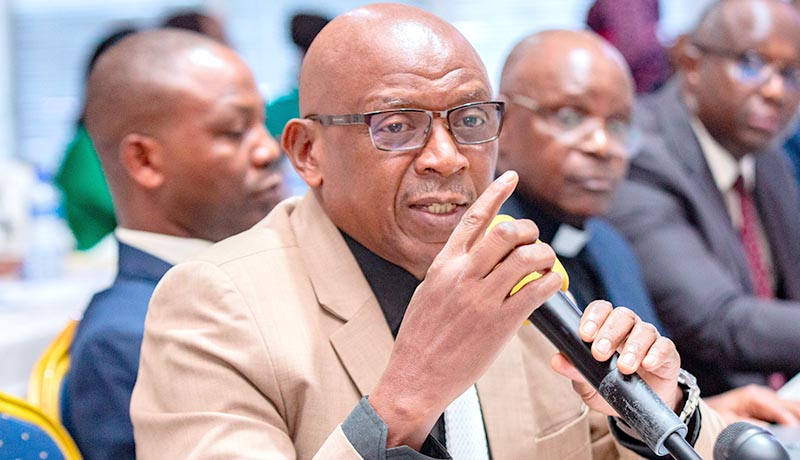
Agathon Rwasa: Réfute Arrêt RAP 68, Alleges Political Exclusion
Summary
- Political opposition leader Agathon Rwasa and his team claim the Supreme Court's Administrative Chamber deliberately refused to hear their request.
- The court's decision, RAP 68, was rendered on August 7 but formally notified to Rwasa on September 21, 2026.
- Rwasa alleges a 'hidden agenda' to exclude him from the next presidential race, citing the court's reliance on 'considerations foreign to the body of the case'.
- Despite the judicial setback and alleged political maneuvering, Agathon Rwasa has declared his firm intention to participate in the upcoming presidential election.
Court Rejects Opposition Leader's Petition
Agathon Rwasa has voiced strong suspicions, asserting that the court's refusal to hear their petition is part of a broader, undisclosed strategy.
Agathon Rwasa, a prominent political opposition figure, along with his political team, has publicly stated that the Administrative Chamber of the Supreme Court deliberately declined to consider their formal request. This refusal, according to Rwasa's camp, was based on factors deemed entirely unrelated to the substantive merits of the case itself, effectively sidestepping a direct engagement with their arguments.
The court's decision, officially designated as RAP 68, was initially rendered on August 7. However, the formal notification of this ruling was not communicated to Agathon Rwasa and his associates until September 21, 2026. This timeline highlights a significant delay between the issuance of the judgment and its official delivery to the affected parties, a detail that has drawn scrutiny from the opposition leader.
Agathon Rwasa Alleges Hidden Agenda
In response to the Supreme Court's action, Agathon Rwasa has voiced strong suspicions, asserting that the court's refusal to hear their petition is part of a broader, undisclosed strategy. He explicitly claims the existence of a 'hidden agenda' aimed at preventing his participation in the upcoming presidential election. This accusation frames the judicial decision not merely as a procedural outcome but as a politically motivated maneuver designed to exclude him from the electoral process.
Rwasa's team contends that the court's rationale for rejecting their request was based on 'considerations foreign to the body of the case,' suggesting that extraneous political or administrative pressures influenced the judicial outcome rather than a dispassionate review of the legal arguments presented. This perspective underscores a deep mistrust in the impartiality of the judicial process concerning his political aspirations. Agathon Rwasa réfute arrêt RAP 68, viewing it as an instrument of political exclusion.
Commitment to Presidential Race
Despite these significant judicial setbacks and the alleged attempts to sideline him, Agathon Rwasa has unequivocally declared his intention to proceed with his political ambitions. He affirmed that, regardless of the Supreme Court's ruling or any perceived 'hidden agenda,' he fully intends to participate in the forthcoming presidential race. This declaration serves as a direct challenge to the perceived efforts to exclude him, signaling his unwavering resolve.
This firm commitment, as conveyed in an interview, indicates that the opposition leader views the court's decision as a hurdle to overcome rather than an insurmountable barrier. His public stance aims to reassure his supporters and demonstrate resilience in the face of what he describes as politically motivated judicial actions, reinforcing his position as a determined contender in the political landscape.
Source
How does this affect you?
Get an AI analysis of this article grounded in your jurisdictions, practice areas, and any policy documents you've uploaded to Wansom.
Finish Reading the Full Story and the Expert Analysis.
Get the latest legal & regulatory intelligence in Burundi
Wansom is AI and can make mistakes.