
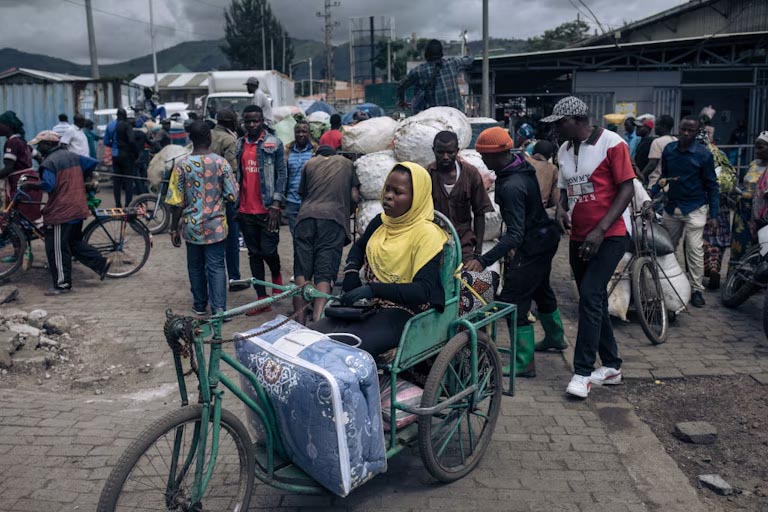
AfCFTA: Informal Cross-Border Traders Drive Billions, Yet Overlooked
Summary
- The African Continental Free Trade Area (AfCFTA) largely overlooks informal cross-border traders, despite their significant role in connecting markets and sustaining incomes.
- Informal cross-border trade in Africa is estimated to be worth between US$10 billion and US$24 billion annually, representing 30-72% of formal trade between neighboring countries.
- Women constitute approximately 70% of these informal traders, who often rely on personal relationships and small-scale operations.
- Overlooking this sector leads to underestimation of economic interdependence and hinders the alignment of development strategies with ground-level realities.
- Accurate understanding of informal trade is crucial for creating more inclusive AfCFTA policies and addressing challenges like tax evasion and exploitation without stifling economic activity.
The Overlooked Economic Engine
Africa cannot fully realize its regional trade ambitions if policy frameworks and official statistics continue to overlook the substantial economic contribution of its small-scale cross-border traders.
The African Continental Free Trade Area (AfCFTA) was established with the ambitious goal of fostering a unified, borderless continental market, thereby stimulating intra-African trade, driving economic transformation, and alleviating poverty across the continent. Paradoxically, the very individuals who embody much of this vision—Africa's small-scale traders who transport goods across national boundaries, link local markets, and provide essential household income—are frequently marginalized in the policy discussions aimed at integrating African economies.
This oversight is particularly critical given the increasing pressure on international development assistance. A report from the Organisation for Economic Co-operation and Development (OECD) in June 2026 indicated a global decline of 23.3% in official development assistance during 2025, with an additional 6.9% reduction projected for 2026. While trade cannot entirely substitute for international aid, these reductions underscore the urgent need to bolster economic activity internally and ensure that a broader segment of the population can benefit from regional markets.
Quantifying Informal Trade's Impact
Informal cross-border trade involves the exchange of goods across national borders through channels that exist outside conventional commercial frameworks. These AfCFTA small scale traders typically purchase goods in one country and resell them in another, often operating on a modest scale and relying on established personal networks to facilitate transactions. The sheer volume of this activity is substantial, highlighting its critical role in the broader African Continental Free Trade Area informal trade landscape.
The United Nations Economic Commission for Africa has estimated that the value of informal cross-border trade across the continent ranges between US$10 billion and US$24 billion annually. Our research further suggests that this figure is equivalent to approximately 30% to 72% of the formal trade conducted between neighboring African nations. Within the Southern African Development Community (SADC), for instance, informal cross-border trade has been valued at an estimated US$17.6 billion, with women comprising around 70% of these traders. While these figures serve as estimates rather than precise measurements due to the inherent challenges in consistently capturing informal activity, they undeniably point to a significant economic force.
Policy Blind Spots and Real-World Impact
The difficulty in accurately measuring informal trade means that policymakers risk significantly underestimating the existing economic interdependence among neighboring African states. When trade statistics fail to account for these transactions, it creates a substantial blind spot in cross-border trade Africa policy. More precise estimates would enable authorities to better align border infrastructure, tariff structures, and support services with the actual volume of commerce, ensuring that development strategies genuinely reflect ground-level economic realities.
Africa cannot fully realize its regional trade ambitions if policy frameworks and official statistics continue to overlook the substantial economic contribution of its small-scale cross-border traders. For many women and young people, this trade offers a vital pathway into entrepreneurship, particularly in contexts where formal employment opportunities are scarce. Beyond direct income generation for traders who capitalize on price differentials, their activities also create employment for transporters, loaders, and market vendors, demonstrating a broader informal trade economic contribution Africa-wide.
Navigating Challenges for Inclusive Growth
It is important to acknowledge that informal trade is not without its complexities. Some participants may engage in tax evasion or bypass customs requirements, and certain operating conditions can expose traders to exploitation. However, by understanding the underlying reasons for the persistence of this activity, policymakers can develop targeted interventions that address these issues without inadvertently stifling a crucial economic sector.
To foster a truly inclusive AfCFTA, policy development must shift its focus to incorporate the practical realities faced by informal traders, rather than exclusively concentrating on established corporations and larger commercial operations. This approach would not only enhance the effectiveness of regional integration efforts but also ensure that the benefits of a continental free trade area are more equitably distributed across all segments of society.
Practical Implications
Lawyers advising on AfCFTA implementation or cross-border trade in Africa must recognize the significant, often overlooked, informal trade sector. This necessitates advising clients on potential regulatory gaps, compliance challenges, and the need to understand ground-level economic realities that may not align with formal trade policies, particularly concerning customs, tax, and market entry strategies for smaller enterprises.
Source
How does this affect you?
Get an AI analysis of this article grounded in your jurisdictions, practice areas, and any policy documents you've uploaded to Wansom.
Finish Reading the Full Story and the Expert Analysis.
Get the latest legal & regulatory intelligence in South Africa
Wansom is AI and can make mistakes.