
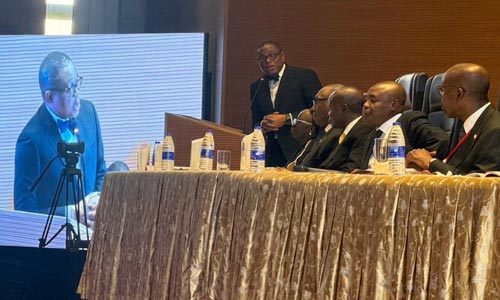
Afam Osigwe SAN: End Charge Amendments, Boost Nigeria Justice
Summary
- Mazi Afam Osigwe, SAN, urged justices and judges to ensure investigations are complete before charges are filed.
- He stated that repeated amendments to charges lead to significant judicial time waste in Nigeria.
- Osigwe highlighted that Nigeria has sufficient laws for economic crime prosecution, but their application is problematic.
- The immediate past Nigerian Bar Association President's remarks address widespread complaints about prosecution delays.
- His statement advocates for enhanced prosecutorial diligence to improve judicial efficiency in Nigeria.
A Call for Prosecutorial Diligence
Mazi Afam Osigwe, a Senior Advocate of Nigeria (SAN) and the immediate past President of the Nigerian Bar Association, recently addressed a gathering of justices and judges, urging a fundamental shift in prosecutorial practices.
Mazi Afam Osigwe, a Senior Advocate of Nigeria (SAN) and the immediate past President of the Nigerian Bar Association, recently addressed a gathering of justices and judges, urging a fundamental shift in prosecutorial practices. His remarks underscored a critical concern regarding the handling of criminal cases, particularly those involving economic and financial offenses in Nigeria. The prominent legal figure emphasized the necessity for law enforcement agencies to conduct comprehensive investigations prior to the formal filing of charges in court.
Osigwe's intervention highlighted that the frequent practice of amending charges after they have been initiated contributes significantly to the inefficiency of the judicial system. He specifically warned that such repeated alterations to charge sheets result in considerable judicial time waste, a factor that exacerbates the already challenging landscape of justice delivery in the country. His statement serves as a direct admonition against premature charge filing, advocating for a more meticulous approach from the outset of legal proceedings.
Addressing Systemic Delays
The SAN's comments directly confront the prevalent issue of Nigeria economic crime prosecution delays, asserting that the nation already possesses robust legal frameworks to combat such offenses. According to Osigwe, the core challenge does not lie in the absence of adequate legislation but rather in the inconsistent and often flawed application of existing laws. This perspective suggests that while the statutes are in place, the operational execution by prosecuting bodies often falls short of the required standards.
This deficiency in application is particularly evident in the realm of pre-charge investigation Nigeria. A thorough and complete investigation before charges are brought to court is presented as a crucial step to mitigate the need for subsequent amendments. The current approach, which often sees charges filed based on incomplete inquiries, inevitably leads to procedural bottlenecks and prolongs the judicial process, contributing to the widespread complaints about the pace of justice.
Impact on Judicial Efficiency
The implications of incomplete investigations and subsequent charge amendments extend beyond mere procedural inconvenience; they directly undermine judicial efficiency Nigeria. Each amendment requires additional court time, resources, and often leads to adjournments, thereby delaying the resolution of cases. This cycle of delays not only burdens the judiciary but also erodes public confidence in the justice system's ability to swiftly and fairly adjudicate matters, especially high-profile economic crimes.
Afam Osigwe SAN's warning about judicial time waste is a significant statement from a former Nigerian Bar Association President, highlighting a systemic issue that impacts the entire legal ecosystem. His call for greater prosecutorial diligence is a plea for a more effective and streamlined administration of justice, ensuring that the legal process is not unnecessarily protracted by avoidable procedural missteps. The emphasis on completing investigations before filing charges is presented as a key reform to enhance the overall effectiveness of criminal prosecution in Nigeria.
Practical Implications
This statement from a prominent SAN highlights the ongoing challenge of prosecutorial diligence in Nigeria, particularly concerning economic and financial crimes. Lawyers should be aware that this sentiment could influence judicial scrutiny of prematurely filed charges and subsequent amendments, potentially impacting litigation strategies and case outcomes.
Source
How does this affect you?
Get an AI analysis of this article grounded in your jurisdictions, practice areas, and any policy documents you've uploaded to Wansom.
Finish Reading the Full Story and the Expert Analysis.
Get the latest legal & regulatory intelligence in Nigeria
Wansom is AI and can make mistakes.