
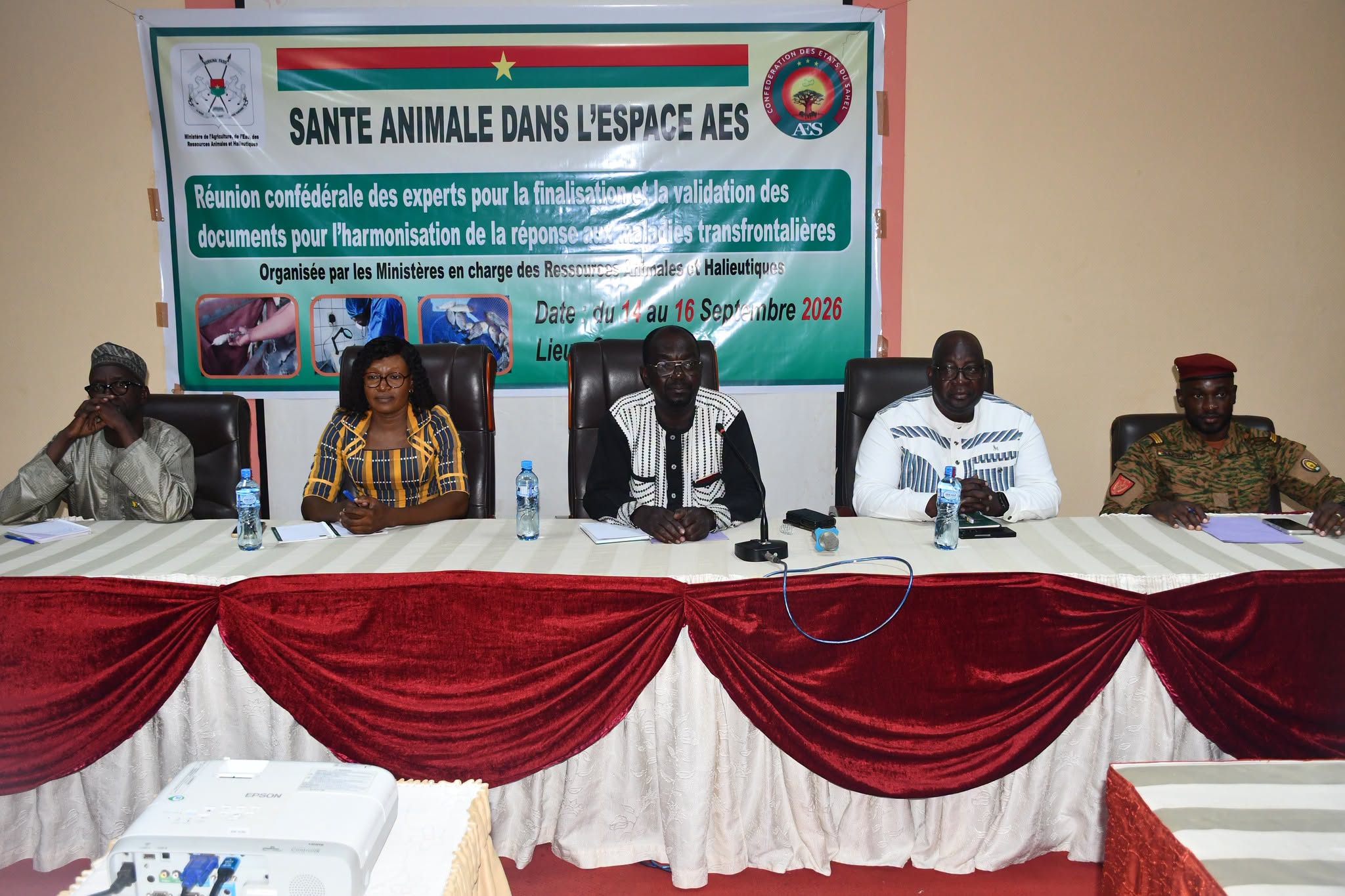
AES: Transboundary Animal Disease Documents Validation for Sahel Alliance
Summary
- Animal health experts from the Alliance of Sahel States (AES) convened in Ouagadougou from September 14-16, 2026.
- The workshop focused on the AES transboundary animal disease documents validation to harmonize regional responses.
- Comrade Hiver BOUSSINI, a Technical Advisor, presided over the crucial validation event.
- These documents aim to establish unified regional legal frameworks and operational protocols for animal health across the Sahel Alliance.
- The initiative will significantly impact agricultural enterprises, cross-border trade, and veterinary practices within Burkina Faso, Mali, and Niger.
What Happened
Lawyers and compliance officers, in particular, should closely monitor these developments, as they are expected to lay down new regional legal frameworks that will govern animal health and related activities across the AES member countries.
Animal health experts representing the Alliance of Sahel States (AES) convened a significant workshop in Ouagadougou from September 14 to 16, 2026. The primary objective of this gathering was the validation of crucial documents designed to standardize and bolster the collective response to transboundary animal diseases across the confederal territory. This initiative marks a concerted effort by the AES member nations to establish unified protocols for managing health challenges that extend beyond individual national borders.
The proceedings of the workshop were overseen by Comrade Hiver BOUSSINI, who serves as a Technical Advisor. His leadership underscored the strategic importance placed on this validation process by the Alliance. The documents under review are intended to provide a foundational framework for coordinated actions, ensuring that all participating states adopt consistent and effective measures against animal diseases that pose a threat to regional livestock populations and agricultural economies.
Legal Context
The validation of these documents is a pivotal step towards establishing a robust regional veterinary law within the Sahel Alliance. Transboundary animal diseases, by their very nature, necessitate harmonized legal and operational frameworks to prevent their spread and mitigate their economic impact. Without common regulations and cooperative mechanisms, individual national efforts can be undermined by movements of animals or products across borders, making the development of shared animal health regulations for the Sahel Alliance critical.
These forthcoming instruments are poised to introduce new compliance obligations and operational protocols for member states, including Burkina Faso, Mali, and Niger. The aim is to create a seamless system for disease surveillance, reporting, and control that transcends national jurisdictions, fostering enhanced Mali Niger animal health cooperation and addressing specific challenges like Burkina Faso cross-border animal disease transmission. The legal implications extend to how veterinary services operate, how animal trade is regulated, and how outbreaks are managed collectively.
Why It Matters
The impending finalization and subsequent implementation of these harmonized documents by the Alliance of Sahel States carry significant implications for various stakeholders. Lawyers and compliance officers, in particular, should closely monitor these developments, as they are expected to lay down new regional legal frameworks that will govern animal health and related activities across the AES member countries. These frameworks will define new standards and requirements that agricultural enterprises, livestock traders, and veterinary practitioners must adhere to.
The establishment of these validated tools will directly impact cross-border trade in animals and animal products, potentially introducing new certification requirements, inspection protocols, and disease control measures. For businesses operating within or across Burkina Faso, Mali, and Niger, understanding and adapting to these evolving compliance obligations will be essential to ensure continued market access and operational legality. Furthermore, the new operational protocols will reshape veterinary practices, demanding greater coordination and adherence to regional guidelines in the collective effort to manage and eradicate transboundary animal diseases effectively.
Practical Implications
Lawyers and compliance officers should monitor the upcoming finalization and implementation of these harmonized documents by the Alliance of Sahel States. These tools will likely establish new regional legal frameworks, compliance obligations, and operational protocols for managing transboundary animal diseases, impacting agricultural enterprises, cross-border trade, and veterinary practices within Burkina Faso, Mali, and Niger.
Source
How does this affect you?
Get an AI analysis of this article grounded in your jurisdictions, practice areas, and any policy documents you've uploaded to Wansom.
Finish Reading the Full Story and the Expert Analysis.
Get the latest legal & regulatory intelligence in Burkina Faso
Wansom is AI and can make mistakes.