
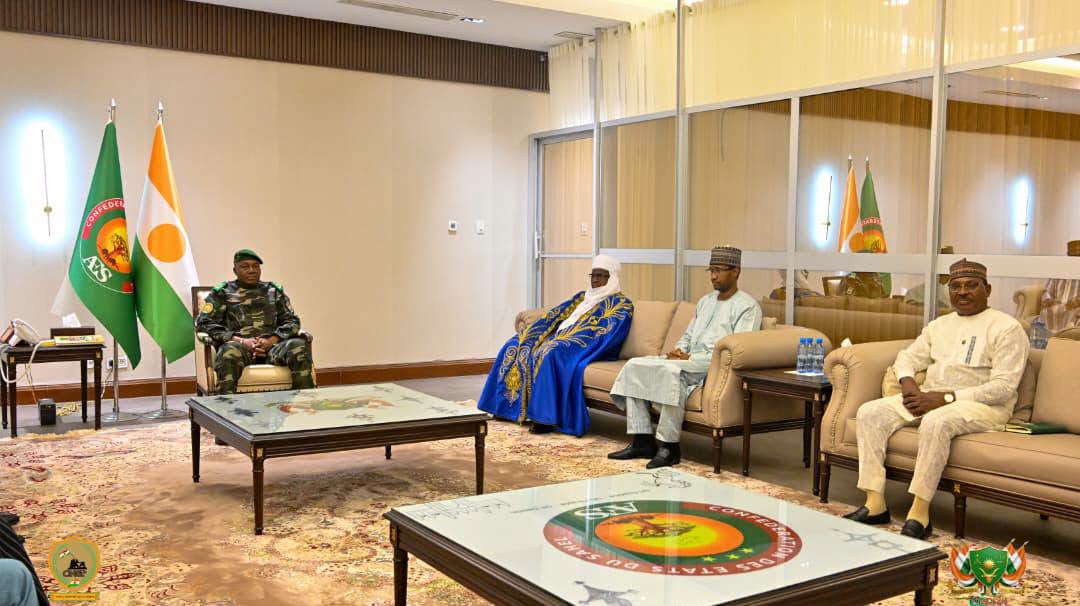
AES Confederal Parliaments: General Tiani Briefed on Inaugural Sessions
Summary
- The Alliance of Sahel States (AES) recently inaugurated its confederal parliamentary sessions.
- During these sessions, internal regulations were adopted, and working commissions were established.
- Dr. Ousmane Bougouma, President of the confederal sessions and Burkina Faso's Legislative Assembly, reported on these developments to General Tiani.
- He was accompanied by two vice-presidents, including General Malick Diaw, during the meeting with General Tiani.
- This engagement occurred the day after the initial parliamentary activities, signifying a formal step in the bloc's governance.
Formalizing Regional Governance
The formalization of these AES confederal parliaments represents a significant stride in the integration efforts of the Alliance of Sahel States.
The Alliance of Sahel States (AES) has taken significant steps toward establishing its legislative framework with the recent inauguration of its confederal parliamentary sessions. These sessions mark a crucial moment in the bloc's development, signaling a move towards more formalized regional governance structures. The initial proceedings included the formal adoption of internal regulations, which will guide the operational procedures and conduct of the parliamentary body, alongside the establishment of various commissions essential for legislative work.
These foundational activities underscore the commitment of the member states to build a cohesive and functional political entity. The establishment of these `AES confederal parliaments` is designed to provide a platform for coordinated legislative action across Burkina Faso, Mali, and Niger. The internal regulations are particularly vital, as they lay down the procedural groundwork for how laws will be debated, drafted, and potentially enacted within the confederal system, thereby shaping future `Sahel States legal framework developments`.
Leadership Engagement and Reporting
Following the inaugural ceremonies and the internal organizational work, the leadership of the newly formed confederal parliamentary sessions promptly engaged with General Tiani, the President of Niger. Dr. Ousmane Bougouma, who serves as both the President of these confederal sessions and the President of Burkina Faso's Legislative Assembly of the People, led a delegation to report on the progress. He was accompanied by two vice-presidents, one of whom was General Malick Diaw, indicating a high-level representation from across the member states.
This delegation met with `General Tiani` to provide an update on the successful inauguration of the `Alliance Sahel States legislative sessions`, the adoption of the `AES internal regulations adoption`, and the formation of the necessary working commissions. The meeting between `General Tiani Ousmane Bougouma` occurred the day immediately following these initial parliamentary activities, highlighting the urgency and importance placed on these developments by the AES leadership. The `Burkina Faso AES parliamentary report` to General Tiani underscores the hierarchical structure and the imperative for legislative bodies to keep the executive leadership informed of their foundational work.
Implications for the Sahel Bloc
The formalization of these `AES confederal parliaments` represents a significant stride in the integration efforts of the Alliance of Sahel States. By establishing a dedicated legislative body, the AES is moving beyond initial security and economic cooperation agreements to build a more robust and institutionalized political union. This development provides a mechanism for harmonizing laws and policies across member nations, which could have far-reaching implications for regional stability, trade, and collective security.
The engagement of `General Tiani` with the parliamentary leadership further solidifies the importance of this legislative arm within the broader AES framework. The creation of these parliamentary structures and the adoption of their operating rules are critical steps towards defining the legal and political identity of the bloc. This institutionalization is expected to foster greater cohesion and provide a structured approach to addressing the shared challenges faced by the member states, ultimately shaping the future trajectory of the Alliance.
Practical Implications
This development signals the formalization of legislative and governance structures within the Alliance of Sahel States (AES). Lawyers and compliance officers with interests in Burkina Faso, Mali, or Niger should closely monitor the output of these confederal parliaments for new regional laws, regulations, or policy directives that could impact cross-border operations, trade, or investment within the AES bloc.
Source
Source: Original reporting via {source}
How does this affect you?
Get an AI analysis of this article grounded in your jurisdictions, practice areas, and any policy documents you've uploaded to Wansom.
Wansom is AI and can make mistakes.