
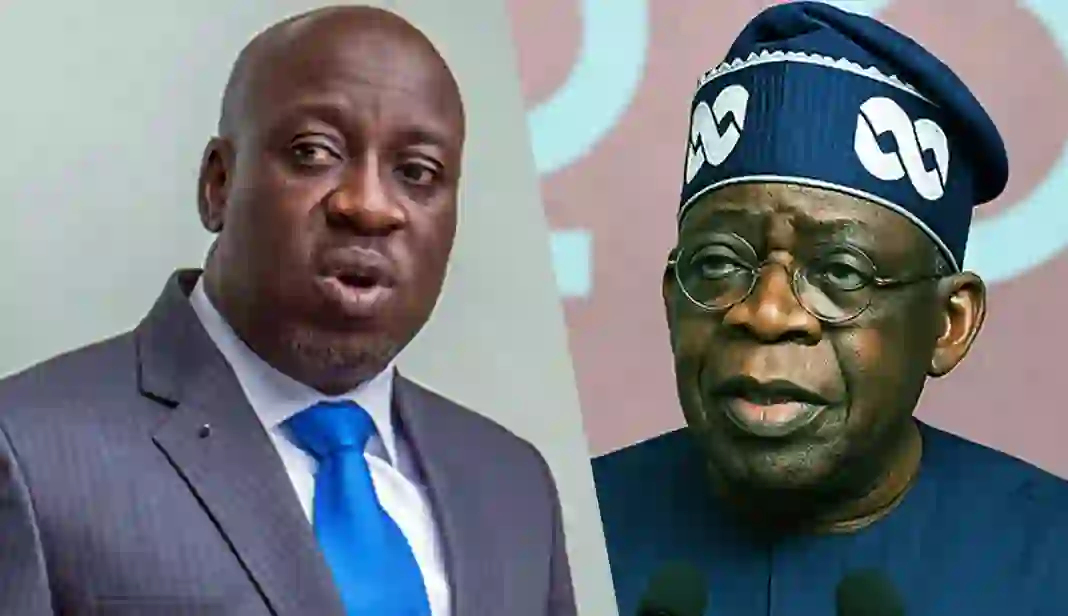
ADC Challenges Tinubu: $12.4 Billion Unaccounted Funds Demanded
Summary
- The African Democratic Congress (ADC) has challenged President Bola Tinubu to explain a $12.4 billion discrepancy.
- This financial gap was identified by the World Bank within Nigeria's external accounts.
- The $12.4 billion sum is nearly a quarter of Nigeria's approved N68.32 trillion federal budget for 2026.
- The ADC's demand emphasizes the need for transparency and accountability in public funds management.
The Call for Accountability
The financial magnitude of the $12.4 billion discrepancy is particularly striking when viewed against Nigeria's approved N68.32 trillion federal budget for 2026.
The African Democratic Congress (ADC) has formally called upon President Bola Tinubu to provide a comprehensive explanation regarding a significant financial discrepancy identified within Nigeria's external accounts. This demand centers on an alleged $12.4 billion sum that the World Bank has flagged as unaccounted for. The political party's challenge to President Bola Tinubu underscores growing concerns over fiscal transparency and the management of national resources.
The ADC's request highlights the imperative for the current administration to address the findings from the international financial institution, ensuring clarity on the nation's financial standing. This direct appeal from the African Democratic Congress to President Bola Tinubu emphasizes the need for immediate action and detailed disclosure concerning the substantial financial gap. The party's stance reflects a broader push for greater oversight of public funds, particularly as the country navigates its economic landscape. The $12.4 billion figure represents a considerable sum, prompting the ADC to seek answers directly from the nation's highest office to maintain public trust and ensure responsible governance.
The World Bank's Findings and Context
The origin of the controversy lies in an assessment conducted by the World Bank, which brought to light a $12.4 billion discrepancy within Nigeria's external accounts. This identification by the global financial body has served as the basis for the African Democratic Congress's recent demand for clarity from President Bola Tinubu. The World Bank's findings typically involve rigorous analysis of a nation's financial inflows and outflows, cross-referencing data from various sources to ensure accuracy and transparency in international financial dealings.
Such a significant divergence in external account figures, as identified by the World Bank, often signals potential issues in financial reporting, data reconciliation, or the management of foreign exchange reserves and international transactions. The specific nature of this $12.4 billion gap has not been fully detailed, but its emergence from a World Bank review lends considerable weight to the ADC's call for a thorough investigation and public explanation. This situation highlights the importance of robust financial systems and transparent reporting mechanisms, especially for a nation with extensive international economic engagements.
Financial Magnitude and National Impact
The financial magnitude of the $12.4 billion discrepancy is particularly striking when viewed against Nigeria's approved N68.32 trillion federal budget for 2026. This unaccounted sum is equivalent to nearly a quarter of the entire projected national expenditure for that fiscal year, underscoring the profound implications for public funds accountability. Such a substantial amount, if indeed missing or mismanaged, could significantly impact the government's ability to fund critical projects, social programs, and essential services outlined in its future budgetary plans.
The comparison to the 2026 budget highlights not just the scale of the alleged discrepancy but also its potential to derail national development objectives. For a nation like Nigeria, where budgetary allocations are crucial for infrastructure, education, healthcare, and economic diversification, a gap of this size in external accounts raises serious questions about fiscal discipline and the integrity of financial management. The African Democratic Congress's demand for explanations from President Bola Tinubu is therefore not merely a political challenge but a call for transparency that directly relates to the nation's economic stability and future financial health.
Practical Implications
Lawyers and compliance officers should monitor the government's response to this alleged $12.4 billion discrepancy, as it could trigger investigations into public financial management and potentially lead to new regulatory scrutiny or policy changes affecting entities dealing with public funds in Nigeria.
Source
How does this affect you?
Get an AI analysis of this article grounded in your jurisdictions, practice areas, and any policy documents you've uploaded to Wansom.
Finish Reading the Full Story and the Expert Analysis.
Get the latest legal & regulatory intelligence in Nigeria
Wansom is AI and can make mistakes.