
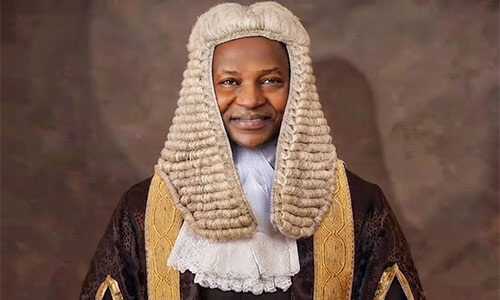
Abubakar Malami: Mambilla Arbitration Infamy Under Scrutiny
Summary
- An article by Chidi Anselm Odinkalu critically examines the Mambilla Hydropower Project arbitration, implicating Abubakar Malami.
- The piece is titled "Abubakar Malami And The Infamy Of The Mambilla Hydropower Arbitration," suggesting significant governance concerns.
- It opens by referencing Chukwuma Kaduna Nzeogwu's 1966 coup announcement, which denounced "political profiteers" and "swindlers."
- This historical context frames the Malami Mambilla legal dispute within a long-standing narrative of integrity challenges in Nigeria.
- In 1966, Nigeria's economy was primarily sustained by agriculture and solid minerals.
Framing a Controversial Arbitration
The very title, "Abubakar Malami And The Infamy Of The Mambilla Hydropower Arbitration,"
An article penned by Chidi Anselm Odinkalu brings into sharp focus the Mambilla Hydropower Project arbitration in Nigeria, specifically titling its discussion "Abubakar Malami And The Infamy Of The Mambilla Hydropower Arbitration." This provocative title immediately signals significant governance and integrity concerns surrounding the high-stakes international arbitration case. The author initiates the piece by drawing a direct historical parallel, referencing a pivotal moment in Nigeria's past.
The article recalls the military coup announcement made by Chukwuma Kaduna Nzeogwu on January 15, 1966. In his address, Nzeogwu famously condemned a specific group he described as "political profiteers, the swindlers, the men in high and low places that seek bribes and demand 10 percent." This historical denunciation serves as a powerful opening, setting a critical tone for the subsequent discussion of the Malami Mambilla legal dispute. By invoking such a strong historical indictment of corruption, the author frames the contemporary arbitration controversy within a long-standing narrative of integrity challenges in Nigerian public life.
Historical Echoes in Nigerian Governance
The choice to open an analysis of the Mambilla Hydropower Project arbitration with a reference to the 1966 coup is significant, underscoring a perceived continuity of issues related to public integrity. Chukwuma Kaduna Nzeogwu's pointed remarks about "political profiteers" and those who "seek bribes and 10 percent" reflect deep-seated concerns about corruption at the highest levels of governance. This historical context is not merely anecdotal; it establishes a framework through which the author intends for readers to understand the contemporary Abubakar Malami arbitration controversy.
Furthermore, the article notes the economic landscape of Nigeria at the time of Nzeogwu's pronouncement. In 1966, the nation's financial sustenance was predominantly derived from its agricultural sector and solid minerals. This detail subtly highlights a contrast or perhaps a historical foundation for the economic activities that could be susceptible to the very profiteering Nzeogwu decried. The juxtaposition of this historical economic reality with the modern Mambilla Hydropower Project, a massive infrastructure undertaking, suggests a critical examination of how national resources, then and now, are managed and potentially exploited, thereby linking the past to the present Malami Mambilla legal dispute.
Implications for International Arbitration in Nigeria
The framing of the Mambilla Hydropower Project arbitration through the lens of historical corruption, as presented in Chidi Anselm Odinkalu's article, carries substantial implications for understanding Nigeria international arbitration risks. The very title, "Abubakar Malami And The Infamy Of The Mambilla Hydropower Arbitration," suggests that the involvement of high-ranking public officials, such as the then Nigerian Attorney General Malami, in such disputes can attract scrutiny regarding governance and integrity. This approach signals to observers that the Malami Mambilla legal dispute is not merely a technical legal battle but one potentially imbued with broader ethical and historical dimensions.
For legal professionals and international investors, the article's perspective underscores the importance of conducting thorough due diligence that extends beyond contractual terms to encompass the political and historical context of governance in Nigeria. The implied "infamy" associated with the arbitration, as suggested by the title, highlights the potential for reputational damage and legal challenges when integrity concerns are raised in high-profile cases involving public officials. This narrative serves as a cautionary tale, emphasizing that historical patterns of corruption, as articulated by figures like Nzeogwu, can continue to influence public perception and the outcomes of significant international legal proceedings, making the Abubakar Malami arbitration controversy a case study in such risks.
Practical Implications
This article highlights potential governance and integrity concerns within high-stakes international arbitration cases in Nigeria, particularly those involving public officials. Lawyers should consider these factors when conducting due diligence for clients involved in large infrastructure projects or advising on dispute resolution strategies in the region, noting the potential for reputational and legal challenges.
Source
How does this affect you?
Get an AI analysis of this article grounded in your jurisdictions, practice areas, and any policy documents you've uploaded to Wansom.
Finish Reading the Full Story and the Expert Analysis.
Get the latest legal & regulatory intelligence in Nigeria
Wansom is AI and can make mistakes.