
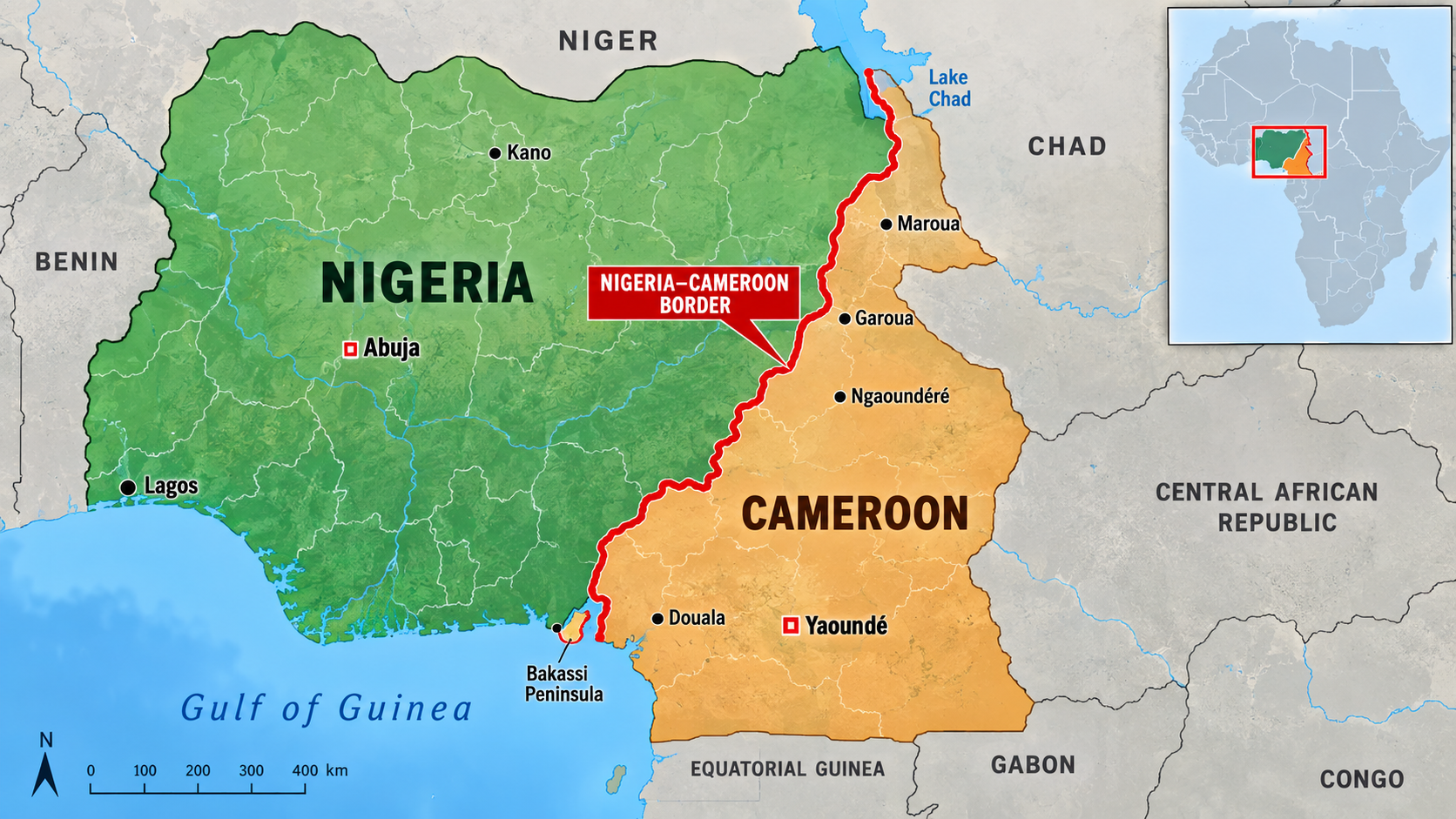
ICJ Ruling: Nigeria Cameroon Border Demarcation Nears Completion
Summary
- The demarcation of the 2,100-kilometer Nigeria-Cameroon border is nearing completion.
- This boundary represents Nigeria's longest international land frontier.
- The demarcation process began 24 years after a definitive ruling by the International Court of Justice.
- An official, Mr. Adaji, confirmed the advanced stage of the border delineation.
- The finalization is expected to enhance legal certainty regarding territorial jurisdiction and regional stability.
Finalizing a Landmark Boundary
Lawyers advising clients on cross-border investments, resource exploration, or land ownership in the Nigeria-Cameroon region should meticulously review the finalized boundary maps and associated legal frameworks.
The extensive process of delineating the border between Nigeria and Cameroon is reportedly nearing its conclusion, marking a significant milestone in the resolution of a long-standing territorial matter. This critical undertaking, which defines Nigeria's most expansive international land boundary, spans an impressive distance of approximately 2,100 kilometers. The impending Nigeria Cameroon border demarcation completion brings an end to decades of efforts aimed at establishing a clear and internationally recognized frontier between the two West African nations.
An official, Mr. Adaji, confirmed the advanced stage of this demarcation, underscoring the collaborative commitment from both countries to finalize the boundary. This development is particularly noteworthy as it comes 24 years after a pivotal ruling by the International Court of Justice (ICJ) set the legal framework for the demarcation. The finalization of this boundary is expected to usher in a new era of clarity regarding territorial jurisdiction and cross-border relations.
The International Court's Mandate
The impetus for the current Nigeria international boundary finalization stems directly from an authoritative judgment delivered by the International Court of Justice. This ICJ Nigeria Cameroon border ruling provided the definitive legal basis for resolving the territorial dispute, particularly concerning the contentious Bakassi Peninsula, though the source focuses on the broader land boundary. The judgment mandated a precise demarcation, transforming a complex political and geographical challenge into a structured, internationally supervised process.
For over two decades since the International Court of Justice Nigeria Cameroon judgment, technical teams have been meticulously working to survey and mark the 2,100-kilometer stretch. This protracted timeline highlights the inherent complexities involved in accurately defining such a vast and often challenging geographical area, ensuring that the demarcation adheres strictly to the parameters set forth by the ICJ's decision. The nearing completion signifies the successful implementation of this crucial international legal directive.
Enhancing Regional Stability and Legal Clarity
The imminent Nigeria Cameroon border demarcation completion holds profound implications for regional stability and legal certainty. A clearly defined and internationally recognized boundary is fundamental for effective governance, resource management, and the prevention of future territorial disputes. This resolution of the Cameroon Nigeria territorial dispute provides both nations with unambiguous territorial jurisdiction, fostering an environment conducive to peace and cooperation along their shared frontier.
For legal professionals and entities operating in the region, the finalization of this boundary is particularly significant. Lawyers advising clients on cross-border investments, resource exploration, or land ownership in the Nigeria-Cameroon region should meticulously review the finalized boundary maps and associated legal frameworks. This proactive approach is essential to ensure compliance with established territorial laws and to mitigate potential risks related to jurisdictional ambiguities that might have existed prior to this comprehensive demarcation update.
Practical Implications
The nearing completion of this long-standing border demarcation, stemming from an ICJ ruling, provides crucial legal certainty regarding territorial jurisdiction. Lawyers advising clients on cross-border investments, resource exploration, or land ownership in the Nigeria-Cameroon region should review the finalized boundary maps and associated legal frameworks to ensure compliance and mitigate risks related to jurisdictional ambiguities.
Source
How does this affect you?
Get an AI analysis of this article grounded in your jurisdictions, practice areas, and any policy documents you've uploaded to Wansom.
Finish Reading the Full Story and the Expert Analysis.
Get the latest legal & regulatory intelligence in Nigeria
Wansom is AI and can make mistakes.