
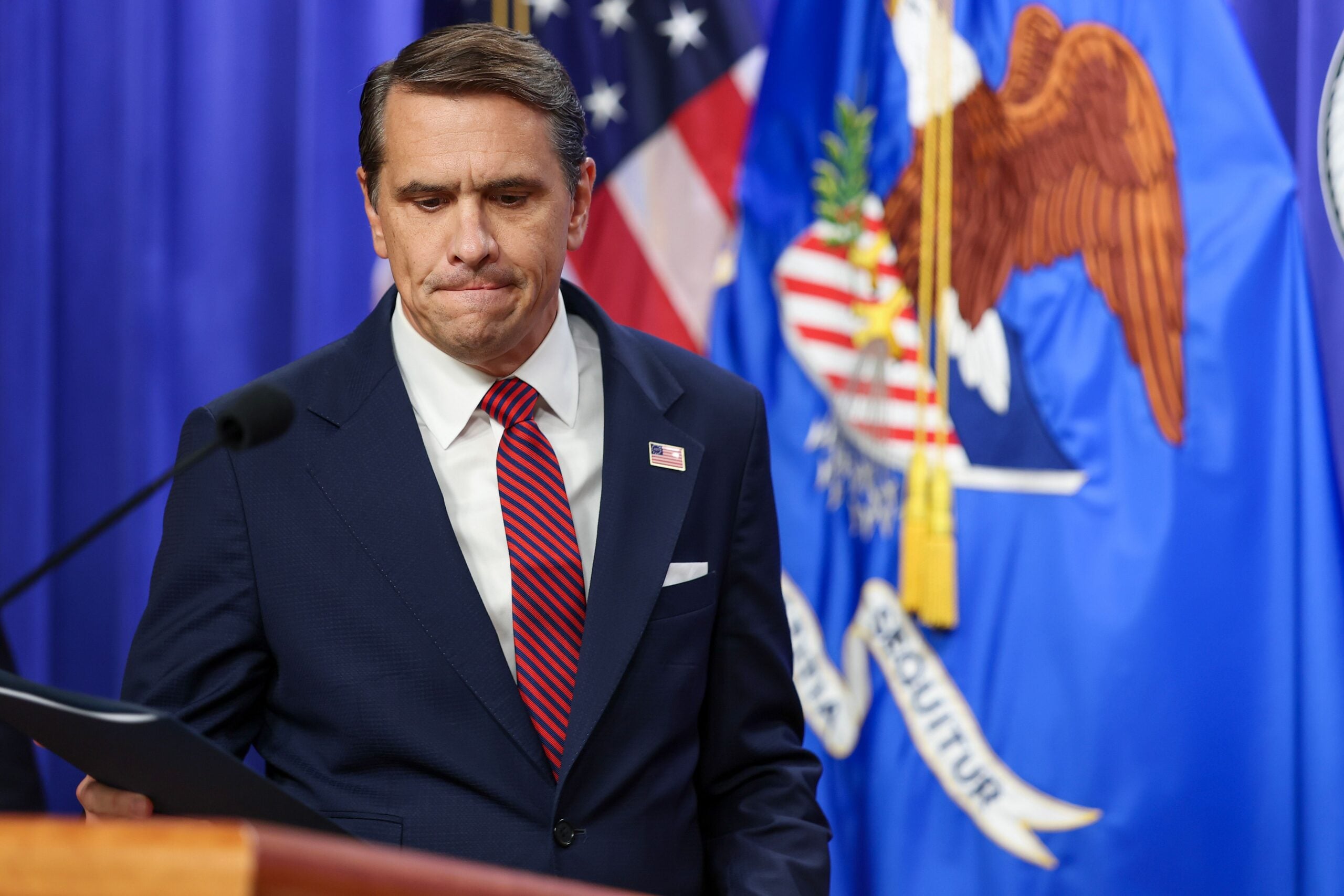
Above the Law: Todd Blanche's Tears Over Trump's Treatment
Summary
- Todd Blanche, the current United States Attorney General, reportedly expressed sadness over Democrats' treatment of Trump and his allies, as noted by Above the Law.
- A legendary litigator passed away after successfully protecting the legal profession from unconstitutional executive orders by the Trump administration.
- A new assessment has identified the top law schools specializing in criminal law.
- Artificial intelligence is recognized for its role in improving access to justice, though its current applications may differ from general expectations.
Political Tensions and Legal Legacies
Crucially, before their demise, this esteemed legal figure undertook significant actions to safeguard the integrity of the legal profession itself.
Recent reports, notably from "Above the Law See Also," have drawn attention to the reported emotional state of Todd Blanche, the current United States Attorney General. The coverage, which specifically referenced "Todd Blanche's Tears," suggests a profound sadness attributed to the perceived harsh treatment directed by Democrats towards former President Trump and his close associates. This observation underscores the deeply polarized and emotionally charged atmosphere that often accompanies high-stakes political and legal confrontations in the current landscape. The intensity of these interactions frequently extends beyond the courtroom, impacting the individuals involved on a personal level.
In a separate and somber note for the legal community, news emerged regarding the passing of a legendary litigator whose career spanned decades and left an indelible mark. This individual was widely recognized for their exceptional skill, strategic acumen, and unwavering dedication to the principles of justice throughout their professional life. Their contributions were celebrated across various legal domains, earning them a revered status among peers and clients alike.
Crucially, before their demise, this esteemed legal figure undertook significant actions to safeguard the integrity of the legal profession itself. Their efforts were particularly instrumental in challenging and ultimately protecting the profession from what were deemed unconstitutional executive orders issued by the Trump administration. This decisive intervention highlighted their commitment to constitutional principles and their role in upholding the rule of law against executive overreach, solidifying their legacy as a defender of fundamental legal frameworks.
Assessing Excellence in Criminal Law Education
The academic world of legal education has recently seen a significant update with the release of a new assessment, which has identified the top criminal law schools across the nation. This "verdict," as it was characterized, offers a comprehensive and current snapshot of the institutions that are currently excelling in providing specialized training and education within the demanding field of criminal law. Such rankings are often eagerly awaited by various stakeholders in the legal community.
These annual or periodic evaluations serve as a critical benchmark for prospective law students who are considering specializing in criminal defense, prosecution, or related areas. They also provide valuable insights for legal academics and practitioners interested in the evolving standards and strengths of different programs. The latest findings illuminate which institutions are currently at the forefront of preparing the next generation of legal professionals for the complexities of the criminal justice system.
The publication of these highly anticipated results inevitably prompts a moment of reflection and inquiry for many within the legal academic sphere. Alumni, current faculty, and administrators alike are often keen to discover whether their respective law schools have earned a place on this year's distinguished list, signaling their program's continued excellence and reputation in this competitive and vital area of legal study.
AI's Expanding Role in Access to Justice
Ongoing discussions within the legal tech sphere continue to explore and affirm the significant potential of artificial intelligence to contribute meaningfully to AI access to justice legal initiatives. Experts widely acknowledge that AI technology possesses a distinct and valuable role in efforts aimed at broadening the availability of legal assistance, thereby making it more accessible and affordable for a wider segment of the public who might otherwise face barriers. This recognition underscores a growing consensus on AI's utility in addressing systemic inequalities in legal aid.
However, a key observation from current implementation is that the specific applications and tasks that AI is presently performing in the realm of access to justice may not entirely align with the common public or even professional expectations. While the overarching utility of AI in this sector is clearly recognized, its practical deployment often diverges from more generalized or futuristic assumptions about its capabilities, focusing instead on more defined and achievable functions.
This nuanced understanding suggests that while AI undeniably serves as a powerful and evolving tool for enhancing access to legal services, its immediate impact is perhaps more concentrated on facilitating specific, targeted functions rather than delivering a sweeping, transformative overhaul of the entire justice system as it might be broadly envisioned. The focus remains on practical, incremental improvements that leverage AI's strengths in areas like information retrieval, document analysis, and guided legal pathways.
Practical Implications
This article is a collection of unrelated news snippets and does not present a single legal development with an actionable implication for lawyers or compliance officers.
Source
How does this affect you?
Get an AI analysis of this article grounded in your jurisdictions, practice areas, and any policy documents you've uploaded to Wansom.
Finish Reading the Full Story and the Expert Analysis.
Get the latest legal & regulatory intelligence in United States
Wansom is AI and can make mistakes.