
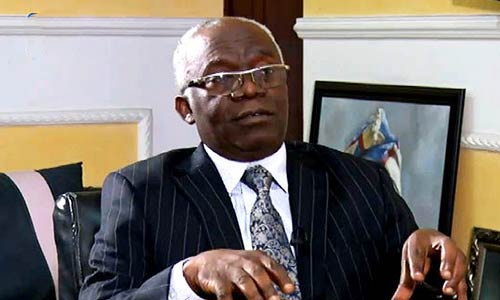
Abdulsalami Abubakar: Femi Falana Criticises NG Over Sani Abacha Loot Denial
Summary
- Femi Falana has criticized General Abdulsalami Abubakar over his claim that Sani Abacha did not loot Nigeria's treasury.
- Falana pointed out that his own decree confirms the existence of widespread looting during Abacha's regime.
- Abubakar has been called upon to apologize for his statement and step down from the Peace Committee.
What Happened
Falana has taken issue with Abubakar's assertion, pointing out that his own decree, which was used to justify illegal forfeitures, confirms the existence of widespread looting during Abacha's regime.
Human rights lawyer Femi Falana has publicly criticized former Head of State General Abdulsalami Abubakar over his claim that late General Sani Abacha did not loot Nigeria's treasury. This assertion, made by Abubakar, is seen as an an attempt to rewrite history and sanitize the Abacha regime. Falana, in a statement, described Abubakar's claim as 'an attempt to whitewash the atrocities committed during the Abacha era.' The criticism comes after Abubakar claimed that there was no evidence of looting under Abacha's rule.
Falana has taken issue with Abubakar's assertion, pointing out that his own decree, which was used to justify illegal forfeitures, confirms the existence of widespread looting during Abacha's regime. The Senior Advocate of Nigeria has called on Abubakar to apologize for his statement and step down from the Peace Committee.
Legal Context
The controversy surrounding Abubakar's claim is rooted in a long-standing debate over the extent of looting during the Abacha regime. The issue has been the subject of various court cases, with some arguing that the assets seized by the government were indeed legitimate. However, Falana and others have maintained that the seizures were illegal and unconstitutional. In his statement, Falana referenced his own decree, which he claimed confirmed the existence of widespread looting during Abacha's rule.
The debate over asset forfeiture has significant implications for Nigeria's legal landscape. The country's laws on asset forfeiture are still evolving, with some arguing that they need to be strengthened to prevent future abuses. The controversy surrounding Abubakar's claim highlights the need for greater transparency and accountability in government dealings.
Why It Matters
The public spat between Falana and Abubakar has significant implications for lawyers and legal practitioners in Nigeria. As a precedent, this controversy could influence future cases involving disputed asset forfeiture. Lawyers should be aware of the potential precedents set by this case and consider how they may impact their own practice.
Furthermore, the debate over asset forfeiture highlights the need for greater accountability and transparency in government dealings. The controversy surrounding Abubakar's claim serves as a reminder that the rule of law must be upheld, even in the face of powerful interests.
Practical Implications
Lawyers should watch for potential precedents set by this public spat, which could influence future cases involving disputed asset forfeiture.
Source
How does this affect your business?
Get an AI analysis of this article grounded in your jurisdictions, practice areas, and any policy documents you've uploaded to Wansom.
Wansom is AI and can make mistakes.