
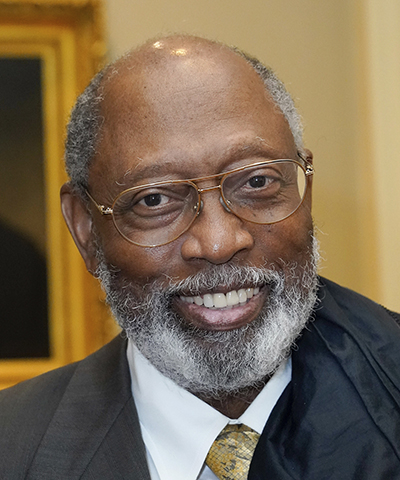
5th Circuit Blasts Federal Judge for AI Errors in Rulings
Summary
- The 5th U.S. Circuit Court of Appeals overturned a preliminary injunction due to AI-generated errors in the district court's orders.
- U.S. District Judge Henry T. Wingate's initial temporary restraining order contained numerous factual inaccuracies, including non-existent parties and false quotations.
- A law clerk reportedly used AI to draft the problematic order, which was mistakenly docketed.
- Even a corrected version of the order from Judge Wingate was found to contain "hallucinated information" by the appellate panel.
- The case has been remanded with instructions to reassign it to a different judge.
What Happened
This case establishes a clear precedent that reliance on unvetted AI-generated content can lead to overturned decisions and potential professional responsibility issues for those involved.
The 5th U.S. Circuit Court of Appeals recently issued a significant ruling, overturning a preliminary injunction that had blocked a Mississippi law prohibiting diversity, equity, and inclusion initiatives in public educational institutions. This decision, handed down on October 22, centered on serious concerns regarding artificial intelligence-generated errors found within the district court's original orders. The appellate panel not only vacated the injunction but also mandated that the case be reassigned to a different judge upon remand, signaling a strong rebuke of the initial proceedings.
U.S. District Judge Henry T. Wingate of the Southern District of Mississippi had initially issued a temporary restraining order (TRO) enjoining the enforcement of the controversial Mississippi DEI law. However, Judge Jerry Smith, writing for the 5th Circuit, highlighted numerous irregularities in Judge Wingate's judicial documents. These included factual assertions that were entirely absent from the case record and, in some instances, from any part of the legal proceedings whatsoever. The appellate court's scrutiny revealed a pattern of unsupported claims that ultimately undermined the integrity of the district court's decision-making process.
The AI Errors and Judicial Scrutiny
The specific inaccuracies identified by the appellate panel were striking. Judge Smith's opinion detailed mentions of plaintiffs and defendants who were not part of the original complaint, declarations attributed to individuals who either did not exist or were never involved in the case, and fabricated quotations purportedly sourced directly from the text of the Mississippi law itself. When these profound errors came to light, Judge Wingate replaced the initial order without providing any explanation for the changes.
It was later revealed, according to reports from Courthouse News Service, that a law clerk had utilized artificial intelligence to draft the problematic order, which was then mistakenly docketed. Despite this acknowledgment, the appeals panel found that even Judge Wingate's subsequent, corrected version of the order continued to contain "hallucinated information." This persistent issue led Judge Smith to comment on the "shoddy reasoning" evident in the preliminary injunction, noting that it "generally incorporates by reference its discussion and analysis in its TRO," thereby extending the impact of the AI-generated flaws. This incident provides a stark "AI hallucination legal precedent" for courts and legal practitioners.
Broader Legal Implications
The decision by the 5th U.S. Circuit Court of Appeals regarding Judge Henry T. Wingate's AI ruling serves as a critical warning for the legal profession. The appellate court's forceful overturning of the Mississippi DEI law injunction underscores the imperative for meticulous verification of all content, especially when artificial intelligence tools are employed in drafting legal documents or judicial orders. The presence of "law clerk AI drafting errors" leading to such a severe judicial rebuke highlights the significant risks associated with unverified AI use.
This case establishes a clear precedent that reliance on unvetted AI-generated content can lead to overturned decisions and potential professional responsibility issues for those involved. The 5th Circuit's stance emphasizes that the responsibility for accuracy ultimately rests with human legal professionals. This incident reinforces the urgent need for law firms, legal departments, and courts to implement robust internal protocols for the responsible and verified integration of AI tools into their workflows, ensuring that AI remains a tool for assistance, not a source of uncritical information, particularly in the context of the 5th U.S. Circuit Court of Appeals AI scrutiny.
Practical Implications
This ruling serves as a critical warning for lawyers and compliance officers regarding the imperative to meticulously verify any AI-generated content used in legal filings or judicial orders, as reliance on unverified AI can lead to severe judicial rebuke, overturned decisions, and potential professional responsibility issues. It highlights the need for robust internal protocols for AI tool usage.
Source
How does this affect you?
Get an AI analysis of this article grounded in your jurisdictions, practice areas, and any policy documents you've uploaded to Wansom.
Finish Reading the Full Story and the Expert Analysis.
Wansom is AI and can make mistakes.