
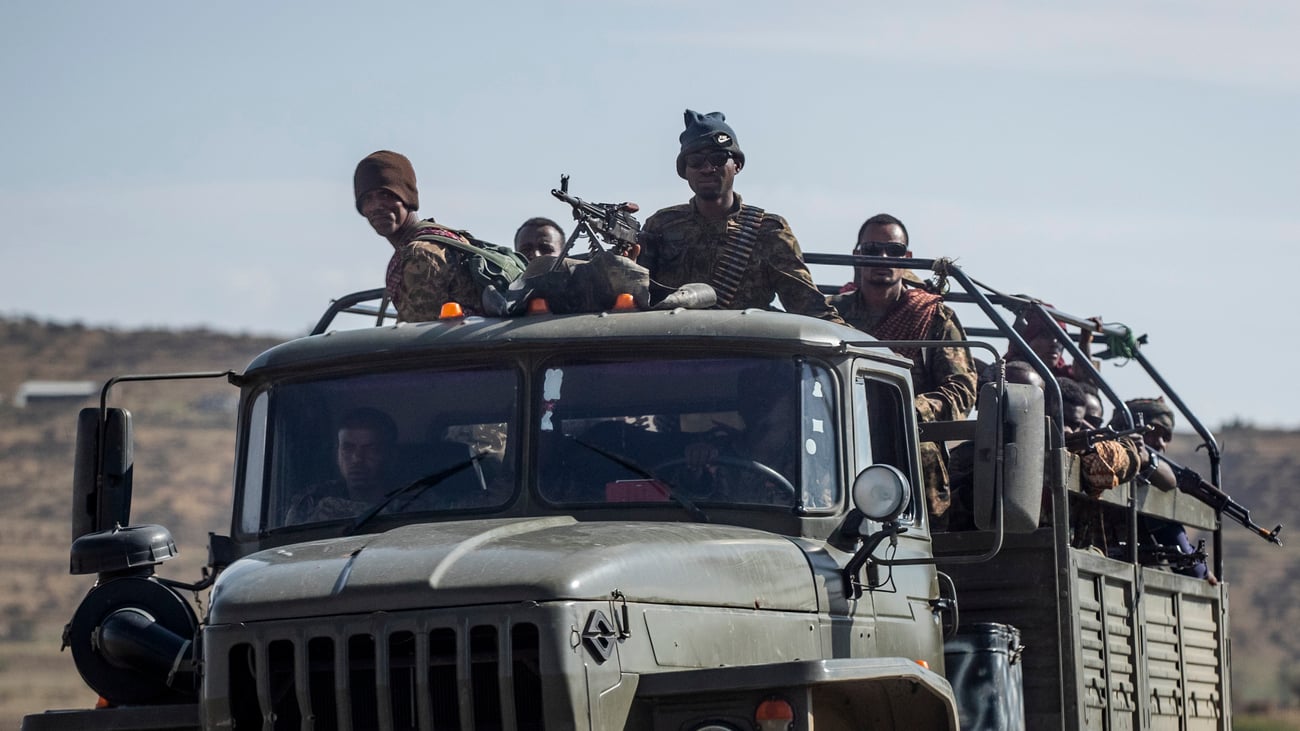
Ethiopian Army: 300 Tigray Fighters Surrender in Ethiopia
Summary
- Approximately 300 Tigray fighters, including divisional officers, surrendered to Ethiopian federal authorities along the Tekeze corridor.
- The federal army reported the fighters handed over more than 280 weapons and ammunition, citing their unhappiness with TPLF war preparations.
- The surrendered individuals reportedly opposed the TPLF's forced recruitment of young Tigrayans and its alliance with Eritrea.
- This event unfolds amid heightened fears of renewed conflict, with both government and TPLF forces massing troops along the northern border.
- The TPLF, which governed Ethiopia until 2018, is accused by the federal government of strengthening ties with Eritrea, an alliance opposed by some of its own fighters.
What Happened
The federal military attributed the surrender of these TPLF fighters to growing internal divisions and discontent within the rebel ranks.
Approximately 300 Tigray fighters surrendered to Ethiopian federal authorities, the national army announced on a recent Friday. This significant development involved members of the Tigray People's Liberation Front (TPLF) forces, who reportedly gave themselves up along the Tekeze corridor, a river system located in northwestern and western Tigray. The federal military indicated that the group included divisional officers.
Upon their surrender, the TPLF fighters handed over a substantial cache of weaponry. This included more than 280 individual and crew-served weapons, alongside various types of ammunition. The Ethiopian army corroborated these details by publishing photographs of the surrendered soldiers and their armaments. In response to inquiries about this military event, TPLF Deputy Chairman Amanuel Assefa declined to offer any comment to reporters.
Internal Divisions and Motivations
The federal military attributed the surrender of these TPLF fighters to growing internal divisions and discontent within the rebel ranks. According to the army's statement, the individuals expressed unhappiness with the TPLF's ongoing preparations for war. This suggests a fracturing within the group regarding the prospect of renewed conflict in the region.
Furthermore, the surrendering fighters reportedly voiced strong opposition to what they described as the TPLF leadership's efforts to recruit young Tigrayans forcibly. They claimed these recruitment drives were intended to send youth to war, primarily to shield the leaders themselves from accountability. This claim aligns with previous reports from AFP and Human Rights Watch, which have documented a campaign of forced recruitment by regional Tigrayan authorities, citing accounts of young men escaping training camps after being taken against their will or fleeing their communities to avoid roundups. The federal forces also stated that the surrendered men opposed the TPLF's alliance with neighboring Eritrea, characterizing it as detrimental.
Escalating Tensions and Regional Instability
This mass surrender occurs amidst mounting fears of a return to the devastating conflict that plagued the Tigray region between 2020 and 2022. Both the Ethiopian government and the TPLF have been observed massing troops along the northern state's border in recent months, a move that has significantly heightened concerns about a resumption of hostilities. The previous war resulted in an estimated 600,000 fatalities, according to figures from the African Union.
Further indicators of escalating tensions include federal authorities conducting several drone strikes in the region during August and September, targeting military positions. These strikes were tracked by ACLED, a non-governmental organization monitoring conflicts, though officials have not publicly commented on them. The Tigray region, which had a population of approximately 6 million before the war, remains economically depleted, with several hundred thousand people still displaced, underscoring the fragile humanitarian situation.
TPLF's Alliances and Political Context
The federal government has consistently accused the TPLF of cultivating closer ties with Eritrea for several months. Eritrea, which achieved independence in 1993, has historically maintained a strained relationship with Addis Ababa. The TPLF's Deputy Chairman, Amanuel Assefa, has previously made public statements indicating a willingness to ally with "anyone who fights the federal government," reinforcing concerns about the nature of these regional partnerships.
Historically, the TPLF held significant political power in Ethiopia, governing the country from 1991 until the appointment of Prime Minister Abiy Ahmed in 2018. Addis Ababa currently considers the TPLF an illegitimate entity. The reported opposition among the surrendered fighters to the TPLF-Eritrea alliance highlights potential strategic disagreements within the group, adding another layer of complexity to the ongoing political and military landscape in the Horn of Africa.
Practical Implications
Lawyers and compliance officers advising clients with interests in Ethiopia should note this development as an indicator of continued political instability and internal divisions within the Tigray People's Liberation Front, which could impact risk assessments related to renewed conflict, human rights concerns (e.g., forced recruitment), and the overall operating environment in the region.
Source
Source: Original reporting via AFP
How does this affect you?
Get an AI analysis of this article grounded in your jurisdictions, practice areas, and any policy documents you've uploaded to Wansom.
Finish Reading the Full Story and the Expert Analysis.
Get the latest legal & regulatory intelligence in United States
Wansom is AI and can make mistakes.