
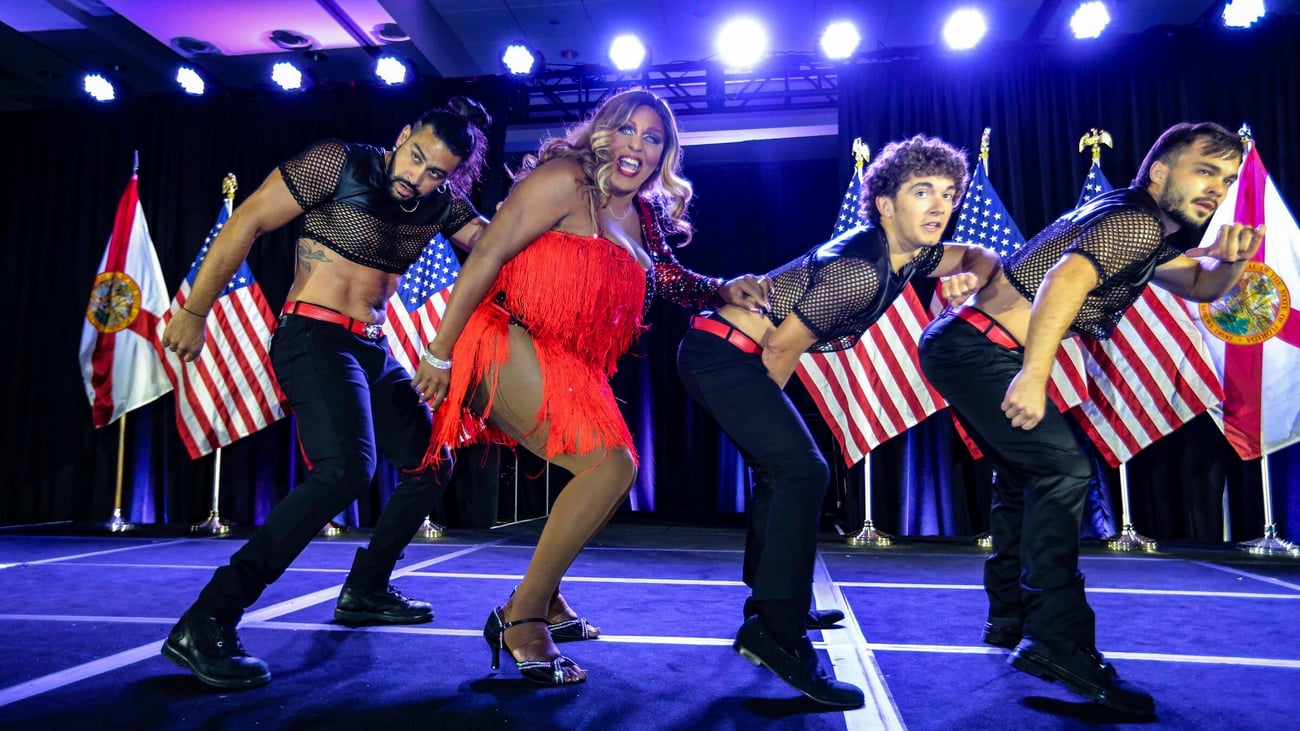
11th Circuit revives Florida’s ban on kids attending drag shows
Summary
- The 11th Circuit Court of Appeals, in an 8-5 decision, reinstated Florida's Protection of Children Act, allowing the state to ban minors from 'adult live performances' like drag shows.
- The ruling overturns a federal judge's injunction that had previously blocked the law's enforcement, making Florida the fifth state with such a ban.
- The law defines 'adult live performance' and makes it a misdemeanor to knowingly admit a child to a performance deemed obscene for their age.
- The majority opinion rejected arguments that the law was unconstitutionally vague, citing the Florida Supreme Court's definition of 'lewd' and emphasizing the state's interest in safeguarding minors.
- Dissenting judges argued the law was designed to 'chill drag,' with public statements from Governor DeSantis and the law's sponsor suggesting a broader intent to target drag performances.
Florida's Drag Show Ban for Minors Reinstated
The federal appellate court's 8-5 decision effectively revives the Florida Protection of Children Act, allowing the state to enforce its prohibition on minors attending certain 'adult live performances' like drag shows.
The full bench of the 11th Circuit Court of Appeals has cleared the way for Florida to enforce its ban on minors attending certain 'adult live performances,' including drag shows. In an 8-5 decision handed down on Tuesday, the federal appellate court overturned a prior injunction issued by a Florida federal judge that had temporarily blocked the state from implementing the Florida Protection of Children Act. This ruling means the controversial law, which prohibits children from being present at live performances deemed obscene for them, is now actively enforceable across the state.
This latest development follows a complex procedural path. Initially, a three-judge panel of the 11th Circuit had upheld the injunction against the Florida minor adult performance law last year. However, a majority of the judges subsequently voted in December to vacate that panel's decision, leading to an en banc rehearing of the case in June. The recent 8-5 vote by the full court reverses the earlier block, allowing the state to proceed with its regulatory framework.
With this decision, Florida joins a growing list of states — including Arkansas, North Dakota, Tennessee, and Texas — that have active prohibitions against minors attending adult live performances. The majority opinion, authored by U.S. Circuit Judge Andrew Brasher, stated that the court would not 'second-guess the Florida Legislature’s decision to regulate obscenity,' asserting that preventing children from attending performances deemed obscene for them is rationally related to the state's interest in safeguarding minors' well-being.
Legal Challenge and Statutory Definitions
The legal battle originated when Hamburger Mary’s Restaurant and Bar, an Orlando establishment known for its family-friendly drag shows, filed a lawsuit seeking to block the enforcement of the Florida Protection of Children Act. The restaurant argued that the law violated the First and 14th Amendments, particularly challenging the vagueness of certain terms within the statute. The initial injunction against the act was issued by Senior U.S. District Judge Gregory Presnell, an appointee of Bill Clinton.
The 2023 Florida minor adult performance law defines an 'adult live performance' broadly, encompassing any show that depicts or simulates 'nudity, sexual conduct, sexual excitement or specific sexual activities, lewd conduct or the lewd exposure of prosthetic or imitation genitals or breasts.' The statute further specifies that it is a misdemeanor to knowingly admit a child to any live performance that predominantly appeals to a 'prurient, shameful or morbid interest,' is offensive to 'prevailing standards' regarding what is suitable for the child's age, and lacks 'serious literary, artistic, political or scientific value for the age of the child present.'
Attorneys for Hamburger Mary’s specifically contended that the law's use of the word 'lewd' and the phrase 'age of the child present' rendered it unconstitutionally vague. They argued that these terms lacked the necessary clarity for individuals and businesses to understand what conduct was prohibited, potentially chilling protected speech.
Court's Interpretation of Obscenity and Vagueness
In its majority opinion, the 11th Circuit addressed the vagueness arguments directly. The court clarified that the term 'lewd' has been clearly defined by the Florida Supreme Court as 'gross indecency with respect to sexual relations' and 'the unlawful indulgence of lust, signifying that form of immorality which has a relation to sexual impurity.' This established definition, according to the majority, provides sufficient clarity to counter claims of unconstitutional vagueness.
U.S. Circuit Judge Brasher, an appointee of Donald Trump, further elaborated on the 11th Circuit obscenity standard for minors, stating that it is 'difficult to imagine any sex-based performance that predominantly appeals to a prurient interest being suitable for a child of any age.' He noted that Hamburger Mary’s had not identified any hypothetical performance that would fit this description while still being appropriate for children. The court also determined that the lower court had overstepped its authority by issuing a universal injunction that prevented enforcement of the law against 'anyone and everyone' in Florida, rather than limiting it to the specific plaintiffs in the case.
Dissenting Voices and Broader Context
Despite the majority's clear stance, the 11th Circuit's decision was met with strong dissent from five appellate judges. In a dissenting opinion, U.S. Circuit Judge Robin Rosenbaum, an appointee of Barack Obama, joined by four other judges, argued that Florida 'purposely created a mess-around-and-find-out statute to chill drag.' This perspective suggests that the law's true intent extends beyond merely regulating obscenity for children and aims to suppress drag performances more broadly.
Supporting the dissenters' view, both Florida Governor Ron DeSantis and the law's primary sponsor, then-state Representative Randy Fine, made public statements that critics argue reveal the law's broader target. Governor DeSantis described the legislation as 'being about adult performances … like those drag shows,' while then-state Representative Fine explicitly stated the statute would 'protect our children by ending the gateway propaganda to this evil — ‘Drag Queen Story Time.’ These statements underscore the political motivations behind the Florida drag show ban.
This legal development in Florida contrasts with actions in other circuits, such as the Ninth Circuit's decision in March to uphold an injunction blocking Montana from enforcing its ban on drag story hours while a First Amendment challenge proceeds. Such differing outcomes highlight the ongoing national debate and varied judicial interpretations surrounding First Amendment drag show Florida protections and similar laws across the United States.
Practical Implications
Lawyers must advise clients operating venues or organizing events in Florida that the Protection of Children Act, banning minors from certain 'adult live performances,' is now enforceable following the 11th Circuit's decision. This requires assessing compliance risks, understanding the court's interpretation of obscenity for children, and preparing for potential enforcement actions or further legal challenges.
Source
Source: Original reporting via CN
How does this affect your business?
Get an AI analysis of this article grounded in your jurisdictions, practice areas, and any policy documents you've uploaded to Wansom.
Wansom is AI and can make mistakes.