
US Forest Service Must Reinitiate Consultation Over Toxic Metals in Aerial Fire Retardants
Summary
- A federal court hearing has brought to light a contentious issue between the US Forest Service and an environmental nonprofit over the use of aerial fire retardants containing toxic metals.
- The nonprofit claims that despite being aware of the toxic metal content, the agency failed to properly assess or analyze it and instead relied on biological opinions from wildlife agencies that were not given the full information.
- A 2024 study revealed that aerial fire retardants contain concentrations of heavy metals four to 2,880 times greater than drinking water regulatory limits.
What Happened
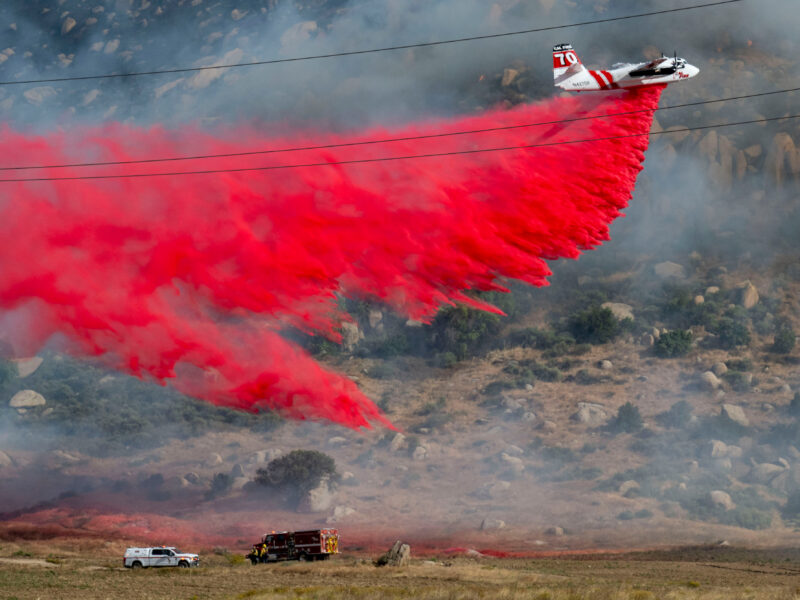
A federal court hearing has brought to light a contentious issue between the US Forest Service and an environmental nonprofit over the use of aerial fire retardants containing toxic metals. The nonprofit, comprised of US Forest Service employees, accused the agency of intentionally neglecting to disclose and analyze heavy metals found within these fire retardants. This case centers around the Forest Service's nationwide authorization of aerial application of long-term fire retardant across millions of acres of federal land as part of its wildfire combat efforts.
The nonprofit claims that despite being aware of the toxic metal content, the agency failed to properly assess or analyze it and instead relied on biological opinions from wildlife agencies that were not given the full information. The Forest Service, however, maintains that it had disclosed the complete list of ingredients in each aerial fire retardant during consultation with the wildlife agencies.
Relevant Legal/Regulatory Context
The Endangered Species Act is at the heart of this dispute, as the nonprofit accuses the Forest Service of violating it through the use of aerial fire retardants laced with toxic heavy metals. The agency's actions have been questioned by Senior US District Judge Donald Molloy, who expressed concern about whether the Forest Service was privy to the exact chemical makeup of the fire retardants or if it was subject to trade secret protection from manufacturers. The nonprofit also points to a 2024 study on metals in wildfire suppressants, which revealed that aerial fire retardants contain concentrations of heavy metals four to 2,880 times greater than drinking water regulatory limits.
The Forest Service's consultation with wildlife agencies has been called into question, as the nonprofit claims that these agencies were not given the full information about heavy metal content. The agency's reliance on biological opinions from these agencies has been criticized for being incomplete and potentially misleading.
Why It Matters
The court's decision in this case could have far-reaching implications for the US Forest Service's use of aerial fire retardants containing toxic metals. If the agency is required to reinitiate consultation with wildlife agencies, it could potentially jeopardize endangered species and impact critical habitat. The nonprofit's claims highlight a critical issue in environmental law: the need for transparency and accountability in the use of chemicals that can harm the environment.
The case also underscores the importance of proper analysis and disclosure of toxic metal content in aerial fire retardants. As the nonprofit argues, 'What we would like the Forest Service to do is to officially reinitiate consultation with the wildlife agencies.' The court's decision will likely have significant implications for the agency's future use of these chemicals.
Practical Implications
The court's decision could require the US Forest Service to reinitiate consultation with wildlife agencies over the use of aerial fire retardants containing toxic metals, potentially jeopardizing endangered species and impacting critical habitat.
Source
How does this affect your business?
Get an AI analysis of this article grounded in your jurisdictions, practice areas, and any policy documents you've uploaded to Wansom.