
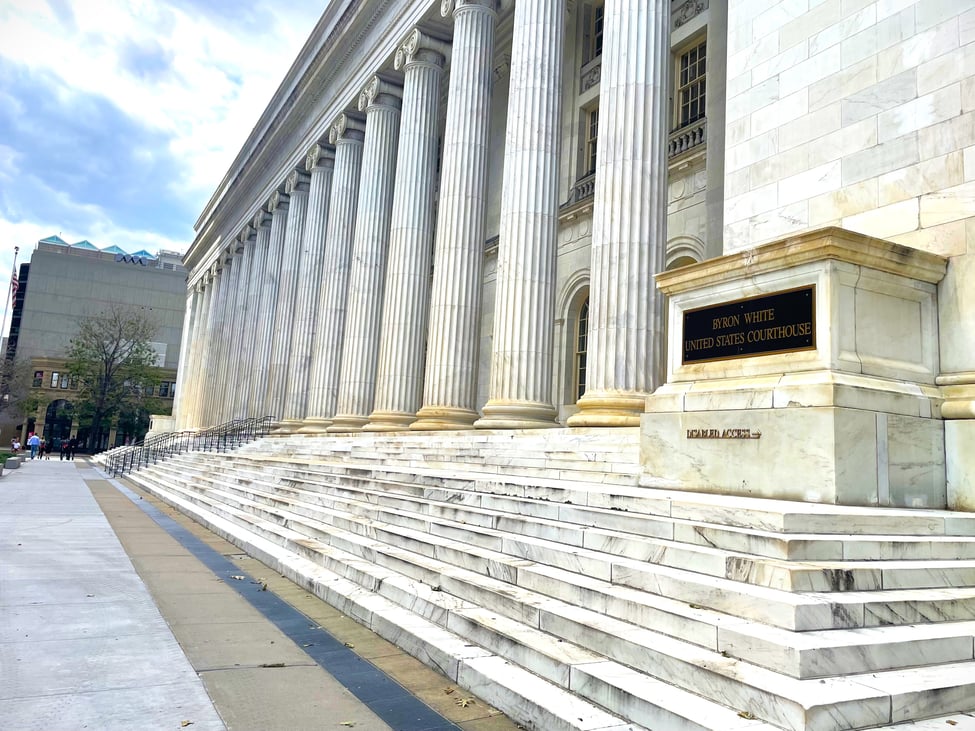
10th Circuit: Defendants Must Prove Native American Status
Summary
- The 10th Circuit Court of Appeals has unanimously ruled that criminal defendants must prove their Native American status when used as a defense in federal cases on tribal land.
- This decision shifts the burden of proof from the government to the defendant for establishing Indian status as an affirmative defense under 18 U.S.C. § 1152.
- The ruling reverses previous panel decisions that had overturned convictions for Dennis Herbert and Joel Ruiz due to the government's failure to disprove their Native American status.
- The U.S. Department of Justice petitioned for this en banc review to close a perceived loophole in federal jurisdiction over crimes in Indian Country.
- The cases of Herbert and Ruiz have been remanded for further proceedings, as they were tried under an incorrect standard for the burden of proof.
What Happened
The unanimous decision from the 10th Circuit carries significant implications for federal prosecutions involving crimes committed in Indian Country, particularly for defense attorneys operating within the circuit.
The full 10th Circuit Court of Appeals has unanimously ruled that criminal defendants bear the responsibility of proving their Native American status when asserting it as a defense against federal charges for offenses committed within Indian Country. This pivotal decision clarifies a long-standing ambiguity regarding the 10th Circuit Native American status burden of proof, overturning previous interpretations that placed this evidentiary requirement on the prosecution. The ruling, detailed in a 51-page opinion penned by U.S. Circuit Judge Scott Matheson, explicitly states that a defendant's tribal affiliation is not a jurisdictional element that the government must establish for federal courts to exercise subject-matter jurisdiction over these crimes.
This en banc review was prompted by the U.S. Department of Justice, which sought to address what it described as a loophole. The DOJ's petition followed two separate instances where 10th Circuit panels had previously overturned convictions for child sex abuse. In one such case, Dennis Herbert was found guilty by a jury in 2024 of aggravated sexual abuse on Choctaw Nation Tribal land in Oklahoma. Despite four witnesses testifying to his lack of tribal status, an appellate panel vacated his conviction and 30-year sentence because prosecutors had not affirmatively proven he was not Native American. Similarly, Joel Ruiz saw his 30-year sentence for child sexual abuse on the Jicarilla Apache Nation Reservation in central New Mexico overturned by another 10th Circuit panel, also due to uncertainty surrounding his tribal status.
Legal Context
Historically, federal jurisdiction over crimes on tribal land jurisdiction has included an "antique carveout" for offenses committed by one Native American against another, or those already addressed by tribal law. This statutory framework, primarily governed by 18 U.S.C. § 1152, has been the subject of varying interpretations. Judge Matheson's opinion directly addresses this, asserting that the statute "nowhere states that a defendant’s Indian status is an element" of the crime itself. Instead, the court determined that an exception to statutory liability, such as Indian status, functions as an affirmative defense.
The court's decision effectively reverses earlier panel rulings, including those influenced by the 2001 en banc review of U.S. v Prentiss. That prior interpretation had led to federal prosecutors being required to prove a defendant's non-Native American status in certain cases, a standard that the current en banc court has now rejected. The new ruling establishes that if a defendant wishes to invoke their Native American heritage as a 18 U.S.C. § 1152 defense to federal jurisdiction, the onus is squarely on them to present the necessary evidence.
Why It Matters
The unanimous decision from the 10th Circuit carries significant implications for federal prosecutions involving crimes committed in Indian Country, particularly for defense attorneys operating within the circuit. The ruling clarifies that the burden of proof for establishing Native American status as an affirmative defense now rests entirely with the defendant. This means that defendants must proactively gather and present evidence of their tribal affiliation if they intend to challenge federal jurisdiction on this basis.
As a direct consequence of this shift, the en banc court remanded the cases of Dennis Herbert and Joel Ruiz back to the lower panels that had initially overturned their convictions. The court noted that both Herbert and Ruiz were tried under an incorrect allocation of the burden of proof and were not adequately notified of their obligation to present evidence of their Indian status as an affirmative defense. Therefore, further proceedings are deemed necessary to ensure a fair application of the newly clarified standard. The opinion was joined by a diverse group of judges appointed by Presidents George W. Bush, Barack Obama, Donald Trump, and Joe Biden, with U.S. Circuit Judge Harris Hartz also penning a three-page concurring opinion that further explored the asymmetrical burden of proof.
Practical Implications
Defense attorneys in the 10th Circuit must now advise clients that the burden of proving Native American status as an affirmative defense in federal prosecutions for crimes in Indian Country (under 18 U.S.C. § 1152) rests squarely with the defendant, not the government. This requires proactive evidence gathering and presentation by the defense to establish tribal status if it is to be used to challenge federal jurisdiction.
Source
How does this affect you?
Get an AI analysis of this article grounded in your jurisdictions, practice areas, and any policy documents you've uploaded to Wansom.
Finish Reading the Full Story and the Expert Analysis.
Get the latest legal & regulatory intelligence in United States
Wansom is AI and can make mistakes.