
10th Circuit: Kappa Kappa Gamma 'Women' Definition Challenge Revived
Summary
- On May 14, 2024, six sorority sisters appealed to the 10th U.S. Circuit Court of Appeals at Denver to challenge Kappa Kappa Gamma's definition of 'women'.
- The sorority's current policy allows transgender students identifying as women to join, a change from its historical 'all-women' status.
- Attorney Angela Lavin argued the updated definition fundamentally altered the organization's 150-year-old nature.
- The Kappa Fraternity Council issued a 2015 statement including 'individuals who identify as women' in its membership criteria.
- The first transgender sorority sister was admitted at the University of Wyoming in 2022, leading to a 2023 lawsuit by the plaintiffs.
Appellate Court Hears 'Women' Definition Challenge
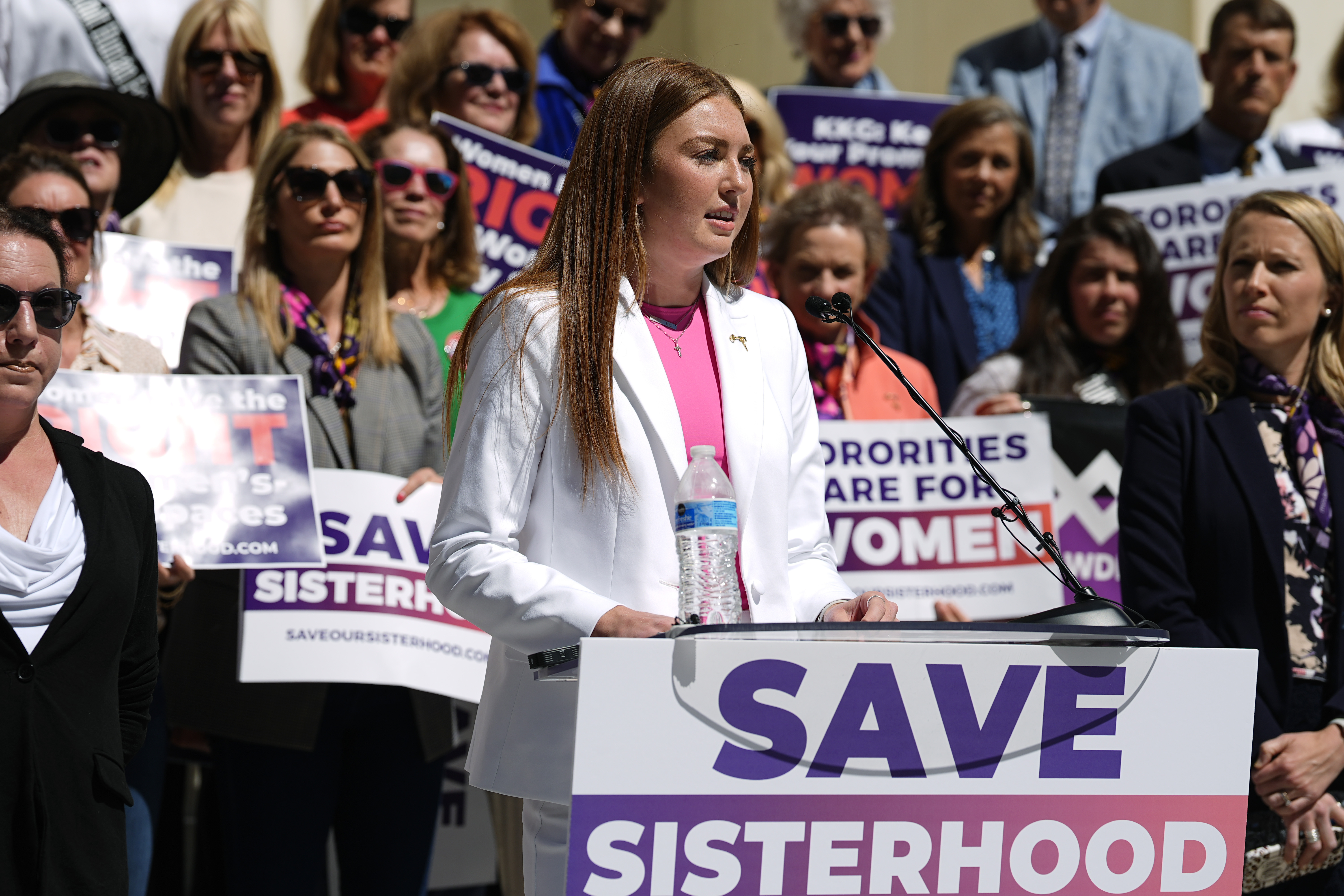
Attorney Angela Lavin, representing the sorority sisters from Wegman Hessler in Cleveland, presented arguments to the appellate court, contending that the revised definition fundamentally altered the nature of Kappa Kappa Gamma.
A significant legal dispute concerning the definition of “women” within a long-standing sorority recently advanced to the 10th U.S. Circuit Court of Appeals at Denver. On May 14, 2024, a group of six sorority sisters, including Hannah Holtmeier, sought to revive their challenge against Kappa Kappa Gamma’s current membership policy, which permits transgender students who identify as women to join the organization. This appeal marks a critical juncture in the ongoing Kappa Kappa Gamma transgender members lawsuit, drawing attention to evolving interpretations of gender within traditionally single-sex institutions.
The core of the dispute centers on a policy shift by Kappa Kappa Gamma. The sorority, founded in 1870 as a women-only fraternity, historically maintained strict gender-specific membership criteria. However, a 2015 position statement from the Kappa Fraternity Council broadened this definition, stating that membership would include “women and individuals who identify as women.” This change paved the way for the admission of the first transgender sorority sister at the University of Wyoming in 2022, an event that subsequently triggered the initial lawsuit in 2023.
Legal Arguments Against Policy Shift
Attorney Angela Lavin, representing the sorority sisters from Wegman Hessler in Cleveland, presented arguments to the appellate court, contending that the revised definition fundamentally altered the nature of Kappa Kappa Gamma. Lavin emphasized the organization's more than 150-year history as an “all-women” entity, which historically enforced policies to exclude men from participating in its activities. The plaintiffs' legal team asserts that by expanding the definition of “women,” the sorority has deviated from its foundational identity.
The initial lawsuit, filed in 2023 by Hannah Holtmeier and five other sorority sisters from the University of Wyoming, named both Kappa Kappa Gamma and its president as defendants. These sorority sisters challenge the gender definition, specifically claiming that the organization's leaders manipulated the induction process to compel them to accept an individual they describe as a biological male into their sisterhood. This claim underscores the deep divisions and legal complexities arising from the sorority's updated membership criteria.
Historical Context of Membership Criteria
Kappa Kappa Gamma’s journey from its founding in 1870 as an exclusive women-only fraternity to its current inclusive stance highlights a broader societal and legal evolution regarding gender identity. For over a century and a half, the organization’s identity was inextricably linked to its definition of membership as solely for cisgender women, with explicit rules preventing male participation. This historical framework forms a crucial backdrop to the current 10th Circuit Kappa Kappa Gamma 'women' definition challenge.
The pivotal moment for the sorority's membership policy arrived with the Kappa Fraternity Council's 2015 position statement. This declaration, which explicitly welcomed “individuals who identify as women” alongside cisgender women, marked a significant departure from previous norms. It was this policy clarification that directly led to the admission of the first transgender sorority sister at the University of Wyoming in 2022, setting the stage for the subsequent legal actions and the ongoing University of Wyoming sorority lawsuit.
Broader Implications for Organizations
The ongoing legal proceedings, particularly the Angela Lavin 10th Circuit appeal, carry substantial implications for other gender-specific organizations navigating contemporary discussions around gender identity and inclusion. The outcome of this case could influence how similar groups define their membership criteria and manage internal disagreements over such definitions. It underscores the increasing scrutiny faced by organizations whose historical foundations are rooted in traditional gender classifications.
This challenge to Kappa Kappa Gamma's definition of 'women' serves as a critical example of the legal and social pressures confronting institutions with gender-specific membership. The arguments presented by the sorority sisters challenge the very essence of what constitutes an 'all-women' organization in the modern era, highlighting the need for clarity and careful consideration in drafting and interpreting membership policies to mitigate future disputes.
Practical Implications
This case highlights the ongoing legal challenges and potential litigation risks for organizations with gender-specific membership criteria, particularly regarding the inclusion of transgender individuals. Lawyers should advise clients to review and clarify their internal definitions of 'women' or 'gender' in membership policies to mitigate future disputes and understand evolving legal interpretations.
Source
How does this affect you?
Get an AI analysis of this article grounded in your jurisdictions, practice areas, and any policy documents you've uploaded to Wansom.
Finish Reading the Full Story and the Expert Analysis.
Get the latest legal & regulatory intelligence in United States
Wansom is AI and can make mistakes.