
10th Circuit: Denver Water Gross Reservoir Expansion Injunction Vacated
Summary
- The 10th Circuit Court of Appeals vacated a lower court's injunction, allowing Denver Water to complete and fill its expanded Gross Reservoir.
- The ruling emphasizes judicial deference to the U.S. Army Corps of Engineers' technical and scientific judgments in environmental permit reviews.
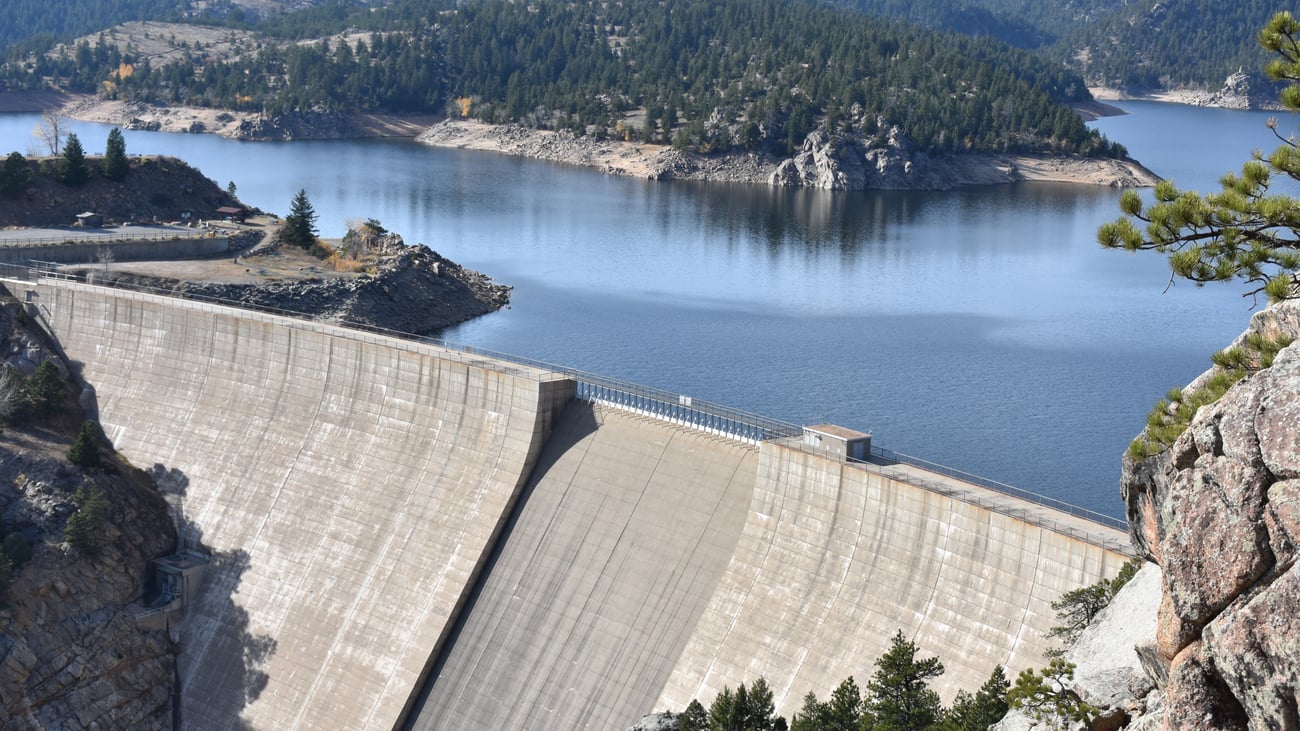
- The $600 million Gross Dam expansion, part of the Moffat Collection System Project, adds 131 feet to the dam's height and 77,000 acre-feet of water capacity.
- Denver Water initiated the project 24 years ago to secure water for 1.5 million people and enhance system efficiency, including year-round operation for the Moffat Water Treatment Plant.
- Environmental groups had challenged the project's permits, arguing inadequate review under the Clean Water Act and National Environmental Policy Act.
10th Circuit Clears Path for Gross Reservoir Expansion
This decision underscores the principle that courts should generally defer to the technical and scientific expertise of federal agencies when reviewing their actions, particularly in complex environmental permitting processes.
The 10th Circuit Court of Appeals has overturned a lower court's permanent injunction, allowing Denver Water to proceed with the completion and filling of its expanded Gross Reservoir. This significant ruling, issued on Tuesday, marks a crucial development for Colorado's largest dam project, which has been in planning for over two decades and faced legal challenges from environmental organizations.
The appellate court's decision vacates an injunction secured in 2024 by environmental groups, which had prevented Denver Water from filling the newly expanded reservoir. The utility had initially aimed to complete construction by next year. The ruling effectively clears the final legal hurdle for the project, enabling Denver Water to utilize the full capacity of the enlarged dam.
Senior U.S. Circuit Judge Timothy Tymkovich authored the 37-page opinion, emphasizing the judiciary's role in reviewing agency actions. He stated that deference is particularly appropriate when agencies apply their expertise to technical and scientific determinations. The court concluded that the U.S. Army Corps of Engineers' three key determinations, which the district court had deemed arbitrary and capricious, fell within the agency's zone of discretion and were not, in fact, arbitrary or capricious.
Project Background and Legal Challenges
The Gross Dam expansion is part of the broader Moffat Collection System Project, which Denver Water began designing 24 years ago to address anticipated future water shortages. The utility first sought a wetlands permit from the U.S. Army Corps of Engineers in 2003, with the permit finally granted more than a decade later in 2017.
In December 2018, nonprofit Save the Colorado, alongside other environmental groups, initiated legal action against the Army Corps and the Department of the Interior. They contended that the federal government had issued the necessary permits without conducting adequate environmental reviews. Senior U.S. District Judge Christine Arguello initially dismissed the case in 2021 due to a perceived lack of subject-matter jurisdiction. However, the environmental groups successfully appealed, leading the 10th Circuit to revive the case in 2022, coinciding with the commencement of dam construction.
Following a bench trial in 2024, Judge Arguello, a George W. Bush appointee, found the government's environmental review to be insufficient under both the Clean Water Act and the National Environmental Policy Act. While she initially enjoined further construction, she later modified her order to permit Denver Water to complete the physical structure, pending appeal, but prohibited the filling of the dam to its expanded potential. The 10th Circuit heard arguments from both Denver Water and the Army Corps of Engineers in July before issuing its recent decision.
Scope and Purpose of the Expansion
The Gross Dam expansion, completed in July at a cost of $600 million, involved increasing the dam's height by 131 feet. This significant modification enables the reservoir to hold an additional 77,000 acre-feet of water. Prior to the 10th Circuit's ruling, a lower court order had prevented Denver Water from clearing trees around the reservoir and utilizing this newly added capacity.
Denver Water's permit application projected a need for an additional 18,000 acre-feet per year of new firm yield to supply 1.5 million people. Beyond increasing water supply, the utility also aimed to enhance the overall efficiency of its system by drawing water from diverse sources and distributing storage across the state. The completed project will facilitate the diversion of water from the Colorado River on the Western Slope of the Rocky Mountains to the Gross Reservoir on the Eastern Slope. This strategic move is designed to mitigate shortfalls in Denver Water's northern system, which currently serves only 10% of its customers, and will also allow the Moffat Water Treatment Plant to operate year-round, even during anticipated droughts.
Judicial Deference to Agency Expertise
In its recent opinion, the 10th Circuit panel affirmed that the government acted reasonably in tailoring the project to achieve Denver Water's dual objectives: increasing water supply and reducing reliance on its southern system. The court also found it reasonable for the federal agency to have dismissed alternative projects that did not involve expanding the Gross Reservoir and Dam, as these alternatives would not have met the project's specific goals.
This decision underscores the principle that courts should generally defer to the technical and scientific expertise of federal agencies when reviewing their actions, particularly in complex environmental permitting processes. Senior U.S. Circuit Judge Tymkovich, a Bush appointee, explicitly stated that the Corps did not act arbitrarily or contrary to law by screening out proposed alternatives that were incapable of increasing water supply to the Moffat Treatment Plant. The ruling reinforces the idea that agency determinations, when based on specialized knowledge and within their zone of discretion, warrant judicial respect.
Practical Implications
This ruling reinforces the principle of judicial deference to agency expertise in technical and scientific judgments, particularly concerning environmental permits under the Clean Water Act and NEPA. Lawyers advising clients on large infrastructure projects or environmental challenges should consider this precedent when assessing the likelihood of overturning agency decisions, emphasizing the importance of robust agency review processes.
Source
How does this affect you?
Get an AI analysis of this article grounded in your jurisdictions, practice areas, and any policy documents you've uploaded to Wansom.
Finish Reading the Full Story and the Expert Analysis.
Get the latest legal & regulatory intelligence in United States
Wansom is AI and can make mistakes.