
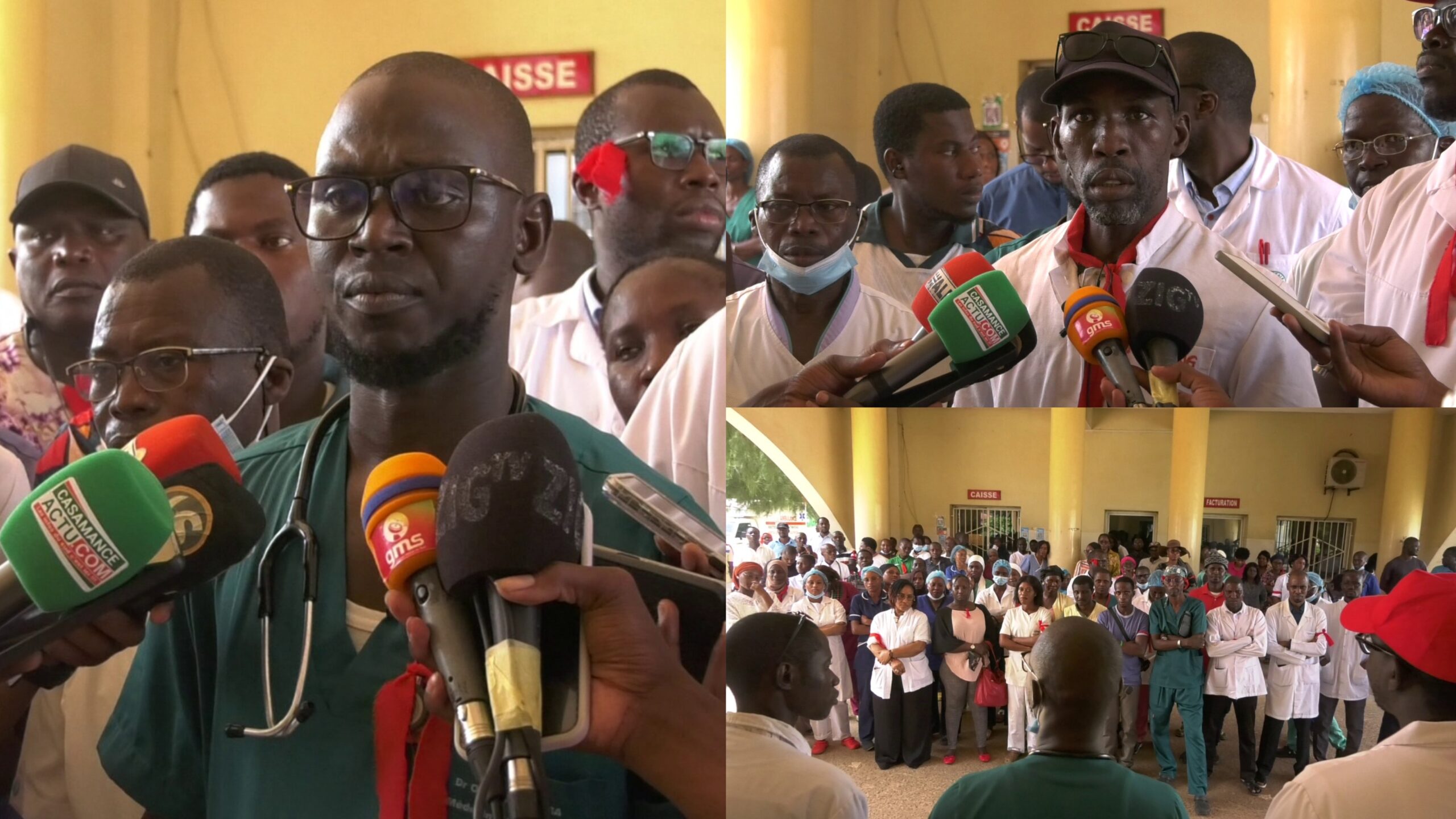
Hôpital de la Paix Ziguinchor Grèves Septembre 2026: Unions Strike Over Equipment
Summary
- The Inter-syndical of Hôpital de la Paix in Ziguinchor announced multiple general strikes and a sit-in for September 2026.
- The strikes are a response to a lack of concrete answers from management and health authorities regarding funding, equipment, and infrastructure.
- Key demands include making the MRI operational, rehabilitating infrastructure like the roof and drainage, and securing adequate, predictable funding.
- Past administrative delays led to over 100 million CFA francs in losses per facility, and the 2025 operating subsidy was still pending.
- Negotiations involving the Labor and Social Security Inspector failed to resolve the issues, with unions citing only conditional commitments from management.
Overview of Impending Healthcare Disruptions
A meeting convened following the intervention of the Labor and Social Security Inspector failed to address the issues raised by the unions.
The Inter-syndical of Hôpital de la Paix in Ziguinchor, Senegal, has declared a series of general strikes and a sit-in scheduled for September 2026. This coalition, comprising the Autonomous Union of Doctors, Pharmacists, and Dental Surgeons of Senegal (SAMES), the National Union of Health Workers (SINTRAS), and the Unified Union of Health and Social Action Workers (SUTSAS), is protesting a perceived lack of substantive responses from hospital management and health authorities regarding critical operational and financial issues.
The planned industrial action will commence with a general strike on Thursday, September 3, and Friday, September 4, 2026, followed by an inter-union evaluation on Monday, September 7. Further strikes are slated for Tuesday, September 8, and Wednesday, September 9, with another assessment on Thursday, September 10. The workers intend to strike again on Monday, September 14, and Tuesday, September 15, with an evaluation on Wednesday, September 16, and two additional strike days on Wednesday, September 23, and Thursday, September 24. These actions underscore deep-seated grievances concerning the hospital's operational capacity and the welfare of its staff.
Core Grievances: Equipment, Infrastructure, and Funding
A central point of contention revolves around persistent equipment malfunctions and shortages. Workers report ongoing breakdowns of essential diagnostic devices, recurrent shortages of reagents, and a lack of critical biological examinations. A significant demand focuses on the magnetic resonance imaging (MRI) machine designated for the Casamance region, which, according to the unions, remains non-operational. The collective also insists on the restoration of service for the remote-controlled digital radio and the panoramic dental radio, stating that a clear decision, a precise timeline, and the effective functioning of the MRI are prerequisites for lifting the strike.
Beyond equipment, the Inter-syndical's demands extend to critical infrastructure improvements. They are calling for the installation of an incinerator for biomedical waste, as well as the rehabilitation of the hospital's roofing, ceilings, internal road network, and drainage system. The unions are urging the Ministry of Health and Social Action to honor its commitments regarding these necessary renovation projects. The comprehensive list of 20 demands also addresses financial rights, social contributions, staffing levels, hygiene, security, governance, and modernization.
Financial Instability and Governance Demands
The dispute is deeply rooted in financial instability and governance concerns. The Inter-syndical highlights that the funding of healthcare facilities remains under strain. As early as February 18, 2026, the inter-union body for Ziguinchor's hospitals and health district had warned of losses exceeding 100 million CFA francs per facility due to administrative delays. At that time, both regional hospitals were still awaiting the final installment of their 2025 operating subsidy, a situation that directly fuels the current demands for adequate equipment, debt resolution, and operational subsidies for Hôpital de la Paix.
To address these financial vulnerabilities, the Inter-syndical is advocating for an investment subsidy tailored to the hospital's needs and a special subsidy to progressively clear its existing debt. They also seek a transparent re-evaluation of this debt and a structured plan for its resolution, emphasizing that regular and predictable funding is crucial given past delays that have weakened regional healthcare structures. On the governance front, workers are pushing for the election of staff delegates and a personnel representative, the activation of the facility's technical commission, and the appointment of an internal auditor to regularly scrutinize financial and operational management.
Unresolved Negotiations and Conditional Commitments
Despite attempts at resolution, negotiations have stalled. A meeting convened following the intervention of the Labor and Social Security Inspector failed to address the issues raised by the unions. The syndicates contend that management offered only conditional commitments, which they deem insufficient. Dr. Ousmane Diba, who serves as the Secretary-General of the SAMES section at the hospital and coordinates the Inter-syndical, conveyed through EMedia that a hospital cannot function effectively based solely on promises.
This situation signals significant labor relations disputes and potential public service disruptions, requiring legal counsel on strike legality, patient care obligations during service interruptions, and contractual implications for hospital suppliers. Compliance officers should assess risks related to healthcare service continuity and regulatory adherence in public health administration. The unions' firm stance underscores the critical need for concrete actions rather than mere assurances to avert widespread service interruptions at Hôpital de la Paix.
Practical Implications
This situation signals significant labor relations disputes and potential public service disruptions, requiring legal counsel on strike legality, patient care obligations during service interruptions, and contractual implications for hospital suppliers. Compliance officers should assess risks related to healthcare service continuity and regulatory adherence in public health administration.
Source
Source: Original reporting via EMedia
How does this affect you?
Get an AI analysis of this article grounded in your jurisdictions, practice areas, and any policy documents you've uploaded to Wansom.
Finish Reading the Full Story and the Expert Analysis.
Wansom is AI and can make mistakes.